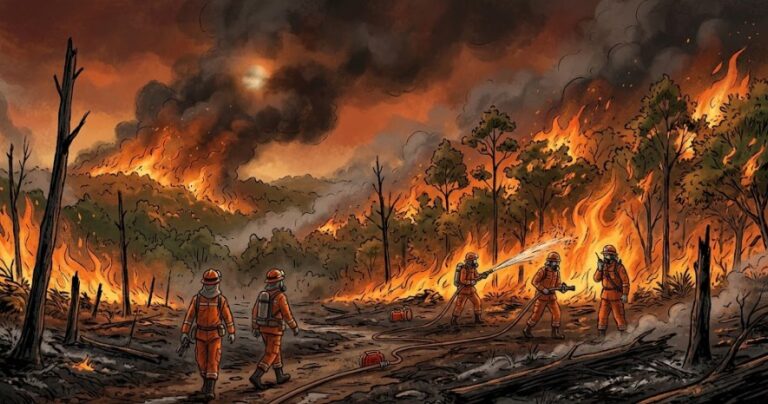
History has proven that deforestation has been induced by human civilization since thousands of years ago. Then hundreds of years ago it is further accelerating to meet the rising land need of urban development and to accommodate surging economic activities and human needs, especially in Europe and North America.
Seemingly, seen from the perspective of global civilization, deforestation can be just taken for granted as normal and conventional occurrence, as long as it can be later reverted with regreening programs. But apparently, it is not the case when it is attributed to palm oil, which has dominated the global market of vegetable oils since 1990s, outcompeting its three main rival vegetable oils–namely soybean, rapeseed and sunflower, with a market share of more than 40%.
The deforestation within the context of palm oil turns very ugly. Certain groups of people have even denigrated the palm oil as an environmental villain and the main cause of deforestation, which pushed certain endemic species into near extinction.
In fact, before the massive expansion of oil palm plantations in the 1990s, millions of hectares of Indonesian forests, especially in Sumatra, Kalimantan and Sulawesi, had experienced degradation and deforestation due to intensive logging activities during the New Order era.
Based on the research conducted by Kartodihardjo and Supriono (2000), during the New Order era (1969-1998), the Indonesian ministry of forestry granted more than 580 forest concessions permits (Hak Pengusahaan Hutan –HPH), which allowed the permit holders to conduct logging activities in their forest concessions. All of the forest concessions amounted to a total of 69.4 million hectares in 2000 (Ministry of Forestry, 2014).
Data from Statistics Indonesia (BPS) has also reflected the massive logging activities during the New Order era. It reported that Indonesia’s production of logs increased from 8.1 million cubic meters in 1969 to 22.3 million cubic meters in 1980, and to 37 million cubic meters in 1990, making Indonesia as the world’s largest producer of logs during the period.
With the absence of sustainable practice, the massive logging activities had resulted in forest degradation and deforestation. The study conducted by Gunarso et al. (2013) has concluded that the main causes of forest lost in Indonesia are the intensive loggings and forest fires. The two factors had turned the forest concessions into degraded and derelict land areas which were mostly covered by only weeds and reeds.
The degraded land areas were later utilized by the Indonesian government as land reserve for development of various economic projects outside of forest projects, which include for development of oil palm plantations. This real fact is confirmed by the data from the Palm Oil Agribusiness Strategic Policy Institute (PASPI), IPB Forestry Study Center, and a study conducted by Fahmudin and Gunarso in 2019. According to PASPI, during the period of 1990-2018 a total of 23% of oil palm plantations in Indonesia were developed on agricultural land areas (agroforestry), 18% on shrubs and grasslands in the highlands, 13% on swamps, 11% on secondary or disturbed upland forest, and only 0.4% on primary forest (undisturbed upland forest).
Data from the Nature Conservation and Advocation Study Center of Bogor University of Agriculture (IPB) shows that 91.25 percent of Indonesia’s oil palm plantations are located in areas called APL (areas intended for non-forest purposes), 8.75 percent in areas intended for plantations and production forests, and only 0.1 percent in protected or conservation forests.
Considering the fact, then it is no wonder that many analysts have stated that the development of oil palm plantations in Indonesia is actually an act of raising the degraded lands’ environmental functions, although not up to its original condition as primary forests. Even many experts have seen the oil palm plantation development as a reforestation as reflected in their proposal to classify the oil palm plantations as forests.
One of the experts is Prof Dr Yanto Santosa, an expert and lecturer of forestry and environment at Bogor University of Agriculture (IPB) and Chairman of the Nature Conservation and Advocation Study Center, who said that originated from Western Africa, the oil palm trees are actually forest plant. Malaysia, the world’s second largest producer of palm oil after Indonesia, has included its oil palm plantations as forest.
According to Yanto, based on article 1 verse 2 of Indonesia’s forestry law no.41/1999, an area can be categorized as forest if it is dominated by woody plants and oil palm trees are woody plants which can reach the height of around 20 meters.
Despite it has been rejected by the ministry of environment and forestry, pros and cons on the issue are still burning, especially among forestry and conservation experts. Such debate has also reflected the fact that there are very many definitions of forest, deforestation and reforestation adopted by experts, international institutions and countries across the globe.
The UN FAO, for example, defines forest as having plants higher than 0.5 meters and a canopy cover of more than 10% within an area of more than 0.5 hectares. But the UN Framework on Climate Change (UNFCCC) defines forest as having a density of 10-30%, a minimum tree height of 2-5 meters within an area of 0.1 hectares. Apparently, not only forest definitions are widely different across the globe. What is measured and not measured in deforestation differs too. Unlike the FAO and UNFCCC, the Global Forest Watch measures tree loss and forest loss in real-time across the world.
Another factor that should be considered is the condition and proportion of forest areas and non-forest areas as a whole in respective countries. Countries in Europe have lost most of its natural forests. Perhaps, it is the reason why many countries in Europe adopt the FAO’s forest definition.
But Indonesia still has a total forest area of 91 million hectares or 53% of its total areas with a big-size of old-growth forests scattered across the archipelago. Compared it with France which has only 31% forest cover, with the USA at only 33.8%, and with the UK 13% and other European countries whose forest cover also lower than Indonesia.
So if one criticizes the palm oil as the main cause of deforestation, he or she should be countered with this question: Have you considered the different definitions, total condition and proportion, and the historical and legal contexts of forest and deforestation in Indonesia and other countries?. Benget Besalicto