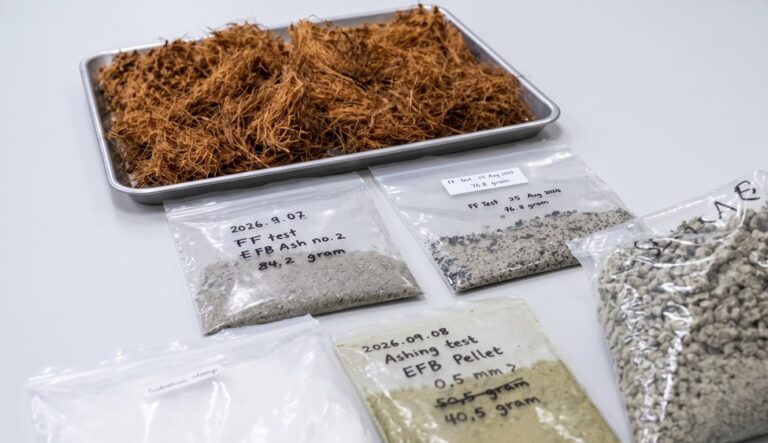
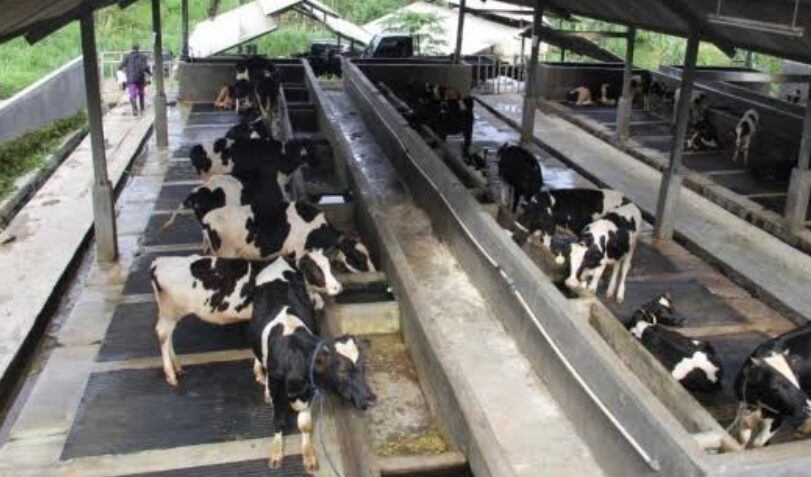
BANDUNG – A research team from Bandung Institute of Technology (ITB) has managed to further expand the versatility of palm oil by cracking its PFAD content that can be used to increase the productivity of cow’s milk in Indonesia.
It was revealed during a journalistic workshop on development and contribution of downstream palm oil industries to Indonesian economy, which was organized by Majalah Sawit Indonesia on 31 January – 2 February 2024 in Bandung, West Java.
Attended by 30 journalists, the workshop was also supported by the oil palm plantation fund management board (BPDPKS), the Indonesian Palm Oil Association (GAPKI), the Indonesian Palm Oil Council (DMSI), the Association of Indonesian Vegetable Oils Industries (GIMNI), the Association of Indonesian Biofuel Producers (APROBI), and the Association of Indonesian Oleochemical Producers (APOLIN).
During the occasion, Prof. Dr. Ir. Lienda Aliwarga, an expert on food processing technology from ITB, said that their research on the PFAD resulted in the production of calcium fat as a supplement in dairy cattle feed. The PFAD is a byproduct derived from the process of producing cooking oil from crude palm oil (CPO). The refining process of CPO can result in 4% PFAD.
“Without calcium fat, dairy cows’ milk production period will be just in short time. But if the dairy cows are given the calcium fat, their milk production period can be prolonged,” said Lienda.
According to her, the calcium fat from palm oil has a higher quality than that used by the European Union for their cattle farms. “We conducted a test to find out the quality of both our local calcium fat and the foreign one. Our test has proven that the quality of calcium fat from the palm oil is higher. With the calcium fat from ITB the productivity of dairy cows increased by 13-14% as compared to only 11% with the imported calcium fat,” said Lienda.
She is confident that with the calcium fat from palm oil, Indonesia can increase the productivity of dairy cows in the country. Based on data from the industry ministry, Indonesia has around 592,000 dairy cows, which can only fulfill 20% of domestic need for milk. It is still far away from the government target that in 2025 its local supply of fresh milk can meet 60% of the total local need of milk.
She said that the calcium fat from palm oil will be commercially produced in Indonesia for the benefits of cattle breeders in the country. “I thank Pak Sahat (Sahat Sinaga, Acting Chairman of DMSI) for linking us to the industrial side,” she said.
Lienda, who earned her Master’s degree in food technology from the Asian Institute of Technology, Bangkok, Thailand, also stated that very often cattle suffered from osteoporosis because of large amount of fat and calcium released through milking process. Even, often the dairy cows suffered from paralysis after giving birth several times. The supplement of calcium fat can increase the dairy cows’ milk productivity up to 5%-8%, accelerating the increase of their body’s weight after giving birth, increase their fertility by around 23.6%, and increase milk fat content by 0.2%-0.3%.
In Indonesia the use of supplement of cattle feed is still very minimal. But in other countries such supplement has been largely used as additional feed for cattle. There are various brand names of calcium fats used in Europe, such as Megalac (UK), Dairylac (UK), Agrofat (Denmark), Hajenol Lipicafent (Germany) and Profat (Netherland). (*)
Source: sawitindonesia.com