JAKARTA – The Indonesian Palm Oil Association (GAPKI) has targeted to increase Indonesia’s palm oil production to 100 million tons in 2045. Various efforts have been pursued, including by importing the pollinator insects, elaeidobius kamerunicus faust, from Cameroon, Central Africa.
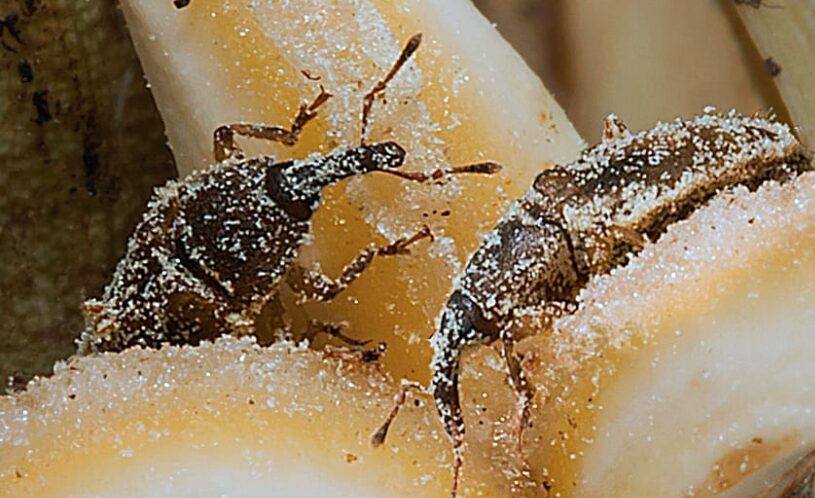
“To increase productivity of oil palm plantations, GAPKI with the support of plantation directorate general of the agriculture ministry and the oil palm plantation fund management board (BPDPKS) has started this year an exploration of new genetic resources of oil palm and will import pollinating insects from Africa. As we know, oil palm trees originate from Africa,” GAPKI Chairman Eddy Martono said during a ceremony to celebrate the 43rd anniversary of GAPKI in Ayana Midplaza Jakarta on Tuesday (27/02/2024).
Eddy said that the current pollinating insects that have been used in Indonesian plantations since the Dutch colonial era are no longer effective. “Our production is relatively stagnant during 2019-2022. Only in 2023 we saw an increase of 7.15% to 50.07 million tons as a result of the increase of plantation areas in production.”
“The current pollinating insects are those imported during the Dutch colonial era. If it rains even a little, they don’t want to go out. We want the type of pollinators who behave the opposite, when it rains they go out to do the pollination,” said Eddy.
“We’ve secured a collaboration to realize it. Hopefully, this year we can realize it with the support of the agriculture ministry and BPDPKS,” he said.
It is expected that by employing the new pollinating insects, Indonesia’s palm oil production can be raised by 5% in 2024 and up to 100 million tons in 2045. The production increase is needed to fulfill the rising local consumption of palm oil.
“We fear that if there is no increase of palm oil production, while consumption continues to rise, then we’ll see an increasingly worrying competition between the need for foods and for energy,” said Eddy. (*)
Source: sawitindonesia.com