JAKARTA – The Association of Indonesian Biofuel Producers (Aprobi) has stated that after 20 years of development, Indonesia’s bioenergy production has become the most advanced industry in the world.

“After 20 years of development, our bioenergy industry, especially the palm oil-based biodiesel, has now become the most advanced in the world,” Aprobi Deputy Chairman Catra de Thouars said in Jakarta recently.
He said that the progress of Indonesia’s bioenergy industry can be traced through the issuances of government regulations and their implementations, which have been fully supported by all stakeholders, particularly the palm oil industrial players.
After several years of research and development, Indonesia started production of biodiesel in 2008, with biodiesel 2.5% or the mixture of 2.5% palm oil and 97.5% diesel fuel. Initially, there was no mandatory program of biodiesel production. But then the government regulated it as a national program to solve many problems, from economic to environmental ones.
It has been upgraded in stages since the last 20 years ago. Now, the government has been implementing the mandatory program of biodiesel 35 percent (B35), which is a mixture of 35 percent fatty acid methyl ester (FAME) from palm oil and 65 percent fossil diesel fuel. This is the highest percentage of mixture and the most advanced in the world.
Catra stated that despite the fact that has been proceeding for the last 20 years, the Indonesian success story was not yet publicly known.
The Indonesian government has planned to continually upgrade the current B35 program to B40, B50 and event B100 program in the future. It is based on economic and environmental considerations.
Based on the 7th ASEAN Energy Outlook (AE07, global biofuel consumption will grow by 4.7 per cent per year until 2050, which is actually higher than the growth of oil consumption at 4.4 percent.
According to Catra, the bioenergy production consists of biodiesel, bioethanol, bioavtur, biogas and biogasoline. So far, the biodiesel and bioethanol have entered the commercial production, but the others have been actually ready for commercial production.
The ministry of energy and mineral resources’ (MEMR) reported that in terms of biofuel, Indonesia has become the world’s third largest producer after the USA and Brazil. Data from BP Statistical Review of World Energy 2022 shows that in 2021 USA produced 643,000 barrels of oil equivalent per day (boepd), followed by Brazil at 376,000 boepd, and Indonesia at 174,000 boepd.
Since last year, Indonesia has also started production of bioethanol 5.0 percent, which is mixed with fossil gasoline Pertamax with RON 95. State-owned energy company PT Pertamina started its commercial production and sells it under the name Pertamax Green.
In ASEAN, there are five countries which have started production of biofuel. They are Indonesia (as the largest producer), Malaysia, Thailand, Philippines, and Vietnam.
Indonesia’s success in developing its bioenergy industry was supported by the availability of palm oil as raw material, incentives, and business-friendly regulations which sets high standards, requires rigorous tests, and thorough supervision and evaluation of its implementation.
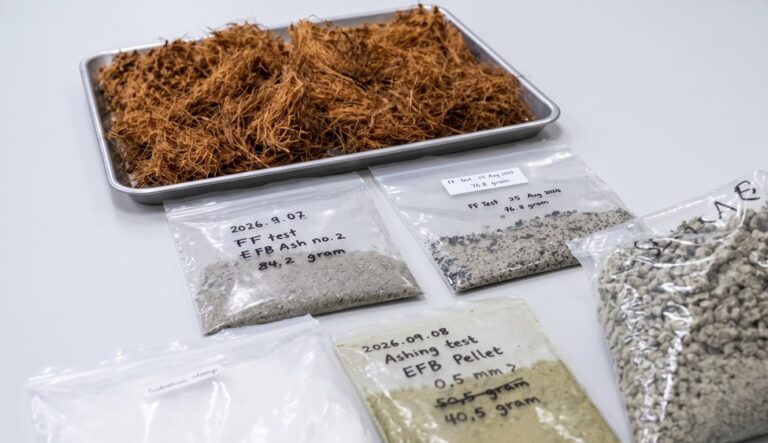
To diversify raw material away from just palm oil, and to avoid conflict of palm oil supply between foods and energy, the government is now conducting a research on the use of coconut and old oil palm trees as alternative raw materials for production of bioethanol.
The MEMR Acting Director General of New and Renewable Energy and Energy Conservation (EBTKE), Jisman P. Hutajulu said that the bioenergy plays a very important role in reducing carbon emissions as part of efforts to realize the net zero emission target in Indonesia in 2060.
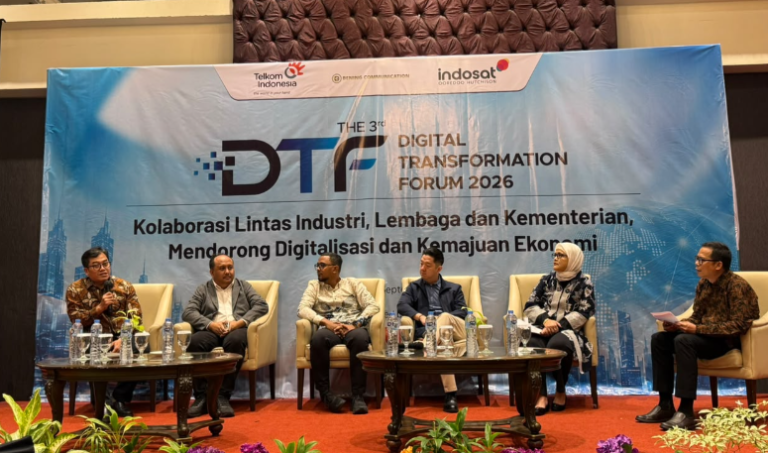
Speaking during a seminar on the challenges of bioenergy organized by Aprobi in Jakarta recently, Jisman Hutajulu said that in 2023 the renewable energy has contributed around 14 percent to the national energy mix, of which 7.7 percent was contributed by bioenergy.
According to him, in 2023 alone a total of 12.3 million kiloliters of biodiesel had been distributed under the B35 mandatory program. It saves foreign exchange at around Rp122 trillion and reduces greenhouse gas emission up to 132 million tons of CO2.
It helps Indonesia in realizing its green commitment set in Paris Agreement, which is a legally binding global treaty on climate change adopted by 196 countries, including Indonesia, at the United Nations Climate Change Conference (COP21) in Paris, France in December 2015. Under the agreement, Indonesia is committed to reduce greenhouse gas emission by between 31.89% – 43.2% with international assistance in 2030.
The economic coordinating ministry’s Deputy in charge of foods and agribusiness coordination, Dida Gardera said that Indonesia targets to realize the use of biodiesel up to 18 million kiloliters by 2030, as part of efforts to realize its target of enhanced nationally determined contribution (NDC) to reduction of carbon emissions.
He said that the bioenergy program is also part of Indonesia’s energy transition program to wean the national economy from its reliance on fossil fuels and moving to a green economy with zero emission. “Besides biodiesel, our palm oil can be also processed into bioavtur for airplanes. This is a very prospective business. Or we can produce bioethanol from sugarcane. We can maximize the raw material needed for this bioenergy production. I think before 2045, when we expect to reach Golden Indonesia, we can achieve our self-sufficiency in energy,” Deputy Dida said when addressing the seminar on national energy transition in Jakarta on Wednesday (06/03/2024). Benget Besalicto ST