JAKARTA – An European documentary film titled “Palm Oil In The Land of Orangutans”, which presents a factual report on oil palm plantations and orangutans, has premiered recently in Copenhagen, Denmark.
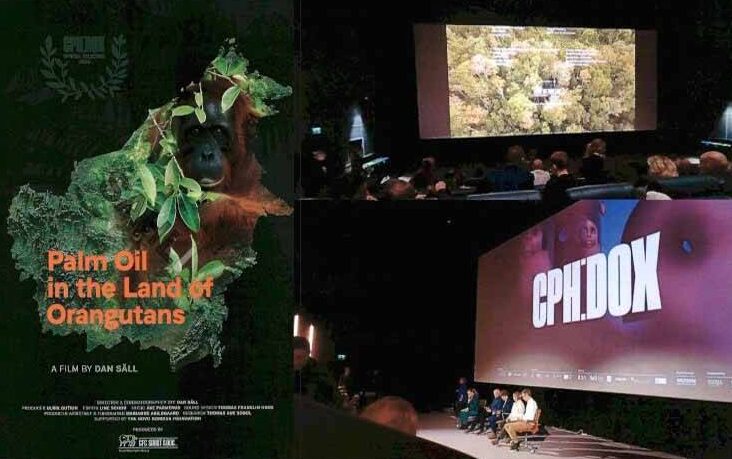
The film has changed the perception of the European people on the oil palm plantations from initially negative perception to neutral and finally positive ones. The documentary movie, which has the runtime of 72 minutes and is directed by Dan Sal as director and Ulrik Gutkin as producer, has been premiered in Copenhagen, Denmark.
The Oil Palm Plantation Fund Management Board (BPDPKS) said in its press release issued on Wednesday (03/04/2024), possibly the ‘Palm Oil in The Land of Orangutans’ film is the first among European films which describe Indonesian palm oil industry objectively. The film has become an information oasis amid the massive negative campaigns against the palm oil industry.
“This film has given a positive contribution to Indonesian palm oil industry in EU (European Union), especially in Denmark,” Indonesian Ambassador to Denmark, Dewi Savitri Wahab said in a press statement in Copenhagen on Sunday and published by bpdp.or.id on Tuesday (02/04/2024).
The Ambassador said that the ‘Palm Oil in The Land of Orangutans’ film tells about the journey of the Internasional Copenhagen Zoo’s Program Director Carl Tareholt to Indonesia. Tareholt visited an oil palm plantation owned by Denmark company United Plantation, which is located in Pangkalan Bun, Central Kalimantan.
United Plantation has conducted a forest rehabilitation by providing forest corridor of 318 hectares that link the oil palm plantations with the protected forests around Tanjung Puting national park.
It is mentioned in the film that the forest corridor has increased the number of species utilizing the corridor, which include various birds around the plantations.
Besides, the forest corridor has also managed to maintain the colony of other species, including mice, snakes, and pigs. It has even become a habitat for orangutans.
“A footage from the CEO of Copenhagen Zoo says that he was initially skeptic on the palm oil industry, but then he realized that the industrial agriculture can coexist productively with the environment,” said Dewi.
Dewi stated that the film has also revealed the economic and social aspects of the palm oil industry. Many smallholders in Indonesia saw their public welfare lifted after joining the plantations with the system of core-plasma plantations under collaborations with private companies.
“This film promotes efforts to implement the principles of sustainability in Indonesia’s palm oil industries,” she said.
Indonesian embasy (KBRI) in Copenhagen, Copenhagen Zoo, and the film producer have agreed to promote the film among wider society.
Dewi hopes that the film will significantly contribute to the efforts of countering the negative campaigns against Indonesian palm oil industry in EU, including in Denmark. (*)
Source: borneonews.co.id