Two non-governmental organizations (NGOs) Auriga Nusantara and Satya Bumi have recently made a controversial statement that the biodiesel production in Indonesia was subsidized by the government and the subsidy was only given to a certain groups of conglomerates due to their lobbying efforts. Previously, there have been others, including the European Union (EU), which echoed such ambiguous statement. They all seem unable to draw a clear line between subsidy and incentive.
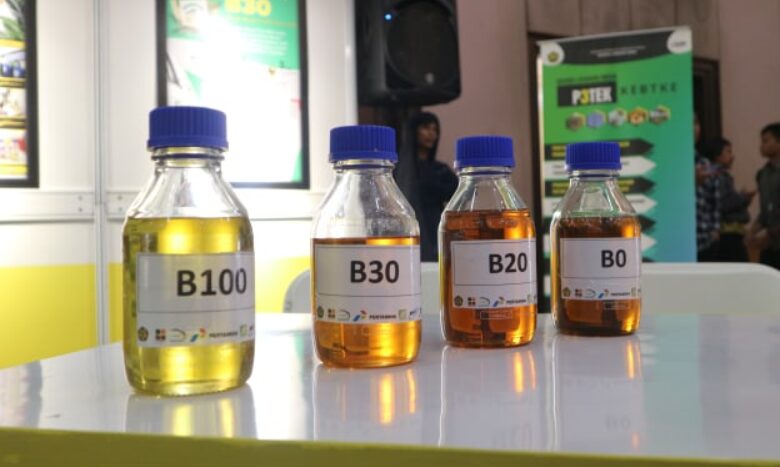
It is true that Indonesia had initially subsidized the biodiesel production. But it is just a normal case as many countries of EU and the USA also provide subsidy for their biodiesel production. The subsidy was needed as a temporary step to help grow the infant industry, whose development was badly needed to strengthen Indonesian economy through energy and palm oil sectors. Without the subsidy, there will be no company interested in producing the biodiesel, which is a mixture of fossil diesel fuel and fatty acid methyl ester (FAME) from palm oil.
While lauding Indonesia’s steps to produce biodiesel since 01 January 2009, many global analysts, including London-based Godrej International Analyst Dorab E Mistry and LMC Analyst James Fry, said the Indonesian government has to initially provide subsidy to help grow the infant industry. “Europe and the USA initially developed their biodiesel industries by providing subsidies and tax incentives to both biodiesel producers and consumers,” said James Fry during the Indonesian Palm Oil Conference and Market Outlook 2009 in Nusa Dua, Bali.
Dorab said that the Indonesian government had taken the right step in implementing the biodiesel production. “Facing weakening exports, the biodiesel production is the best solution for Indonesia to help its palm oil industry. But developing biodiesel industry takes time and demands serious efforts from the government. It needs to design a strategy to accelerate its growth,” Dorab said during the same occasion.
As part of its strategy to grow the biodiesel industry, later in 2014 the government decided to change the biodiesel subsidy policy with incentive policy. It established a special institution called the oil palm plantation fund management board (BPDPKS), which is assigned to collect export levies from palm oil producers and exporters and manages the fund for the interest of palm oil industries, including the biodiesel production. Since then the biodiesel production was supported with incentives provided by the BPDPKS by using the so-called palm oil fund collected from palm oil exporters, and the government stopped subsidizing the biodiesel.
Based on data from BPDPKS, during the period of 2015-2023 BPDPKS collected palm oil fund at the total Rp217.8 trillion. During the same period, its spending reached Rp176.1 trillion, of which Rp160.8 trillion or 91.3% was paid as incentives for biodiesel producers, who are also palm oil producers and exporters.
The incentive payments have nothing to do with those referred to by the two NGOs as politically exposed persons (PEP), who happen to be employed by the biodiesel producers in their companies. The incentives are merely designed to compensate the spread between the market price index of biodiesel and fossil diesel fuel, which fluctuates according to the market price of biodiesel and fossil diesel fuel, and to push up the growth of biodiesel industry.
With such goals, the government has to select the producers based on their financial capability and production capacity. All of them have their own plants which can be sustainably supported with CPO as feedstock to produce biodiesel.
It is due to the incentives that the biodiesel industry in Indonesia is growing and enabled the government to gradually upgrade the implementation of biodiesel mandatory program from B10 to B20 to B30 and to the ongoing B35 program since 2023. Without the incentives, the biodiesel price will follow the market price, which could be much higher and unaffordable for public consumers and end up causing a failure to the biodiesel industry.
It is worth mentioning that the history of biodiesel production in Indonesia was driven by public necessity to resolve a number of urgent problems. Initially, in 2006 it was driven by Indonesia’s surging financial problem caused by rising import of oil amid the high prices of oil, reaching more than US$100 per barrel at the global market. Becoming an oil importer after once enjoying the windfall of high oil prices as a major oil producer and exporter and a member of OPEC in the past, the country turned to the biodiesel as a solution to resolve the energy problem.
It was found that palm oil is the most efficient feedstock to produce the biodiesel if compared to a number of other potential raw materials, which include jatropha curcas, sugarcane and cassava. As the world’s largest producer and exporter of palm oil, in 2023 alone Indonesia’s production of crude palm oil (CPO) reached 50.07 million tons with a total plantation acreage of 16.38 million hectares, of which around 41% owned by smallholders and the rest by plantation companies.
Then several years later Indonesia was facing a problem of palm oil oversupply at domestic market, which was mainly caused by market restrictions through tariff and no-tariff barriers applied by EU at the global market. The oversupply condition had resulted in very low prices, while a large portion of smallholders’ palm oil was not absorbed. Due to the biodiesel mandatory program, local absorption of CPO increased, sending palm oil prices up at both local and global markets.
It turned out that the biodiesel program had lifted the domestic demand for crude palm oil (CPO), raising the prices of fresh fruit bunches from smallholders while resolving the problem of palm oil oversupply at the global market.
Reflecting on those consecutive successes, the government then decided to extend the goal of the biodiesel mandatory program to reduce carbon emissions, while improving Indonesia’s energy security and sovereignty. The reduction of carbon emissions has been included as part of efforts to realize Indonesia’s target of net zero emission in 2060 as its contribution to the global endeavour to solve the problems caused by climate change.
Apparently, the biodiesel program has proven that by looking inward to find solutions, Indonesia has not only managed to solve its economic problems—from energy to trade balance and to palm oil, but it has also enabled the country to robustly move forward with the production of other kinds of biofuel—biogasoline, bioavture and biogas, while pushing the implementation of its down-streaming program further to the next better and stronger level. Benget Besalicto ST