The international campaigns Indonesia and many other developing countries have launched over the past two years against the European Union Deforestation-free Regulation (EUDR) on imports of agricultural commodities will probably be successful.
The EUDR, scheduled to be implemented on Dec.30 this year, would probably be postponed due to the stronger opposition not only from developing countries but also from Europe itself and the United States. EUDR is a key element of the European Green Deal, a set of policy initiatives adopted by the European Commission in 2021 to make European Union (EU) climate-neutral in 2050.
The latest and strongest opposition was expressed by 29 associations of European traders, farm producers, civil society organizations and even newspaper publishers on Sept. 25, demanding that the EUDR implementation be delayed and the necessary compliance tools are fully provided with sufficient time to prepare adequately.
Included among the organizations that made the demand in a joint statement issued in Brussels are the COCERAL association of traders of oil seeds, cereals, olive oil, oils and fats, and animal feed; Copa-Cogeca farmers and agri-cooperatives; CEPF forest owners; ELO landowners; the EUSTAFOR state forests association; and ENPA newspaper publishers.
“Already now, companies are facing paralyzing uncertainties when negotiating contracts for next year. In consequence, serious market disruptions can be expected, which would severely harm European primary producers and in consequence, serious market disruptions can be expected. This would severely harm European primary producers and downstream industries and would threaten supply chain security, reduce market access to vital EU food, feed, and forest products,” the joint statement asserted.
Over the past year, operators and traders around the world have voiced concerns about the EUDR’s practical feasibility and many trade associations have even criticized the regulation as a discriminative trade policy especially against developing countries.
On Sept. 23, Reuters carried a commentary by Afiq Alias from London that says, among other things, that the EUDR would create a hazy trade future and even risk leading to a scorched-earth policy. The article cited the US, China, Brazil, Australia; several EU countries such as Germany, Italy and Sweden; and African countries among the strong critics that had been demanding the postponement of its implementation.
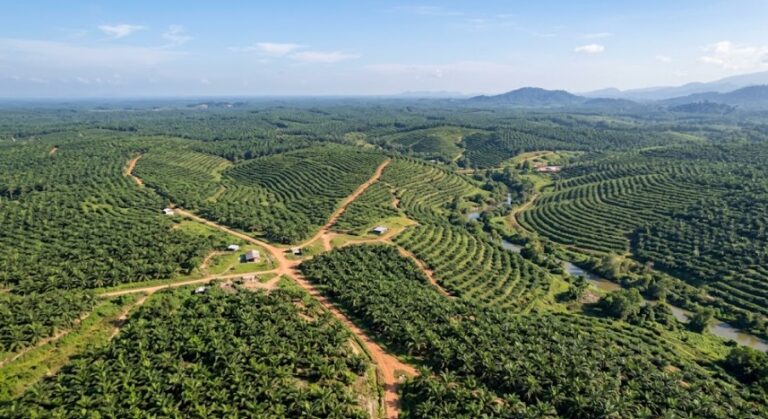
Certainly Indonesia, the world’s largest producer of palm oil and a major producer of rubber, timber, cacao and coffee would most likely be the most adversely affected country by the EUDR.
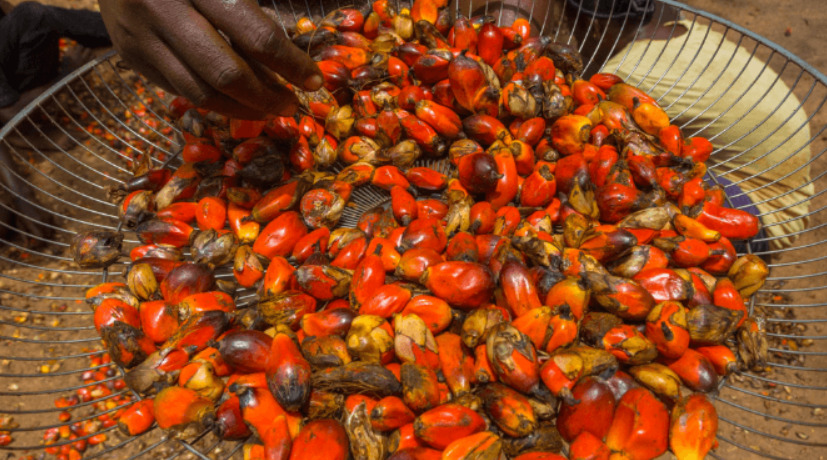
The EUDR will be imposed on agricultural commodities, namely timber products, cattle, palm oil, soybean, coffee, cacao, and natural rubber. But vegetable oils such as rapeseed, sunflower, linseed, olive oil and others that are widely produced in EU are exempted from the regulation.
Even now, according to the Reuters commentary, the EU is already facing the risk of shortages of several key commodities. For example, several companies have begun hoarding coffee. The latest export data shows Indonesian palm oil exports to Europe have dropped by 37 percent since the start of the year.
Under the rules of the Geneva-based World Trade Organization, rapeseed oil, sunflowers oil, olive oils, linseed oils and other edible oils are all agricultural commodities similar to vegetable oils that must be treated equally without discrimination. Nevertheless, palm oil has been exclusively singled out from among all vegetable oils subject to the EUDR.
The EUDR will prevent goods that can be traced to deforested land from entering the bloc. But the Reuters commentary argued that the EUDR would create a complex, and possibly hard-to-enforce, set of requirements. Farmers would have to provide location coordinates of their plot of land to be checked against satellite imagery by a European customs officer. Adding bureaucracy into a largely informal market will be expensive and time-consuming.
The biggest concern of the Indonesian government and the Indonesian Palm Oil Association (Gapki) is that to prove the legality and deforestation-free status of products, the producers, including smallholder farmer cooperatives, have to conduct due diligence consisting of producing dozens of sets of information. Smallholder farmers own about 40 percent of the country’s 16.5 million hectares oil palm estates.
However, the encouraging news about the possible deferral of enforcement of the EUDR green policy should not make the government complacent with regard to the prevention of deforestation. We should magnanimously acknowledge that the government, the private sector as well as farmers should demonstrate stronger resolve to maintain and subscribe to sustainability standards in natural resource development and management.
The most likely deferment of the EUDR implementation demonstrates the shortcomings of the EUDR legislative process, notably in engaging the affected parties, particularly domestic users and producing countries. It also showcases failure to understand coherently the potential repercussions and unintended impacts of the regulation on EU manufacturers and processors.
The postponement is now inevitable due to various factors, but the most important issue is the unpreparedness of the EU bureaucracy to enforce the law without clear guidelines. The delay will allow producers and consumers alike to better adapt to and comply with much clearer mechanisms and requirements.
The EUDR is seen as one of the most controversial laws under the European Green Deal because of the severity of its impacts on the producing countries, which were not properly engaged or consulted. Subsequently, the affected EU manufacturers and users were either unaware or belatedly learned about of the implications of the regulations and raised their opposition when the law was about to be enforced.
We would like to see the European Green Deal a success as an exemplary showcase to have a positive and tangible impact on the global movement in fighting climate change. However, such a noble cause must be pursued in alignment with global commitments, notably the Sustainable Development Goals (SDG) and the principles of fair and free trade in order to secure global support.
Learning from the EUDR, it is necessary that the policymaking process be done in more prudent and consultative fashion. Edi Suhardi, Sustainability analyst)
Source: theJakartapost.com