JAKARTA – The Indonesian Palm Oil Association (GAPKI) Chairman Eddy Martono said that Indonesian palm oil industry is facing various challenges at the domestic and international markets.
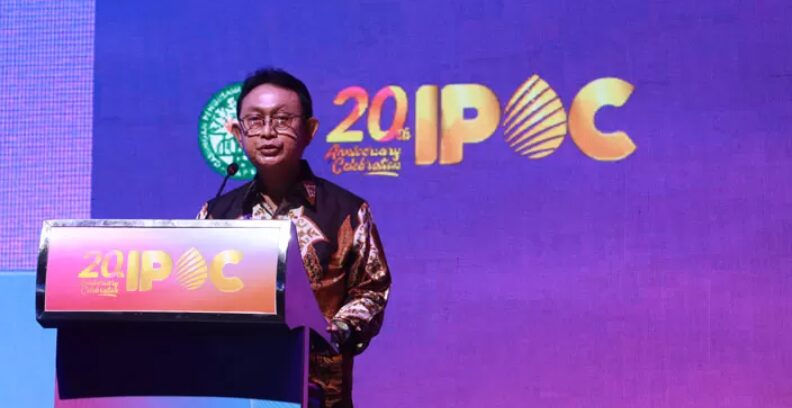
He said the challenges were resulted from the global uncertainty potentially caused by food and energy crisis, and trade barriers imposed by importing countries such as the European Union Deforestation-Free Regulation (EUDR).
“GAPKI hopes the government will help the palm oil industries to tackle the challenges through its business-friendly policies to support the palm oil industry which is the top industry in Indonesia and plays a very strategic role in the the national economy,” Eddy said during the opening ceremony of the 20th Indonesian Palm Oil Conference and 2025 Outlook with the theme “Seizing Opportunities Amidst Global Uncertainty” in Nusa Dua, Bali, on Thursday (7/11/2024).
Eddy also said that they are ready to support the new government under President Prabowo Subianto in taking prudent steps to maintain the global competitiveness of Indonesia’s palm oil industries as the source of foods and renewable energy envisioned in its “Asta Cita” as part of the vision and mission of “With Joint Steps Indonesia Advances Toward Golden Indonesia 2045”.
Eddy further said that domestic challenges, namely stagnant production of palm oil during the last few years as a result of the slow implementation of replanting program for smallholders’ palm plantations that are already mature.
Actions need to be implemented soon include the improvement of practices of sustainable production, synergy among the palm stakeholders, and acceleration of replanting program implementation for smallholders’ palm plantations.
“It’s especially needed to support the mandatory program of biodiesel production by the government as it has planned to upgrade the current biodiesel program from B35 to B40 in 2025 and B50 in 2026, without disrupting the needs for foods and exports,” he said.
In addition to that, Eddy said that it’s urgent now for the advocacy of free and fair trade, as every trade barrier will increase industrial burden and costs. He said that as of August 2024, production of palm oil reached 34.7 million tons. During the same period the exports, including biodiesel and oleo-chemicals, reached more than 20.1 million tons. The exports contribute income in foreign exchange at around US$17.349 million dollars for Indonesia. Domestic consumption was reported at 15.6 million tons.
“But the performance was lower than that of last year. During the same period last year, the production of palm oil reached 36.2 million tons, exports 21.9 million tons, and the export value exceeded US$20.597 million dollars,” he said.
During the same occasion, the 20th IPOC Organizing Committee Chairperson Mona Surya also mentioned the national and global challenges facing Indonesian palm oil industries. “Global economy is facing a number of challenges, including high inflation, geopolitical conflicts in Ukraine and the Middle East and trade regulations by importing countries. Those challenges have created a global uncertainty. Our palm oil industry is not free from the global challenges,” she said.
“We’ve experienced volatilities of prices and stagnant production in producing countries, trade barriers and regulations such as the EUDR. But our national regulations should continue playing a strategic role in directing and developing our palm oil industries toward reaching higher competitiveness,” she said.
Mona said that along with the development of palm oil, the IPOC has increasingly gained more global attention as global forum of palm oil discusssions. Adopting the theme of “Seizing Opportunities Amidst Global Uncertainty,” the 20th IPOC and Outlook 2025 was attended by 1,509 participants from 24 countries, which have become a new record during its history of 20 years. (*)