JAKARTA – The Indonesian oil palm industry players have urged President Prabowo Subianto to immediately establish a special palm oil board, which is authorized to single-handedly manage the country’s palm oil industries from upstream to downstream sectors.
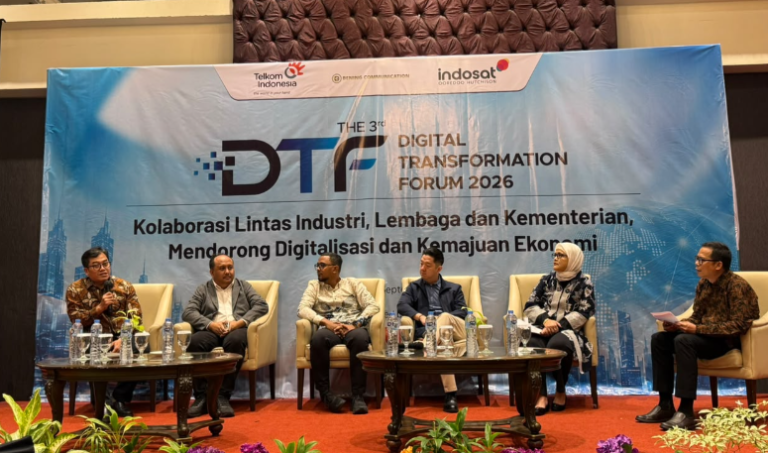
The palm industry players submitted such request to the new government during a public discussion entitled “A Thorough Analysis of Sustainable Palm Oil Governance” held by the Agricultural Journalists Forum (Forwatan) at the office building of Ministry of Agriculture (Kementan) in Jakarta on Thursday (19/12/2024).
The discussion was also addressed by the Indonesian Palm Oil Council (DMSI) Chairman Sahat Sinaga, the Indonesian Palm Oil Association’s (GAPKI) Plantation Division Head R. Azis Hidayat, the Association of Indonesian Oil Palm Smallholders’ (Apkasindo) Secretary General Rino Afrino, Forestry and Plantation Law Expert Sadino, and Acting Director General of Plantations (Ditjenbun) of the Ministry of Agriculture, Heru Tri Widarto.
Sahat underlined the importance of the special palm oil board to realize the food and energy vision of President Prabowo Subianto, especially in terms of reaching self-sufficiency in foods and energy.
“President Prabowo has stated that we need to realize our national energy and food security. If given full authority, the special board of palm oil will help us to realize it and also to resolve problems related to governance issues,” said Sahat.
According to Sahat, currently too many ministries and institutions are assigned to manage the palm oil industries from upstream to downstream. Such condition has led to overlapping authorities and regulations, hampering efforts to resolve governance issues in the industry.
“What makes it difficult is, here they say A, there they say B. That’s the view of many people, in the end it never gets resolved. That’s the problem we have to deal with in the palm oil industries,” said Sahat.
He said that such overlapping issues can be resolved with the establishment of the special palm oil board. “The special board will also accelerate the realization of our food and energy self-sufficiency in this country,” he said.
Azis added that in fact the expert team from the three presidential candidates during the campaign period had agreed to establish a special palm oil board that would handle all palm oil affairs, from upstream to downstream.
Then, the Ombudsman has also proposed that public services in the palm oil sector should be more focused and directed. “The Ombudsman itself has conducted a comparative study of MPOB (of Malaysia) last month and made their proposal based on its study,” he said.
This is because currently there are 37 ministries and institutions that manage the palm oil sector, and each has different views and policies. “If we face lawsuits, they are also mixed and sometimes when they are invited, the ones who come are different, not the directors. Such is the condition we’re dealing with. As a result, our problems, including those concerned with the lawsuits at the WTO ended up being unresolved,” he said.
“Now there is BPDPKS (oil palm plantation fund management board). Maybe later we’ll only need to improve it further to cater to our industrial need,” said Azis.
Sadino said that the establishment of the special board, whatever its name, will accelerate the efforts of resolving the current problems in the palm oil sector. “It means that with the existing of the special board, the palm oil management can be made more efficient and more effective, especially in tackling the chaos and all problems resulted from overlapping authorities and regulations,” he said.
According to him, if the palm oil sector is managed by a special board with full authority and is directly under President, then regulations will not be considered as something absolute or a “holy book”. “We can see such legal problems between the ministry of agrarian and spatial planning/ national land agency (ATR/BPN) and ministries of environment, forestry and trade,” he said.
During the same occasion, Rino said that in the past two weeks, they have held technical discussions with one of the ministries regarding the formation of a special palm oil board and sought to convey the discussion results to President Prabowo.
“Our goal is to let the President know the importance of establishing the special board. One of the important points discussed was whether the formation of this board will increase state income. So, the formation of this special palm oil board is not just to respond to complaints, but more about whether it will be able to increase state revenue from the palm oil sector,” he said.
“I think if the industry is well organized, with better data validation, of course, the optimization of this sector will be easier to do. And the most important thing is state revenue,” said Rino.
According to him, the state income from the palm oil sector can increase two to three times from the current level. This shows the great potential that has not been fully tapped so far.
Meanwhile, Heru emphasized the importance of palm oil management in accordance with existing regulations. He emphasized the need for more effective socialization of the rules and obligations of business actors, including those regulated in Permentan Number 18/2021.
“Maybe our weakness so far is concerned with the fact that we haven’t yet properly socialized the FPKM obligations. Even though after we opened it yesterday, many have finally submitted to us to be recognized by Permentan 18/2021,” he said.
Heru said that the Directorate General of Plantation has also begun evaluating company compliance with the rules, especially regarding the obligation to allocate 20% of their own plantations for development of smallholders’ plantations (FPKM).
In an effort to support the sustainability of the palm oil sector, the Directorate General of Plantations is targeting the development of e-STDB (Electronic Cultivation Registration Certificate) of 250 thousand data by 2025. Heru said this program is important to meet export standards to the European Union (EU).
“And because of budget constraints, I have proposed to BPDP that our target for e-STDB is 250 thousand hectares next year. We calculate it based on the proportion of exports to EU,” said Heru. (*)