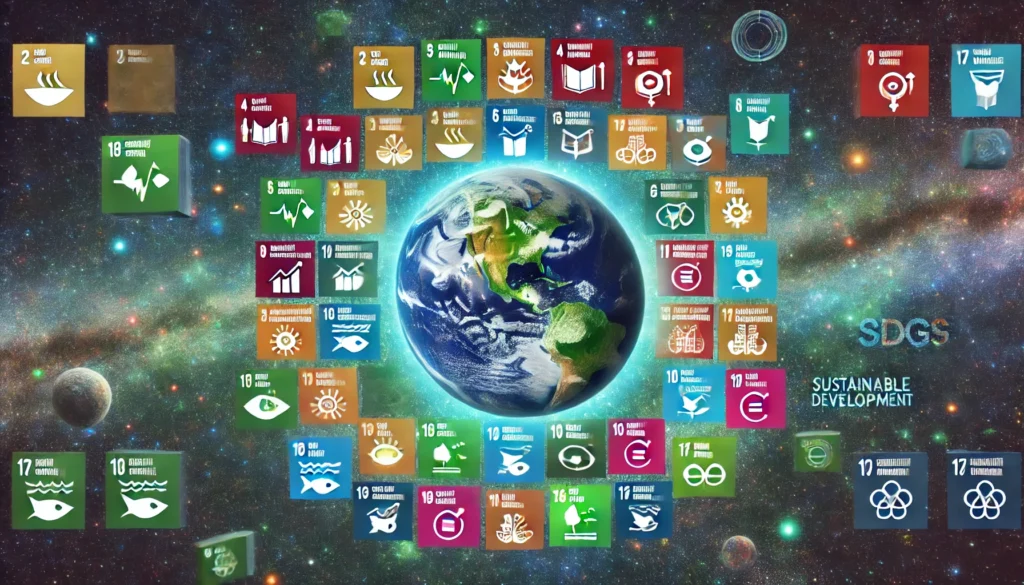
JAKARTA – Sustainable Development Goals (SDGs) is a global platform of development initiated by the United Nations (UN) in 2015. As a member country of UN, Indonesia has also ratified the SDGs and is committed to realizing the SDGs during 2015-2030 period. The collaboration of palm oil industries and SDGs has been proceeding naturally. In this article, it will be explained how palm oil and SDGs can become a globally acknowledged platform of development.
RI’s Commitment To Realize SDGs
The Indonesian government’s commitment to contribute to the efforts of achieving the SDGs is contained in the Presidential Regulation (Perpres) No.59/2017 and Perpres No.111/2022 on achieving sustainable development goals, and other implementing regulations at national and regional levels.
Palm Oil Industries and SDGs
Not only at the level of government (central and regions), the SDGs are also expected to be achieved by other industrial sectors in Indonesia. The palm oil industry as one of the strategic industries in Indonesia also needs to proactively position itself as part of solution in achieving the goals set in the SDGs at the national and global levels.
The palm oil industry has also shown its commitment to achieve the SDGs through the system of Indonesia Sustainable Palm Oil (ISPO) certification. The presidential regulation no.44/2020 (Perpres no.44/2020) on certification of Indonesian Sustainable Palm Oil (ISPO) is aimed to complement the prevailing regulations and accommodate the dynamics of global market and adopt the values set in the SDGs. The adoption of SDGs into the Perpres has shown that the governance of palm oil industries in Indonesia has been on the right track toward achieving the SDGs.
Research On Palm Oil Contribution and SDGs
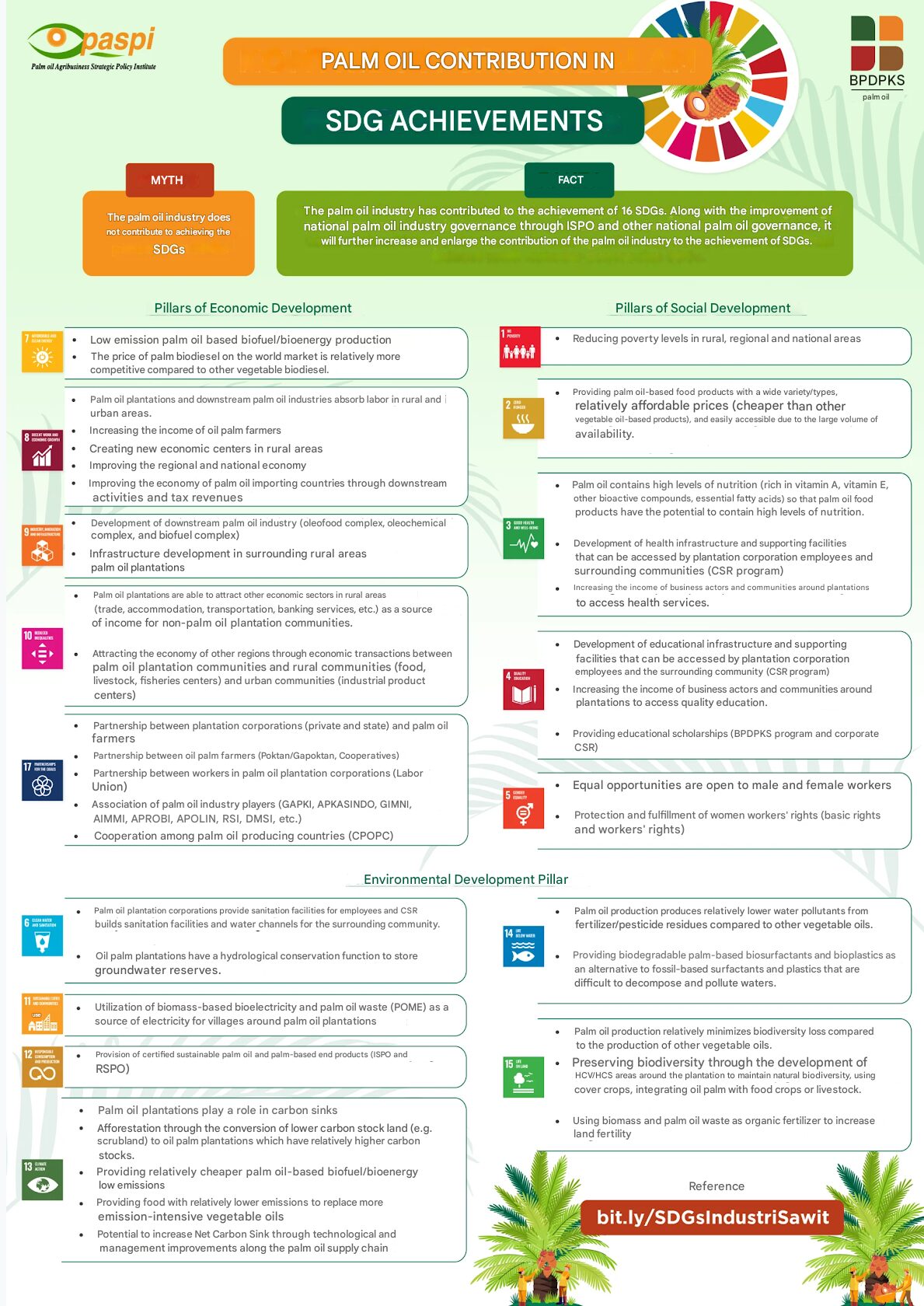
Based on empirical studies already published at national and global levels, the palm oil industries have significantly contributed to the achievement of 16 points of SDGs in the development pillars of economy, social and environment. In economic pillar, the palm oil industries have contributed to the achievement of SDG-7 (Affordable and Clean Energy), SDG-8 (Decent Work and Economic Growth), SDG-9 (Industry, Innovation, and Infrastructure), SDG-10 (Reduced Inequalities), and SDG-17 (Partnership for the Goals).
Palm Oil Contribution in Social and Environment
The palm oil industries have also contributed to the achievement of the SDGs’ pillar of social development, which covers SDG-1 (No Poverty), SDG-2 (Zero Hunger), SDG-3 (Good Health and Wellbeing), SDG-4 (Quality Education), and SDG-5 (Gender Equality).
Besides, the palm oil industries also contribute to the achievement of SDGs’ pillar of environmental development which covers SDG-6 (Clean Water and Sanitation), SDG-11 (Sustainable Cities and Communities), SDG-12 (Responsible Production and Consumption), SDG-13 (Climate Action), SDG-14 (Life Below Water), and SDG-15 (Life on Land).
Conclusion
The contribution of Indonesia’s palm oil industries in achieving the SDGs can also be adopted as an inspirational story that can be used in advocacy narratives and promotion of the positive values of palm oil. By relating the palm oil industries with SDGs as globally-acknowledged platform of development, the positive benefits of palm oil industries should draw global attention and become more acceptable at the global market. (*)
Palmoilina.asia. https://palmoilina.asia/berita-sawit/sawit-dan-sdgs-kontribusi/. Sawit dan SDGs [Artikel Infografis 2024]. Juni 28, 2024