JAKARTA – The unilateral actions of Indonesian Forestry Enforcement Task Force (Satgas PKH) in confiscating millions of hectares of oil palm plantations without dialog and field verifications are potential to worsen Indonesia’s investment climate and even destabilize the country, a palm oil analyst from Bogor University of Agriculture (IPB University) said.
IPB Palm Oil Study Center Head, Prof. DR. Budi Mulyanto made the statement recently in commenting on the actions of Satgas PKH to take over millions of hectares of oil palm plantations, which are considered to be located at forest areas. He warned that taking unilateral actions without dialog with related stakeholders and without field verifications are potential to destabilize the country.
“What will be the impacts, if lands confiscated? I’ve been talking about this since 2001. If the legal status of lands is not certain, then it could trigger conflicts, looting, and social unrest. If such case turns massive, then it will affect economy, politics, and national security,” he said in a press statement on Friday (2/5/2025).
According to Budi, land control and ownership in Indonesia needs legal certainty and clarity. “The task force should not just take repressive actions. Confiscating lands without first conducting dialogs with related stakeholders and field verifications will be just counter-productive, creating uncertainty, hindering investments, and worsen Indonesia’s rating of Ease of Doing Business,” he asserted.
He said that the process of determining forest areas should comply with the procedures stipulated in the law (UU) No.41/1999, which include appointment, arrangement, mapping, and physical verification on the field.
“Map from satellite images is only initial description. Without field verification, certain people could become victims as their lands are labelled illegal despite the fact that the lands have been operated as plantations or residential areas. Their lands could be seen encroaching forests although they are not located in forest areas,” said Budi.
According to Budi, land control and ownerships are very important for the public and the state. “Certified lands will make it easier for the government to collect taxes, manage land use, and create space for investments. Legality of land control and ownerships is the key to social stability and national security. The legal certainty of lands is the absolute requirement to attract investments,” he said.
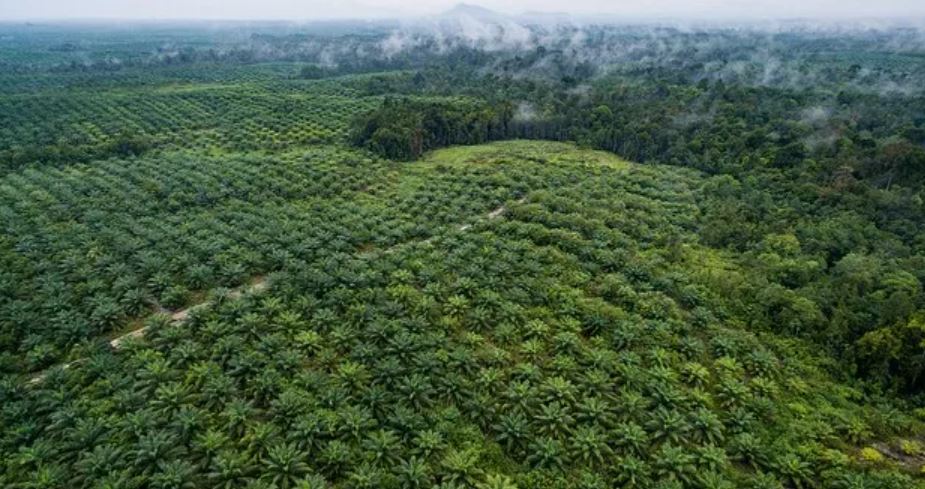
He questioned why Satgas PKH seemed like only targeting the palm oil sector, although the oil palm plantations seen encroaching into forest areas are only around 3.4 million hectares, as compared to the fact that around 31.8 million hectares of forest areas have changed function to residential areas, transmigration sites, schools, airports and seaports, and others.
“Once I heard that an elementary school in Riau province could not be certified because being located at forest area. It’s not fair,” he said.
Budi urged the government to quickly conduct a comprehensive review of forest demarcation in a participative and fair manner.
He also proposed that lands already unforested should be utilized for productive agriculture or redistributed to the public under cooperative basis with legal certainty.
“We should dare to get out of old paradigm. The map could be wrong. Do not take documents as absolute truth,” he said.
As a former official of the Investment Coordination Board (BKPM), Budi reminded that foreign investors have often cancelled their investments because land status in Indonesia is not clear. “It’s different from the condition in other countries like Vietnam, where they offer lands with clarity and certainty of legal status,” he said.
He said that Indonesia should not be worried over international pressures as long as its reformation process is implemented transparently, scientifically, and based on the principles of fairness. “As long as we have valid data and open process, we don’t need to worry. Indonesia is a sovereign country,” he said. (*)