JAKARTA – The government has been continually strengthening its synergy with the industrial sectors in dealing with the forest and land fires (Karhutla), particularly in fire-prone regions like West Kalimantan (Kalbar) province. One of its strategic partners is the Indonesian Palm Oil Association (GAPKI), which has been recognized by the government as national model and pro-active in mitigating the risks of Karhutla cases.
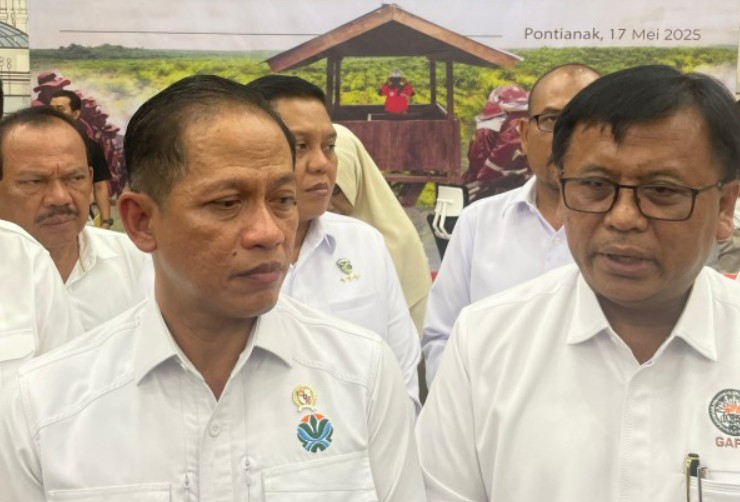
Environment Minister Hanif Faisol Nurofiq made the statement when attending a consolidation meeting on preparations of forest fire control in West Kalimantan province. He said that West Kalimantan needs serious attention as it has 57 hotspots, which are the largest one in Indonesia.
“West Kalimantan has quite high potential to see forest fires. That’s why we need to strengthen our collaboration there with all stakeholders, especially with GAPKI,” said Hanif.
He said that considering the vast area and complexity of West Kalimantan’s geography, the success of tackling the Karhutla cases there is highly determined by preparations in regions. “Therefore, we need to continually strengthen our inter-sectoral collaborations,” he said.
During the occasion, GAPKI Secretary General M. Hadi Sugeng confirmed the commitment of GAPKI’s member companies in facing the incoming dry season and in making preparations to tackle the Karhutla.
“All member companies of GAPKI are obliged to implement standby protocol and involve the general public in their programs of preventing and extinguishing forest and land fires,” he said.
Hadi Sugeng also underlined the importance of cross-sectoral cooperation in tackling the Karhutla cases in Indonesia. “Although not all palm oil companies operating in Indonesia are grouped in GAPKI, we invite all of the industrial players to collaborate to prevent Karhutla,” said Hadi in a press statement on Wednesday (14/5/2025).
According to him, until now a total of 752 member companies of GAPKI have applied the required standards in preventing and tackling the Karhutla cases. Besides socialization among the public, GAPKI has also conducted trainings and certifications of manpower, use of technology such as drone with a flight range of more than 30 kilometres, weather modifications, and preparations of facilities and equipment units according to established standards.
“Our member companies have been equipped with adequate equipment, ready to use, and regularly maintained. They also comply with all prevailing regulations,” said Hadi.
Addressing the meeting on behalf of Kalbar governor, Regional Secretary Harrison said the province has a total 14.7 million hectares of plantations and 8.32 million hectares of forest areas. The province has a total of 2.67 million hectares of peat ecosystem, which is the fourth largest in Indonesia after Papua, Riau, and Central Kalimantan.
“With such characteristic, West Kalimantan is categorized as prone to Karhutla cases. In tackling the Karhutla, the government could not work alone. We need the support of the public and all stakeholders, such as the self-sufficient peat care village group, fire care community, fire care farmer group,” said Harrison.
According to him, the provincial government (Pemprov) of Kalbar has taken a number of steps to mitigate the forest fire risks, ranging from weather modifications to strengthening of collaborations with TNI/Polri, BPBD, BMKG, and business players. (*)