JAKARTA – The government has again reaffirmed its commitment to strengthen the sustainability of palm oil by issuing a new presidential regulation, Perpres No.16/2025, which expands the obligation of Indonesian Sustainable Palm Oil (ISPO) certification from just upstream palm oil industries to downstream palm oil industries, including bioenergy.
The government’s new policy marks its latest step in complying with the global demand for sustainable palm oil, which is more ecofriendly, more transparent, and more accountable.
“ISPO is not just a label. It is a system that is aimed to ensure the palm oil business is implemented in a proper manner from the perspectives of economy, environment, socio-culture, and prevailing regulations,” said Ratna Sariati, Head of the Substance Group for Implementation and Supervision of Plantation Product Quality at the agriculture ministry (Kementan) on Friday (6/6/2025).
According to her, the ISPO certification is a written evidence that palm oil industries fulfill the principles of sustainability. “Now, the responsibility of certification is also borne by the Kemenperin (industry ministry) for downstream sector, and by KESDM (ministry of energy and mineral resources) for bioenergy,” she said.
The system is also supported by a reform of institutions and new scheme of financing. The government has opened the opportunity of ISPO financing through APBN (state budget), APBD (regional budget), and palm oil fund. “The industry players who ignore the obligation of ISPO certification will be subject to administrative sanctions,” she said.
As of February 2025, a total of 1,157 industry players had secured the certification of ISPO, with a total plantation areas already certified amounted to 6.2 million hectares.
The 6.2 million hectares of certified palm plantations consist of 84% private companies, 9% BUMN (state-owned companies), and 7% smallholders.
The agriculture ministry is now preparing for a revision of the agriculture minister regulation No. 38/2020, as an implementing regulation of the newly-issued Perpres 16/2025.
The ISPO certification will be also applied for derivative products of palm oil, especially those of high value and in big volume.
According to Lila Harsyah Bakhtiar, Director of Chemurgy, Oleochemical, and Feeds at the Kemenperin, the ISPO certification for downstream sector is made flexible, but it is necessary to allow traceability of products.
“The ISPO certification for downstream is like halal certification, giving written guarantee to consumers that the products are sustainable,” said Lila.
Currently, Indonesia’s palm oil export is only around 10% in the form of crude palm oil (CPO), while the rest are processed ones. It means that maintaining the credibility and sustainability of palm oil products are the key factors in penetrating the export markets.
Lila said that in the future, downstream palm oil products that are certified will be given ISPO logo on their packaging. “This is not only a marker of quality, but also a promise to consumers that the products are derived from responsible sources.”
The government hopes that through the system of ISPO for upstream and downstream, Indonesia will become more competitive at the global market, which is increasingly concerned about issues of environment and sustainability.
Global Acceptance
The Indonesian Palm Oil Association (GAPKI) has stated that it fully supports the government’s steps to realize the sustainability of palm oil industries through the implementation of the Perpres No:16/ 2025, which is the revision of Perpres No.44/2020 on the system of Indonesian sustainable palm oil (ISPO) certification.
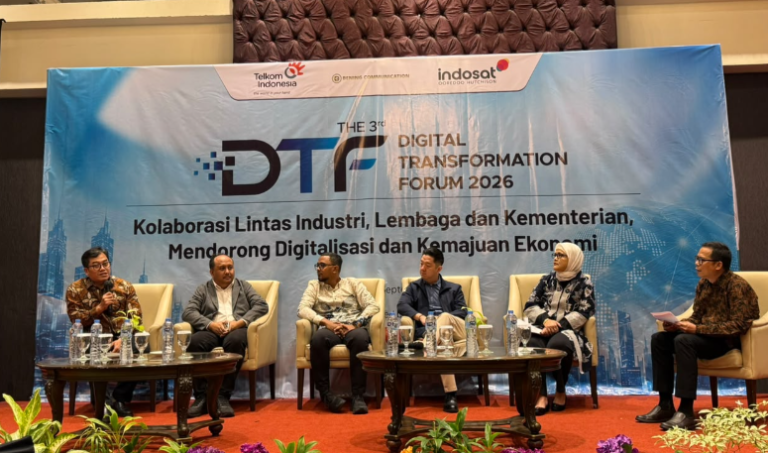
GAPKI’s Plantation Division Head Aziz Hidayat said that palm oil companies grouped in GAPKI are always committed to obeying all of prevailing regulations, especially on ISPO certification that has been made mandatory for upstream palm oil industries since 2011 until now. “Currently, almost all member companies of GAPKI have secured their own ISPO certification. We’re heading toward realizing 100% certification,” Aziz said during a public discussion on the Perpres No.16/2025, which was organized by the Forum of Agriculture Journalists (Forwatan) in Jakarta on Wednesday (04/06/2025).
The palm oil industry players hope that the government will intensify efforts of increasing the global acceptance of ISPO certification. They said that in line with the efforts the government should make the Supply Chain Certification System (SCCS)-ISPO like that applied with RSPO and MSPO.
“To increase global acceptance of ISPO certification at the global market, the government should make the SCCS-ISPO like what applied for RSPO and MSPO,” he said.
According to Ratna, ISPO can actually meet the global demand, like the one required by the European Union Deforestation-free Regulation (EUDR). “To get ISPO certification, there are 38 criteria and 173 indicators that must be fulfilled by palm players. It means the aspects of sustainability required by the ISPO certification can stand as a guarantee for palm oil buyers,” she said.
According to Lila, of the total 17 principles set in the UN’s SDGs, 14 principles are required through ISPO certification. The other 3 principles are not relevant because they are related to aquatic resources, while oil palm is not aquatic plant. “That means the global acceptability of ISPO certification is assured very good,” said Lila Bachtiar. (*)