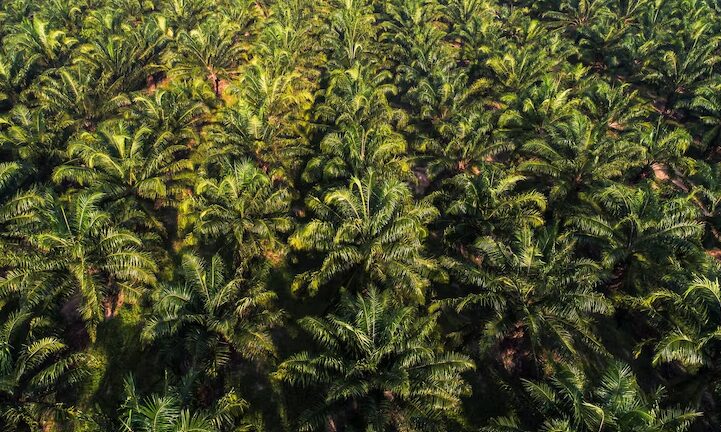
Many people as of now think of oil palm plantations as a major environmental threat that leads to biodiversity loss. But is it true fact or just a myth?
Myth:
Production of palm oil has caused major biodiversity loss.
Fact:
Compared to other vegetable oils, such as sunflower, soybean, and rapeseed, the production of palm oil causes the lowest biodiversity loss. Even the oil palm plantations can support the growth of biodiversity, depending on the way it is cultivated.
Palm Oil = Lowest Biodiversity Loss?
The research by Beyer et al. (2020 & 2021) shows that palm oil has the lowest rate of Species Richness Loss (SRL) if compared to other vegetable oils. To produce one liter of palm oil, the impacts to species around palm plantations are much less than other oil crops.
| Vegetable Oils | SRL (the higher = the worse) |
| Palm Oil | 🔻 Lowest |
| Rapeseed, Soybean, Sunflower, Groundnut | 🔺 Higher |
Palm Plantations Not Biodiversity Dead Zone
Field study in Riau and West Kalimantan compares number of kinds of animals and plants in:
- Natural ecosystem before developing into plantations (benchmark),
- Palm plantations,
- Conservation forests around plantations.
The result? The oil palm plantations still have competitive biodiversity, especially for birds, insects, and vegetation, depending on the plantation practices.
| Taxonomy | Riau (kinds) | West Kalimantan (kinds) |
| Mammals | 0–7 in plantations | 0–4 in plantations |
| Birds | Up to 32 kinds | Up to 27 kinds |
| Herpetofauna | 2–11 kinds | 2–13 kinds |
| Butterflies | Up to 31 kinds | Up to 20 kinds |
| Vegetation | 25–120 kinds | 31–71 kinds |
Why Oil Palm Able To Support Biodiversity?
There are several reasons why oil palm plantations can support the biodiversity:
- Oil palm trees have a long life cycle (25–30 years), creating a stable, shady canopy.
- Planting with minimum tillage allows shrubs, insects, and other organisms to coexist.
- Cover crops or legumes can be planted between palm trees, which help increase diversity of species.
- Integrating oil palm with livestock and local food crops also helps create a balanced agroecological environment.
Palm Oil Can Be Part of Solution
Oil palm plantations managed with best agricultural practices will not be only economically productive, but can also be part of the solution to biodiversity conservation — especially with the implementation of agroforestry practices and microhabitat conservation.
The myth that says the oil palm as the cause of massive biodiversity destruction needs to be corrected. With good practices, oil palm plantations can play an important role in preserving local biodiversity. The oil palm has even the lowest ecological footprint compared to other vegetable oils! (*)
Beyer et al. (2020), Beyer dan Rademacher (2021). Emiwati et al. (2017). Santosa et al. (2017). Suharto et al. (2019)