JAKARTA — Environment Minister /Head of Environment Management Board (KLH/BPLH), Hanif Faisol Nurofiq has stated that Indonesia is ready to accelerate its transition toward green economy by launching a document of Second Nationally Determined Contribution (NDC) version 3.0 as its primary tool of environmental diplomacy ahead of the climate change conference of COP30 in Belém, Brazil.
During a bilateral meeting with the UNFCCC Secretariat in Jakarta on Saturday (26/07/2025), Minister Hanif said that the NDC 3.0 is not just a technical document, but an ambitious roadmap toward low-carbon economic development, which is in balance with the national agenda of economic growth.
“We’ve determined our target of emission reduction at 440 million tons of CO₂e in 2030, and increase to 525 million tons in 2035. This is not an empty promise. This is our real commitment,” said Hanif.
The target is based on data of emission in 2019 at 1.14 billion tons of CO₂e. The NDC 3.0 documents are designed through collaboration with related ministries, business players, academicians, civil society, and it will become the main foundation of Indonesia’s climate strategy after 2030.
During a meeting that was also attended by UNFCCC Secretary General Simon Stiell, Hanif underlined the importance of the role of the United Nations (UN) in assisting developing countries like Indonesia in accessing climate funding, improving national capacity, and developing carbon market based on article 6.0 of the Paris Agreement.
Stiell reminded that it is really a big challenge for Indonesia, as around 75% of Indonesia’s energy mix is still derived from fossil fuels. Considering the fact, then a transition toward clean energy use is urgent. It is not just for the sake ecology, but also for the sake of creating business opportunities in the archipelagic country.
“With global investments in the green energy sector reached US$2.0 trillion last year, Indonesia has potential to earn up to US$600 billion and create 14 million of job opportunities in the green sector,” said Stiell.
He lauded the NDC 3.0 of Indonesia as a strong sign that Indonesia is no longer a follower, but a leader in the global transformation of energy sector.
Stop PLTU, Strengthen FOLU
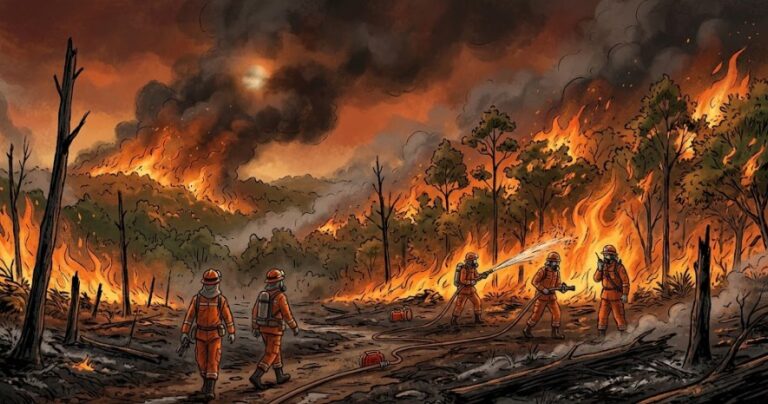
Hanif said that the sectors of energy and forestry are the main focus of the Indonesia government. “The government will accelerate gradual retirement of coal-fired power plants (PLTU), strengthen the program of preventing forest and land fires (karhutla) across the country, and optimize the sector of forestry and other land use (FOLU) in achieving the target of emission reduction.
“Certainly, this transition could not be done instantly. It needs big funding, industrial down-streaming, and international support. We, therefore, urge the UNFCCC to facilitate regional forum for intensification of dialog and technical direction of the voluntary carbon market,” said Hanif.
The ministry of environment is also preparing a post-2030 strategy toward realizing net-zero emission in Indonesia in 2060 or even faster, along with further integration of cross-sectoral policies to facilitate the transition. (*)
Sawitku.id. https://www.sawitku.id/internasional/81415613597/hanif-nurofiq-indonesia-tancap-gas-menuju-ekonomi-hijau-target-emisi-dikunci. Hanif Nurofiq: Indonesia Tancap Gas Menuju Ekonomi Hijau, Target Emisi Dikunci. 27 Juli 2025