JAKARTA – The Indonesian Palm Oil Association (GAPKI) Chairman Eddy Martono said that concerning the legal aspect of palm oil industries, it is strongly linked to the issue of conflict with the public. But he stated that currently there is hardly any direct conflict with the indigenous people, especially with member companies of GAPKI.
“Conflict is more often with people around plantations, not with the customary tribe. For example, in Central Kalimantan, where companies had fulfilled their obligation of 20 percent plasma plantations. Therefore, there shouldn’t be any additional partnership schemes. But in reality, many companies have even provided 30 percent. Actually, based on regulation it’s been more than enough,” Eddy said when addressing the webinar of INDEF on Palm Oil as a Strategic Corridor: Strengthening Indonesia-India Economic and Trade Cooperation, on Monday (22/9/2025).
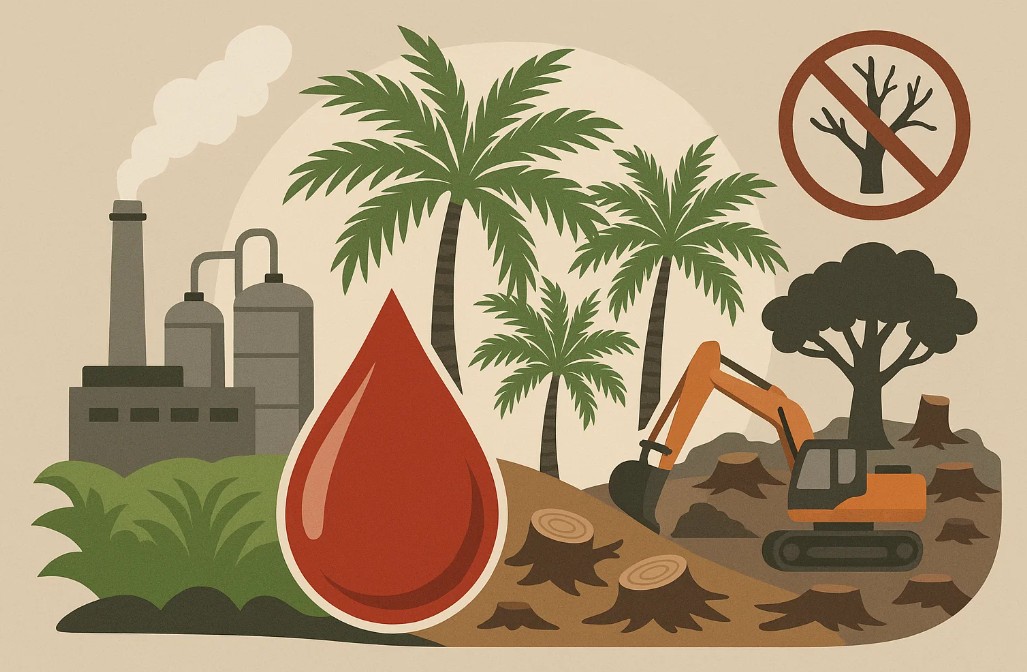
According to him, problem arose when parts of the land areas were found out encroaching the forests. Such condition is prone to cause legal problem, which is concerned with the certification scheme of ISPO or RSPO. The legal problem is also potential to cause criminal implications. To tackle the problem, the government has opened the option of other production activities for the public, such as cattle husbandry and corn farming.
“Yesterday we also talked about corn, as our corn import is big enough. Companies can become off-takers, provide seeds, fertilizer, and open land areas for plantations. But then new problems arise, as sometimes the public opened their own plantations in forest areas,” said Eddy.
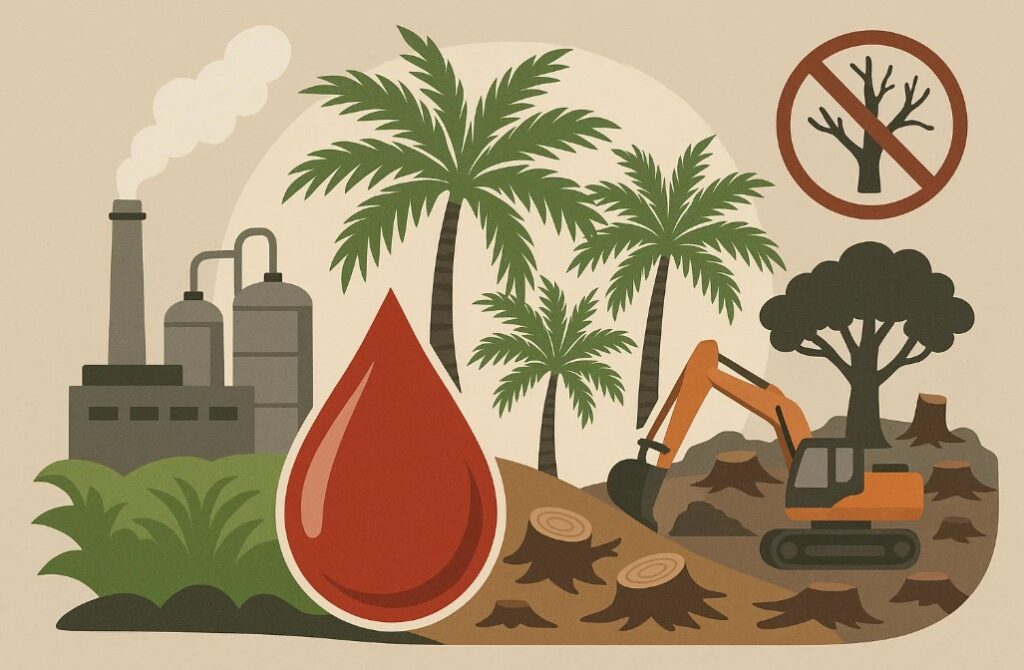
Besides the local conflicts, Eddy also highlighted the international regulations, especially the European Union Deforestation Regulation (EUDR). This regulation stipulates that planting of oil palm after 31 December 2020 is considered as deforestation.
“If we don’t address it, it will affect our exports. So, the national and global problems should be tackled simultaneously,” he said.
Another problem he raised during the webinar is concerned with the dilemma of CPO export and the local need of CPO. With the implementation of mandatory program of biodiesel 40 percent (B40), around 14 million tons of palm oil are needed to fulfil the need of raw material to produce the bioenergy.
“The local need is still prioritized. Only after it is fulfilled, then the export can be allowed. INDEF is now conducting an evaluation to find out which one should be prioritized: Upgrading the mandatory program of biodiesel or exports,” he said.
Price and Investments
Regarding the market, Eddy projected the CPO price will stay at around US$1,100–1,200 per ton, with a possibility of reaching US$1,300 due to the stagnant production of Indonesia and Malaysia, while at the same time demand has been continually rising.
“Not only palm oil, the global demands for other vegetable oils have also increased. So, from the market perspective, it has a positive prospective,” he said.
On investment climate, Eddy said the palm oil industries have no problem to get financing. National banks still support the financing for upstream and downstream palm oil industries.
“If the government distributes Rp200 trillion for palm oil financing, it can be absorbed outright,” he said.
But he mentioned the efforts of the palm oil task force (Satgas Sawit) to discipline the palm oil industries that has often caused uncertainties. Eddy expressed the hope that companies that had already had land cultivation rights (HGU) or land ownership rights (SHM) should not be subjected to the issue of forest encroaching.
“This is concerned with legal certainty in doing businesses. They shouldn’t be subjected to any legal problems if they have formal certificates and licenses. We’re in a process of discussions to ensure that Satgas can accept such stipulation,” Eddy concluded. (*)