JAKARTA – The Indonesian Palm Oil Association (GAPKI) has stated that the palm oil companies are basically ready for the implementation of the European Union Deforestation-free Regulation (EUDR), which will be implemented since December 2025. But GAPKI Chairman Eddy Martono said the biggest challenge in dealing with the EUDR lies with the smallholders.
The European Commission (Commission) had recently proposed to maintain the current application date of 30 December 2025 for large- and medium-sized enterprises, contrary to a recent announcement of the intention to delay the EUDR’s application by another year. But its implementation for smallholders is delayed for one year until 2026.
“If considered from the perspective of companies, we’re actually ready. Almost all member companies of GAPKI stopped opening new plantation areas after 31 December 2020, which is the timeline set in the EUDR for enforcing deforestation-free regulation,” said Eddy.
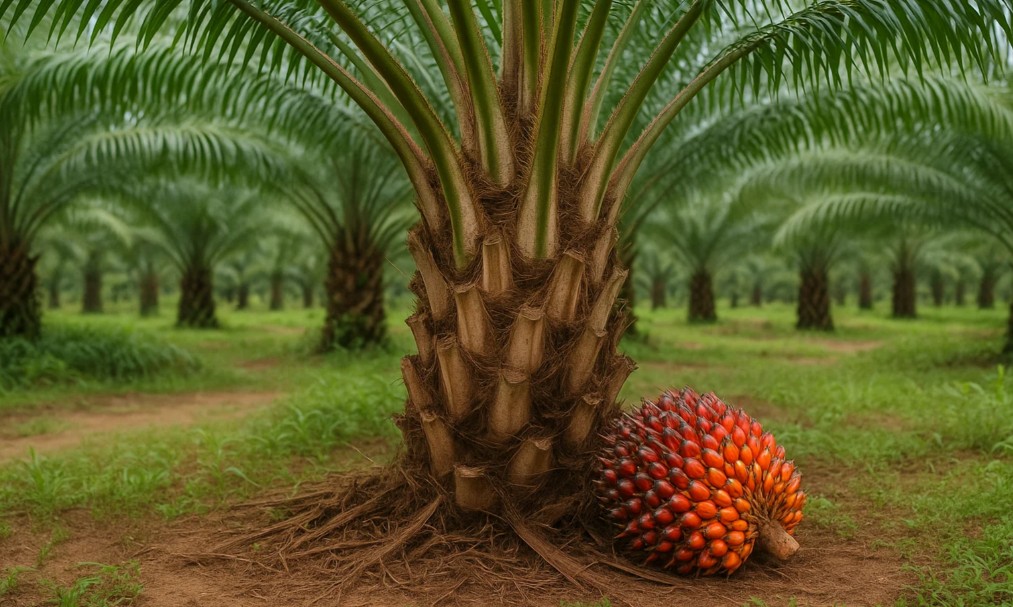
The main challenge will be posing by farmers who have not followed the regulation on banning new plantation areas. Companies could not reject the farmers’ production of fresh fruit bunches (FFB), especially if the farmers are the companies’ partners.
“The EUDR is one package. It does not only require compliance from companies alone, but also from the smallholders. They have to be included into the system of traceability and due diligence,” said Eddy.
The government is intensively pursuing efforts of negotiations with the EU, so that the implementation of EUDR will not burden the smallholders. If the transition period of one year really given to the smallholders, then Indonesia will have a big opportunity to improve the industry and ensure compliance with the EUDR.
“One year is enough. Companies can be prepared within six months, and the smallholders have enough time to improve themselves. If that is the scheme, the exports to Europe should continue proceeding well,” Eddy said. The exports of palm oil and derivative products to Europe have been continually decreasing since 2018, with respective export volumes in 2023 and 2024 reaching 4.1 million tons and 3.3 million tons.
Eddy said the government had issued a special regulation that bans the opening of new palm plantation areas. The regulation, which is the presidential instruction (Inpres) No.5/ 2019, stipulates that business players are not allowed to reject partnerships with smallholders despite the fact the smallholders are indicated to have violated the EUDR.
According to him, the EUDR will not bring significant impact to the palm oil industries in 2026. Until now, the government is still seeking a solution to protect the smallholders against the implementation of the EUDR,” he said.
“In 2026 alone there should be no problem, not yet. If given extra time, especially the smallholders are given one year, then it is a chance for us for improving,” he said.
IEU-CEPA impacts
Previously, Trade Minister Budi Santoso said the EU has softened its stance regarding the prohibitions against products of agriculture, plantations and forestry such as palm oil, cocoa, coffee, soybean, rubber, and woods that are considered to cause deforestation. The prohibition was previously contained in the EUDR.
According to Budi, the Indonesia-European Union Comprehensive Economic Partnership Agreement (IEU-CEPA) has provided a number of benefits for Indonesia. Besides opening market access, the IEU-CEPA also provides a number of advantages in dealing with trade barriers, including the EUDR.
“After the IEU-CEPA concluded, all have softened. Hopefully, it will continue softening further,” Budi said on Monday (29/9/2025). (*)