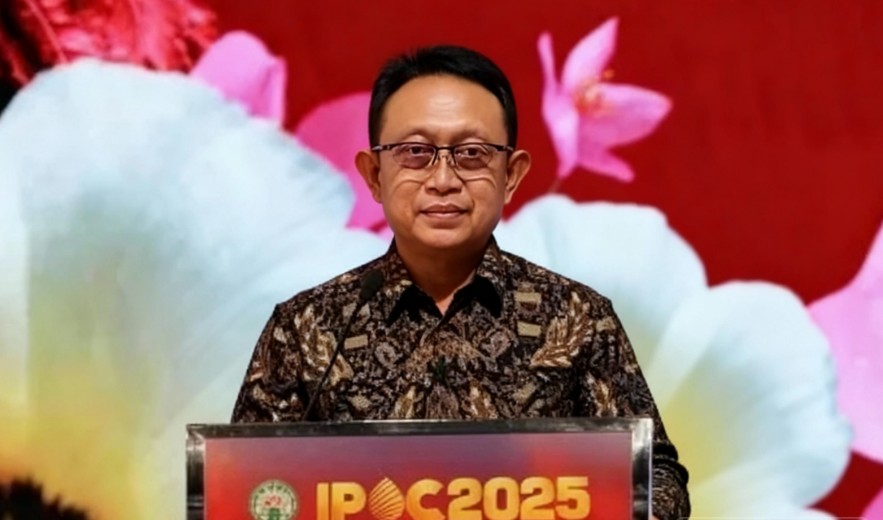
JAKARTA – Indonesian palm oil industry saw a much better performance during 2025 compared to the previous year. It was revealed by Indonesian Palm Oil Association (GAPKI) Chairman Eddy Martono during the opening ceremony of the 21st Indonesia Palm Oil Conference (IPOC) in Nusa Dua, Bali, on Thursday (13/11/2025).
As of September 2025, the production of crude palm oil (CPO) reached more than 43 million tons or an increase of 11 percent compared to the same period in 2024. The increase reflected the recovery of production and the effectiveness of the national palm oil management.
On the international trade, exports of palm oil and derivative products, including CPO, processed products, oleochemical, and biodiesel had reached more than 25 million tons, an increase of 13.4 percent from that of the previous year.
The export performance had resulted in the earning of foreign exchange at US$27.3 billion or an increase of 40 percent compared to that of last year, reaffirming the position of palm oil as the biggest contributor of foreign exchange for Indonesia.
Not only for export market, the domestic consumption of palm oil also rose from 17.6 million tons to 18.5 million tons, which was driven by the needs of industries of foods, oleochemical, and the national mandatory program of biodiesel.
Eddy Martono said the performance of palm oil industry so far this year was better if compared to that of the previous year. “But despite seeing positive performance, our national palm oil industry is still facing various challenges globally and nationally. Our palm oil industry needs a long term strategy to maintain competitiveness and sustainability.
He highlighted three main factors that should get attention:
- Dynamics of global trade landscape
The change of policies in partner countries, regulations on sustainability, and geopolitical issues become the factors that can affect demand and market barriers.
- Strengthening of palm oil industry’s governance
The application of good governance is seen as the main key to the sustainability of industry. Eddy said the certification of Indonesian Sustainable Palm Oil (ISPO) should be further strengthened.
“ISPO should not be just a symbol. Palm oil is a product of national sovereignty and should become global golden standard,” he said.
- Policy of Energy Mix
The national energy policy, including expansion of biodiesel use, becomes an important part of efforts to maintain the stability of palm oil market in the future.
Eddy emphasized the need for the world to understand the principles of sustainability not just a slogan, but a real commitment that will be continually pursued by GAPKI and all palm oil industry players. (*)