The global demand for vegetable oils is projected to continually see significant increase until 2050, along with the growth of global population and incomes.¹ Vegetable oils—including palm oil, soybean, rapeseed, and sunflower—have become the vital component of the global food system, industrial raw material, and a source of renewable energy (biofuel).²
With this encouraging growth, palm oil has been the target of a global smear campaign. But there is one fundamental fact that is often overlooked: blocking palm oil will not necessarily end the global demand for vegetable oils, but it will instead shift the pressures of demand for land and forest clearing to other countries where growers will plant other more land-intensive commodities.
Unstoppable Global Needs of Vegetable Oils
The rise in global demand for vegetable oils is driven by two main factors: global population growth and increasing per capita consumption in developing countries, mainly India and China¹. Per capita consumption of vegetable oils in developed countries has relatively reached saturation point, but in developing countries it continues to increase in line with their population and economic growth.
Many international projections indicate that vegetable oils are agricultural commodities that cannot be eliminated, even in healthier and more sustainable consumption scenarios². Therefore, the main problem facing the world is not about the option of using vegetable oils or not, but rather how to meet the demand with the most efficient and rational way of using land areas.
Palm Oil: The world’s most efficient vegetable oil in land use
Agronomically, oil palm is the most productive oil crop per unit of land area. Data shows that:
- oil palm produces around 3–4 tons of oil per hectare per year,
- soybean produces only around 0.4–0.5 tons of oil per hectare per year,
- and rapeseed and sunflower produce less than 1 ton of oil per hectare per year³.
Considering these productivity levels, oil palm can produce more than seven times more oil than soybeans from the same size of land area⁴. This means that oil palm provides the world’s vegetable oil with the least land areas.
Palm plantations not resulted from clearing forests: Clear legal Fact
It is necessary to emphasize honestly based on legal facts:
Oil palm plantations in Indonesia are not located in forest areas.
Regulatory:
- Oil Palm plantations can only be developed in non-forest areas,
- All legal oil palm plantations are developed on land areas having the legal status of Land Use Rights (HGU),
- The HGU licensing process is strict, lengthy, and multi-layered,
- The government explicitly prohibits plantation activities in forest areas⁸.
With this legal framework, there is no legal mechanism for oil palm plantations to clear forests. Any illegal forest clearing is a violation of the law, not the characteristic of the palm oil industry itself.
Hindering Palm Oil means raising deforestation in other countries
Hindering or rejecting palm oil will not necessarily reduce the global demand for vegetable oils. The demand will be certainly fulfilled with other vegetable oils such as soybeans, rapeseed, or sunflowers.
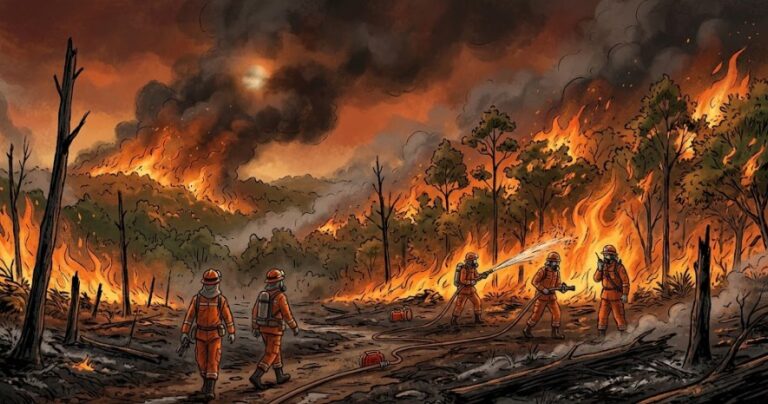
But those vegetable oils have a serious problem, which is concerned with their extremely land-intensive characteristics. To produce the same volume of oil as the palm oil, soybean oil requires up to ten times the size of land areas needed by palm oil.⁵ It means that meeting the world’s vegetable oil demand without palm oil will require massive land and forest clearing.
Various studies show that a scenario of replacing palm oil with other vegetable oils has the potential to increase global land use by hundreds of millions of hectares, particularly in South America, Africa, and other regions.⁵⁶ This pressure will almost certainly lead to much more extensive global deforestation.
Oil Palm as global forest buffers
Having very high productivity with good practices of cultivation on legal, non-forest land, oil palm has actually functioned as a buffer for global forests. It enables the world to meet its rising needs of vegetable oils with the least land use compared to other oils. Thus, oil palm has the following positive impacts:
- suppressing global agricultural expansion,
- reducing pressure on forest clearing in other countries,
- and helping maintain global environmental balance.
The environmental problem lies not with the oil palm, but with how the world’s vegetable oil needs are met.
Rejecting oil palm without providing realistic alternatives means:
- global vegetable oil needs must still be fulfilled,
- production will shift to far more land-intensive crops,
- forest clearing and wildlife conversion will increase,
- and global deforestation will increase sharply.
The rejection of palm oil at the global market will only end up increasing global deforestation enormously. Oil palm is not an environmental enemy, but rather a vital part of the solution to protect the global forests, as long as it is managed legally and sustainably. (*)
¹ IUCN, Vegetable Oils and Biodiversity – Issues Brief
https://www.iucn.org/resources/issues-brief/vegetable-oils-and-biodiversity
² FAO, The Future of Food and Agriculture
https://www.fao.org/3/i6583e/i6583e.pdf
³ BPDPKS, Minyak Sawit sebagai Solusi atas Tantangan Keberlanjutan Global
https://www.bpdp.or.id/minyak-sawit-sebagai-solusi-atas-tantangan-keberlanjutan-global
⁴ IUCN, Oil Palm and Biodiversity
https://www.iucn.org/resources/issues-brief/oil-palm-and-biodiversity
⁵ Studi ilmiah proyeksi kebutuhan lahan minyak nabati global
https://pmc.ncbi.nlm.nih.gov/articles/PMC11840662/
⁶ PalmOilina, Most Productive Vegetable Oil
https://palmoilina.asia/berita-sawit/most-productive-vegetable-oil/
⁷ News-Medical, Future food oil choices could determine the fate of global forests
https://www.news-medical.net/news/20250223/Future-food-oil-choices-could-determine-the-fate-of-global-forests.aspx
⁸ Kementerian ATR/BPN – Hak Guna Usaha (HGU)
https://www.atrbpn.go.id/layanan/layanan-pertanahan/hak-guna-usaha KLHK – Larangan kegiatan perkebunan di kawasan hutan https://www.menlhk.go.id/site/single_post/1216