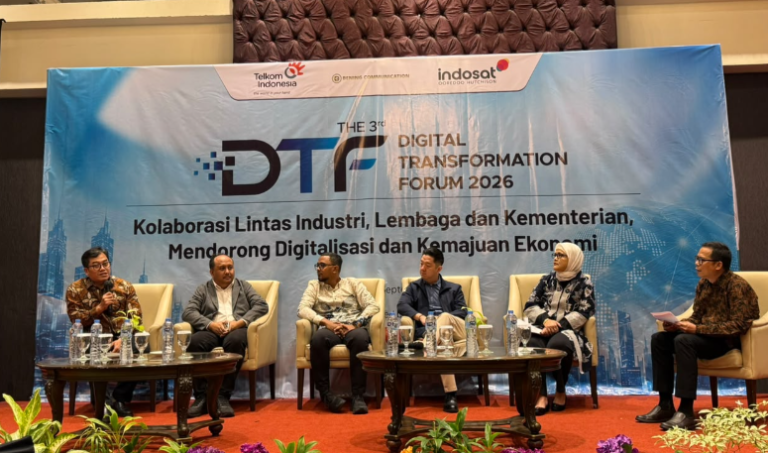
JAKARTA – The revised regulation on foreign exchange from exports (DHE) of natural resources, which will take effect since January 2026, are still facing objections from palm oil industry players. The Indonesian Palm Oil Association (GAPKI) believes the main obstacle is the requirement to retain 50 percent of DHE for one year.

The Indonesian Palm Oil Association (GAPKI) Chairman Eddy Martono said until now they have not yet received any copy of the DHE regulation and they still rely on just information published by news media.
“Frankly, we haven’t yet received a copy of the DHE regulation. We’ve only read about it in the news,” said Eddy.
But Eddy emphasized that GAPKI, in principle, has no issue with the revised DHE regulation as a whole. The objection of palm oil industry lies solely with one crucial point: the amount of DHE withheld.
“We have only one objection: 50 percent of DHE retained for one year. That’s very burdensome,” he said.
According to Eddy, the operational costs of the palm oil industry—from plantation maintenance to processing—can exceed 50 percent, so withholding such a large amount of funds will directly put pressure on liquidity of companies.
He also emphasized that there are no issues regarding the mandatory placement of DHE in the State-Owned Banks (Bank Himbara).
“We have no objections whatsoever to the requirement of placing it in Bank Himbara. It’s no problem for us,” Eddy explained.
The main issue remains the amount of funds that must be withheld and the duration of the withholding.
Responding to the goal of revising the DHE regulation to strengthen the national reserve of foreign exchange, Eddy said that the monitoring mechanism has been already implemented effectively through Bank Indonesia’s SIMODIS system.
“Every time the PPE or PEB is issued, Bank Indonesia automatically monitors it. If the funds are not accepted after three months, a warning letter will be issued. Exports can even be stopped,” he said.
Eddy believes that with such system, foreign exchange proceeds from exports are actually within the country, although they are placed in non-Himbara banks.
GAPKI members’ compliance considered good
Eddy also emphasized that GAPKI members’ compliance with their obligations on the export proceeds (DHE) has been excellent.
“Almost all major exporters are GAPKI members. We can monitor them, and so far there have been no problems,” he said.
He admitted he couldn’t comment much on non-member exporters, considering that the DHE policy applies to all natural resource sectors, not just palm oil.
According to Eddy, withholding 50 percent of DHE has the potential to trigger a long-term domino effect. If operational funds are not sufficient, companies will be forced to seek additional financing.
“If funds are withheld, we will have no choice but to borrow from banks. Loans will definitely incur interest,” he said.
As an illustration, Eddy presented a simple simulation. A company exporting 10,000 tons per month at an average price of US$1,000 per metric ton will incur additional cost of around IDR 9.9 billion per year if subject to a 1 percent interest difference from the back-to-back financing scheme. “This is a real additional cost,” he said.
Eddy said that the additional cost could ultimately affect the price of fresh fruit bunches (FFB) for palm smallholders. Currently, the smallholders are already burdened with an export levy of around IDR 250 per kilogram of fresh fruit bunches (FFB).
Another worrying impact is the weakening competitiveness of Indonesian palm oil in the global market. Palm oil prices are determined by international prices, so there is very little room for price increases.
“If our prices are higher, importers will substitute with other cheaper vegetable oils,” said Eddy.
He cited the situation in 2024, when palm oil prices were the most expensive among vegetable oils at the global market.
“What will happen? Our exports will drop,” he said.
According to Eddy, although palm oil has certain advantages that cannot always be replaced, certain consumers will still switch to other alternative vegetable oils if possible.
The next domino effect is the potential decline in palm oil production due to reduced operational costs, particularly the fertilizer.
“If costs must be reduced, the easiest way to reduce them is fertilization. Fertilizer is a very large component of cost,” Eddy said.
Reducing fertilizer doses will have a direct impact on productivity and production. However, according to Eddy, national palm oil production has stagnated for the past five years.
“We are stagnating, while the government wants to increase the production of palm-based biodiesel. This could become a new problem,” he said.
Considering these potential impacts, GAPKI has sent a letter to the government requesting a review of the DHE withholding policy.
“The goal of strengthening foreign exchange reserves is good. But this policy should not burden the industry and reduce competitiveness,” Eddy concluded. (*)
Video: Dolar Ekspor SDA Wajib Masuk Himbara, Pengusaha Sawit Teriak Ini, CNBC Indonesia, 5 Januari 2026. Diakses dari https://www.cnbcindonesia.com/news/20260105101534-8-699619/video-dolar-ekspor-sda-wajib-masuk-himbarapengusaha-sawit-teriak-ini