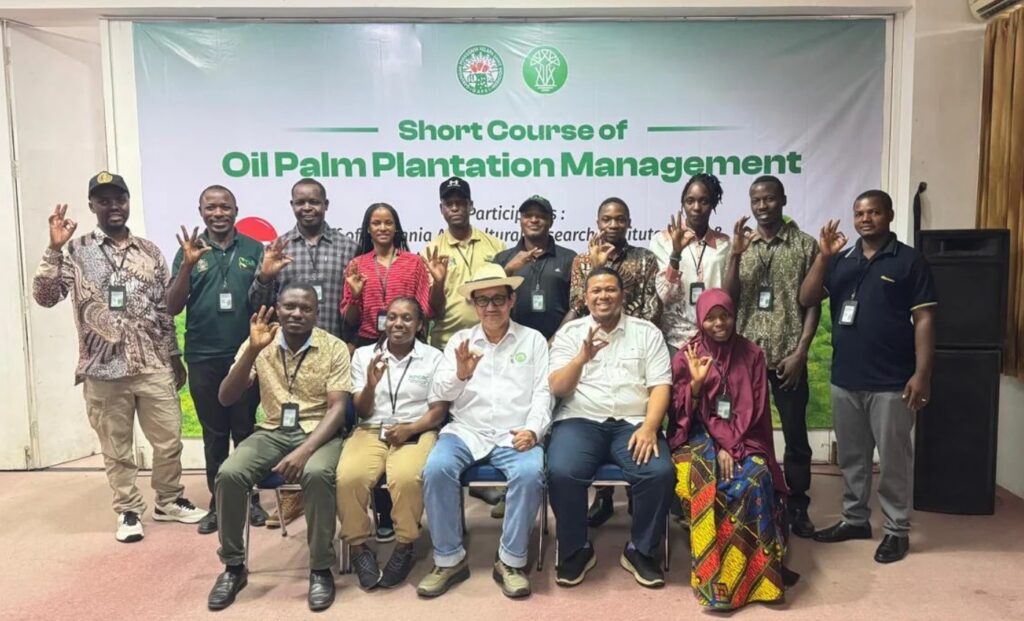
JAKARTA – The Indonesian Palm Oil Association (GAPKI) has collaborated with the Palm Oil Research Center (PPKS) to conduct a short course on oil palm plantation management. The training program, which will be undertaken for the next two months, will be participated by 13 representatives from Tanzania Agricultural Research Institute (TARI) and Tanzania Plant Health and Pesticides Authority (TPHPA).
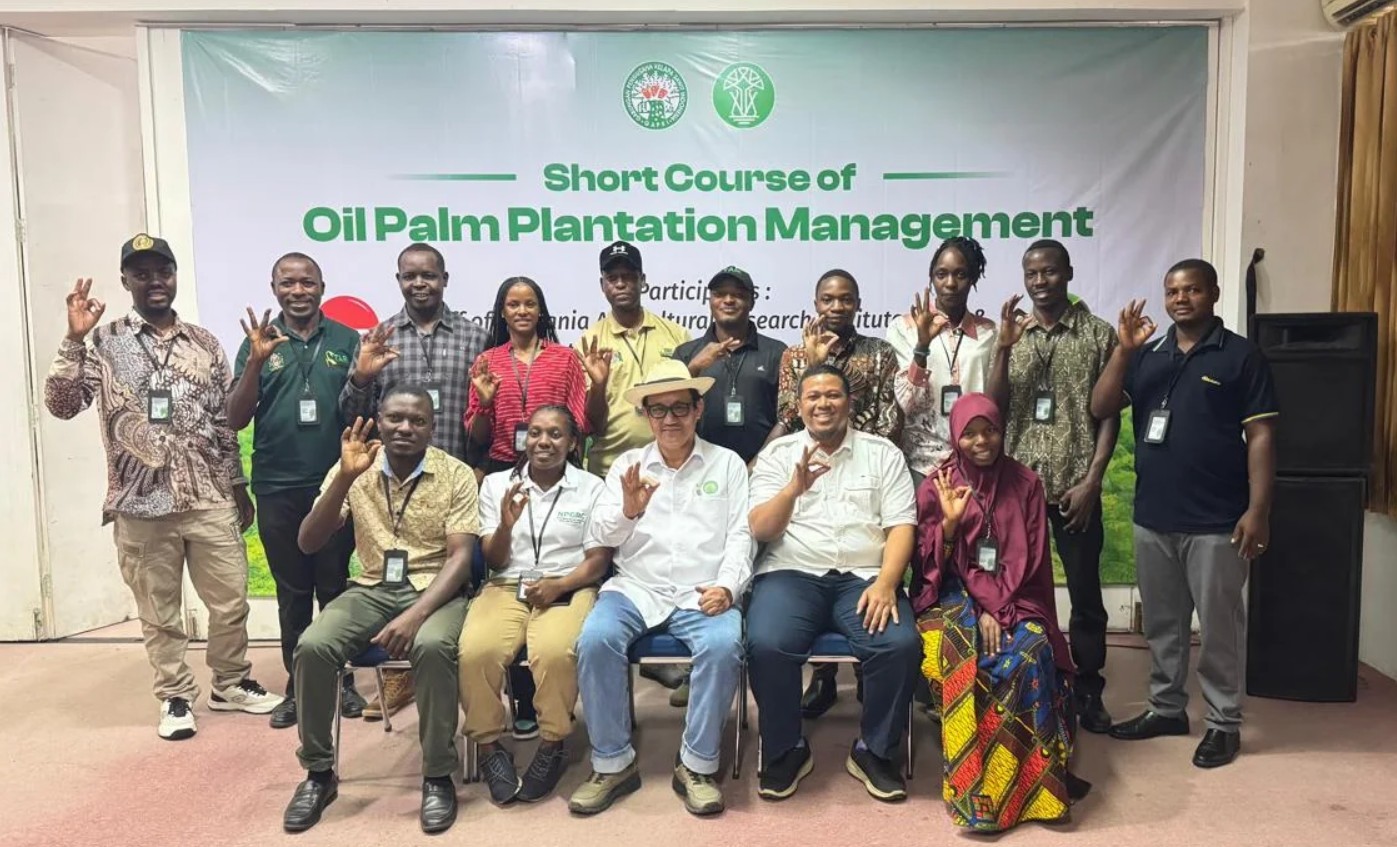
“The collaboration is very positive and strategic for both Indonesia and Tanzania,” GAPKI’s Indonesia Ganoderma Consortium Chair Indra Syahputra said when addressing the opening ceremony of the training.
Indra, who is also the head of SSPL of PT Socfin Indonesia, said that the training would combine programs of classroom learning and field practice on the oil palm plantations.
He expressed his appreciation for the participation of the Tanzanian delegation in the two month training in North Sumatera.
According to him, the training participants will have opportunities to visit the site of oil palm nursery locations, including the location of oil palm seeds from Tanzania. “The activity is not just designed for training, but also functions as a forum for exchange of knowledge and genetic resources between collaborating countries.
Besides the aspect of training, the cooperation between Indonesia and Tanzania is also realized through the introduction of three species of pollinating insect Elaeidobius imported from Tanzania. The insects are considered having a strategic role in supporting the national palm oil industries, especially the problem of fruit sets in a number of oil palm plantations in Indonesia.
“Oil palm breeding program in Indonesia has been developing well and produced various superior materials dominated by female flowers.
This is crucial for production. But without being balanced with male flowers and the introduction of adequate pollinator populations, productivity can be disrupted. Therefore, this collaboration is very beneficial for Indonesia,” he said in a press statement on Wednesday (14/01/2026).
Meanwhile, Tanzania is currently in the early stage of developing its palm oil industry. Such condition opens up ample opportunities to strengthen human resource capacity through direct learning from Indonesia’s experience in developing an integrated palm oil industry.
“For Tanzania, this short course becomes a very positive learning forum. Participants can learn firsthand how the Indonesian palm oil industry is developing, particularly through the experiences and practices of GAPKI members. We hope the knowledge and experiences received during the course will become a foundation for development of the palm oil industry in Tanzania,” added Indra.
During the two-month program, participants from TARI and TPHPA will receive comprehensive training and be directly involved in practical activities on plantations and research facilities. This approach is expected to provide a deeper understanding of the application of oil palm plantation technology and management in the field.
Besides improving the technical competency of participants, the course program is also expected to strengthen collaboration on palm oil research and development between Indonesia and Tanzania. Indra also emphasized during the occasion GAPKI’s commitment to continually fostering mutually beneficial international collaboration.
“Through this partnership, we hope to build long-term collaboration. GAPKI is ready to work together and support the future development of Tanzania’s palm oil industry,” he said. (*)
SawitKita.id, “GAPKI–PPKS Gelar Pelatihan Manajemen Perkebunan Sawit Bersama Delegasi Tanzania”, Januari 2026. https://sawitkita.id/gapki-ppks-gelar-pelatihan-manajemen-perkebunan-sawit-bersama-delegasi-tanzania/
Agrofarm.co.id, “GAPKI dan PPKS Gelar Pelatihan Manajemen Perkebunan Sawit Bersama Delegasi Tanzania”, Januari 2026. https://www.agrofarm.co.id/2026/01/gapki-dan-ppks-gelar-pelatihan-manajemen-perkebunan-sawit-bersama-delegasi-tanzania/