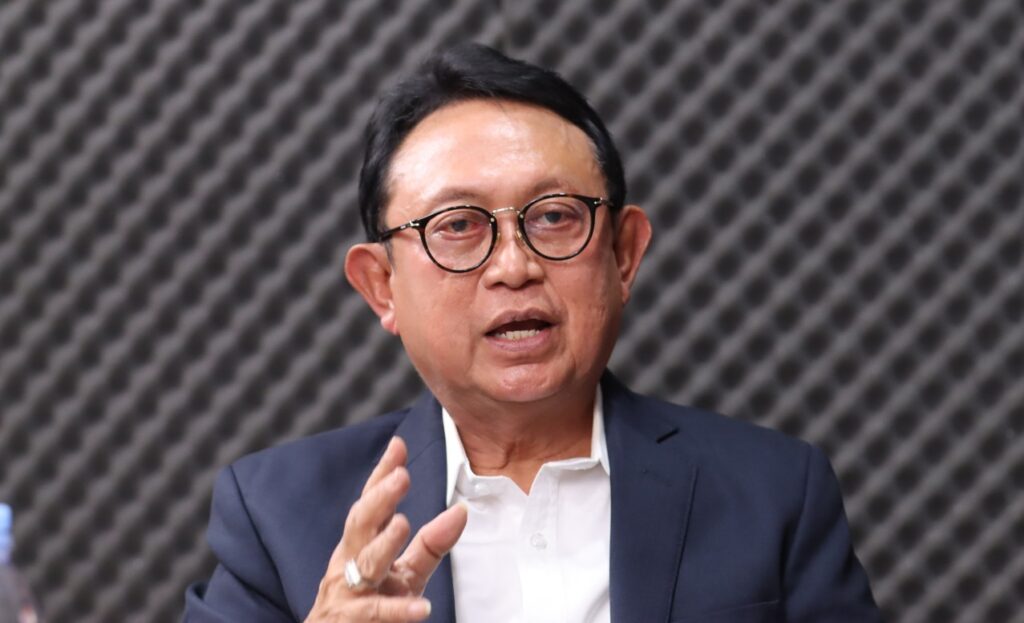
JAKARTA – The Indonesian Palm Oil Association (GAPKI) Chairman Eddy Martono has reaffirmed that palm oil is not just an export commodity for Indonesia, as it plays a very important role in the country’s national economy and becomes the life support for tens of millions of Indonesian people.
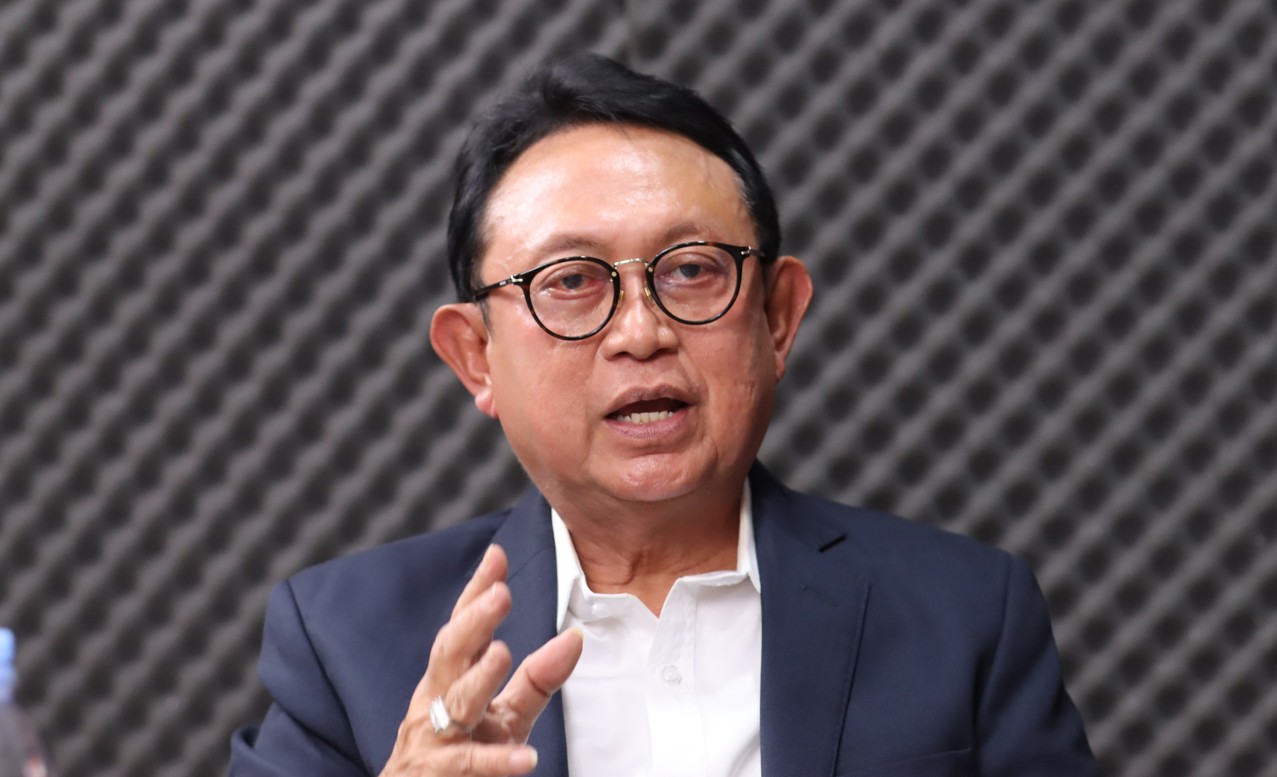
“At least 16.5 million families, ranging from oil palm smallholders to workers of companies, depend on the palm oil sector for their income,” Eddy Martono said when addressing a national seminar on “Considering Palm Oil Industry from the Aspects of Social, Economy, and Environment”, which was organized by the Land Study Centre and Agriculture Faculty of the University of UPN “Veteran” Yogyakarta, on Thursday, 22 January 2026.
The seminar was addressed by a number of experts, including Prof Budi Mulyanto, Prof Bustanul Arifin, Prof Yanto Santosa, and Prof Zulkarnain. Eddy noted that the palm oil has given a very significant contribution to Indonesia’s foreign exchange income. In 2022, the export value of palm oil reached US$39 billion, which enabled Indonesia to book a surplus in its trade balance up to US$56 billion.
“The palm oil industry should continue growing and becoming a part of solution to national resilience of foods, energy, and regional development,” he said .
Palm oil and land challenges
Head of the Palm Oil Study Centre of Bogor University of Agriculture (IPB), Prof. Budi Mulyanto highlighted the aspect of land as an important factor in the palm oil industry. The transformation of forest into areas of cultivation has been continually increasing along with the population growth and economic growth.
The palm oil has proven to be adaptive in various kinds of lands across Indonesia, which has a total palm plantation areas of 16.8 million hectares and produce more than 50 million tons of palm oil with around 160 derivative products.
However, problems arise from claims of forest areas that are not forested, based on maps that are regarded as problematic. According to Budi, a solution of land legality is needed that emphasizes certainty, benefit, and justice. He advocates affirmative action policies, the clarification of land boundaries, the strengthening of community rights, and regenerative palm oil management.
Eddy Martono hopes the palm oil industry will remain a driving force of the national economy while contributing to improvement of sustainability, including environmental conservation. “Palm oil is not just about exports, but also about the welfare of millions of Indonesian families. They are palm growers, smallholders and workers,” he said. (*)
Sawitku.id, “GAPKI: Industri Sawit Tumpuan Ekonomi 16,5 Juta Keluarga Indonesia”, 23 Januari 2026. GAPKI: Industri Sawit Tumpuan Ekonomi 16,5 Juta Keluarga Indonesia. https://www.sawitku.id/sawitku/81416606402/gapki-industri-sawit-tumpuan-ekonomi-165-juta-1keluarga-indonesia