JAKARTA – History goes beyond just a series of stories. It is also a reflection of the past that allows human to draw reasons for optimism to envision a bright future and make all necessary preparations to overcome all challenges that stand in the way of realizing the bright future.
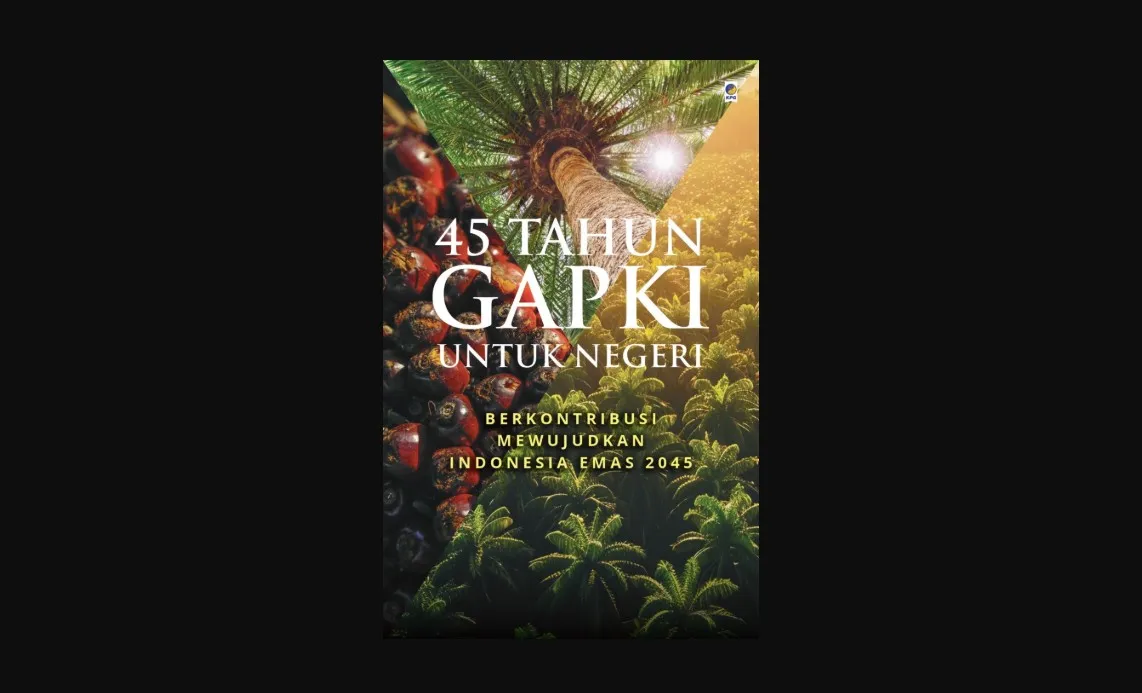
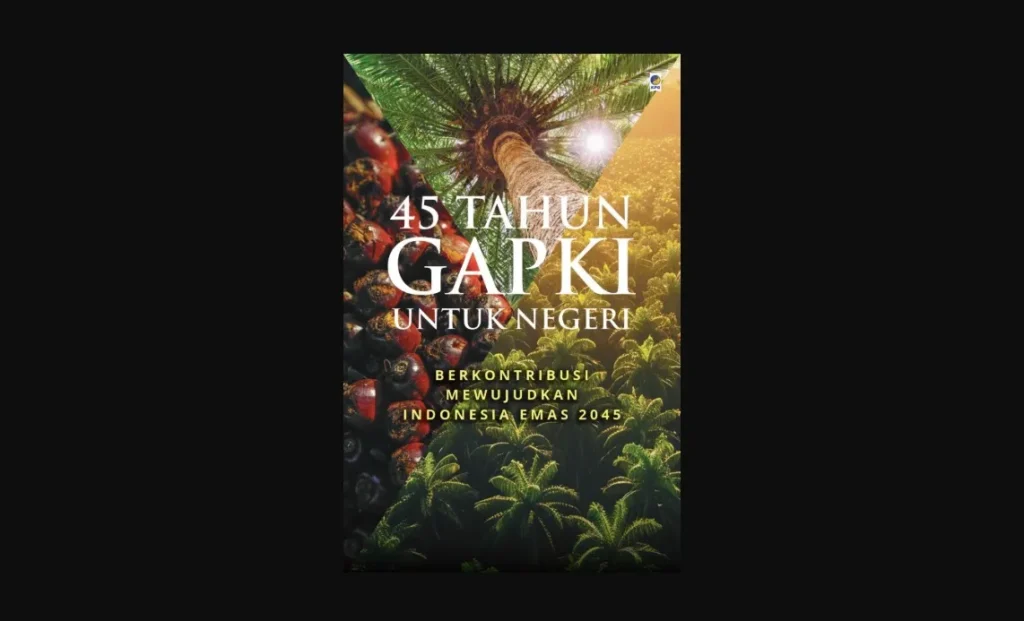
Seemingly, it is such spirit that was exuding out of the writers of the book published recently in conjunction with the anniversary celebrations of the Indonesian Palm Oil Association (GAPKI). Through the book titled “45 Tahun GAPKI untuk Negeri: Berkontribusi Mewujudkan Indonesia Emas 2045” (45 Years of GAPKI For the Nation: Contribution To Realize Golden Indonesia 2045), the writers present their ideas clearly with the support of data, facts, analysis, and strong emotional touch.
The book seeks to revive memories that hold special historical value for President Prabowo Subianto. The initial idea for the founding of the Indonesian Palm Oil Association (GAPKI) stems from the thoughts of the President’s father, Prof. Soemitro Djojohadikoesoemo. His spirit of nationalism and determination to pursue Indonesia’s progress formed the foundation for the association, which remains the primary forum for national palm oil industry players.
Prof. Soemitro not only encouraged palm oil entrepreneurs to organize themselves so that the industry could make a greater contribution to national development, but also facilitated meetings between business actors and government officials. Thanks to his support, GAPKI was then officially established in February 1981.
In line with the vision of the national economic guru, GAPKI’s existence was intended to become an effective communication platform to address the increasingly complex issues facing the palm oil industry. This association serves as a bridge for dialogue between the government, the palm oil industry players at national and global levels, and other related communities.
GAPKI’s journey from its founding to the present can be divided into three main phases. First, the development phase of national oil palm plantations (1981–1999). Second, the palm oil industry leadership phase in the face of various global pressures (2000–2015). Third, the consolidation phase towards sustainable governance (2016–2025). In each phase, GAPKI strives to play a constructive role while continuously strengthening the organization from within.
The book does not only describe the long process and dynamics of the relationship between the government and the palm oil industry. It also illustrates GAPKI’s courage in presenting arguments, taking risks, and carefully interpreting the dynamics of global interactions, which are essentially fierce competition in the global market of vegetable oils.
At the domestic level, GAPKI’s approach tends to be non-confrontational. As formulated by its founders, the association chooses to position itself as a strategic partner of the government, rather than an antagonistic opponent. This approach is based on the belief that palm oil industry development is not a zero-sum game, but rather a joint effort to achieve national goals.
Public Sphere
In the context of public policy and democracy, the term “strategic partner” bears similarities to the concept of the public sphere introduced by German philosopher Jürgen Habermas. According to this Frankfurt School thinker, the public sphere should function as a medium that allows public opinion to enter and influence the political decision-making process.
Habermas emphasized that a healthy and deliberative state requires a mediating space for diverse interests. The increasing literacy of the European middle class in the 18th century enabled government policies to become the subject of widespread public discussion.
In the context of the palm oil industry, the knowledge and experience of business actors play a crucial role in maintaining the competitiveness of the palm oil commodity. Many Indonesian agribusiness products once thrived due to their comparative advantages, but later suffered setbacks due to regulatory errors, weak communication with the government, and a lack of understanding of global trade dynamics.
Therefore, various strategic policies related to palm oil are a constant concern for GAPKI. These include the Domestic Market Obligation (DMO), export levies, biofuel programs, and various international regulations such as the Renewable Energy Directive (RED), the European Union Deforestation Regulation (EUDR), and UK Due Diligence Law.
Communication is a crucial factor in this process. Habermas later developed the concept of the public sphere into the theory of communicative action. According to him, rational agreements do not arise from the privileges held by one party. Although the positions of the government, business owners, oil palm smallholders, and consumers are not always equal, democratic decisions can be reached if all parties are bound by the evidence and the strength of the arguments presented.
It is at this point that research becomes increasingly important for GAPKI. Aside from its important role to strengthen GAPKI’s position in national and international dialogue, the research also serves as a foundation for future industrial development. This is reflected in one of the book’s closing notes, which emphasize that research and development are the primary foundation for maintaining productivity, increasing added value, and addressing sustainability challenges.
“Research and development are essential foundations for maintaining productivity, increasing added value, and addressing sustainability challenges,” the book reads.
References for smallholders and cooperatives
The 286-page book clearly explains the various steps that palm oil industry players need to take, especially those that align with the government’s Asta Cita vision.
In addition to increasing productivity and a commitment to continuously assisting oil palm smallholders, there are a number of home-work assignments which have yet to be completed to strengthen the solidity and reliability of all industry players and stakeholders. As we approach the Golden Indonesia era of 2045, efforts to advance the nation through this strategic commodity can be further enhanced, if oil palm smallholders continue to strengthen their organizations, while palm oil companies, both private and state-owned ones, continue to join hands and enhance their spirit of cooperation under one common umbrella: GAPKI. (*)
Reviewer: Wuri Ayu Dwi Hartanti, Doctoral Student at Padjadjaran University (UNPAD), currently conducting research on the European Union Deforestation Regulation (EUDR).
Book Title: 45 Years of GAPKI for the Nation: Contributing to the Realization of Golden Indonesia 2045
Publisher: Kepustakaan Populer Gramedia
Authors: Joko Supriyono, Satrija Budi Wibawa, Mukti Sardjono, and Lalang Buana
Pages: xxv + 286 pages (311 pages in total)