JAKARTA – The National Research and Innovation Board (BRIN) has been continually pursuing efforts of improving the national research and development (R&D) in the plantation sector. Its latest such effort is to develop a new technology to control the Ganoderma disease, which is one of the biggest threats facing Indonesia’s palm oil industry.
The development of the technology has become one of the topics of discussions during the webinar of EstCrops Corner #26 with the theme “Strategy of Controlling Ganoderma towards reaching sustainable palm oil industry.”
Siti Hardiyanti, a Research Expert at BRIN’s Plantation Crops Research Center, explained that Ganoderma is the primary cause of Basal Stem Rot (BSR) and Upper Stem Rot (USR) in oil palms.
The disease gradually attacks the root system and stems of the plant. As a result, it can disrupt the plant growth, decrease its productivity, and even kill the plant.
“Ganoderma is a dangerous pathogen in oil palm plantations. Its presence can significantly reduce productivity and cause economic losses for both farmers and plantation companies,” said Siti.
According to Siti, Ganoderma is a disease that is difficult to control because it can persist for a long time in the soil and infected plant residues.
It can spread through contact between healthy plant roots and diseased roots, stem and root residues left in the soil, and spores carried by wind, water, animals, and human activity in plantation areas.
The impact of this disease not only inhibits water and nutrient absorption but also reduces fresh fruit bunch (FFB) production. In more severe cases, the stem can rot, causing the tree to collapse.
Ganoderma Symptoms
In young plants, initial symptoms of ganoderma are usually yellowing leaves, stunted growth, and plant death.
In mature plants, symptoms can include yellowing of young fronds, the appearance of spear leaves, drying fronds, and an abnormal appearance of the plant crown.
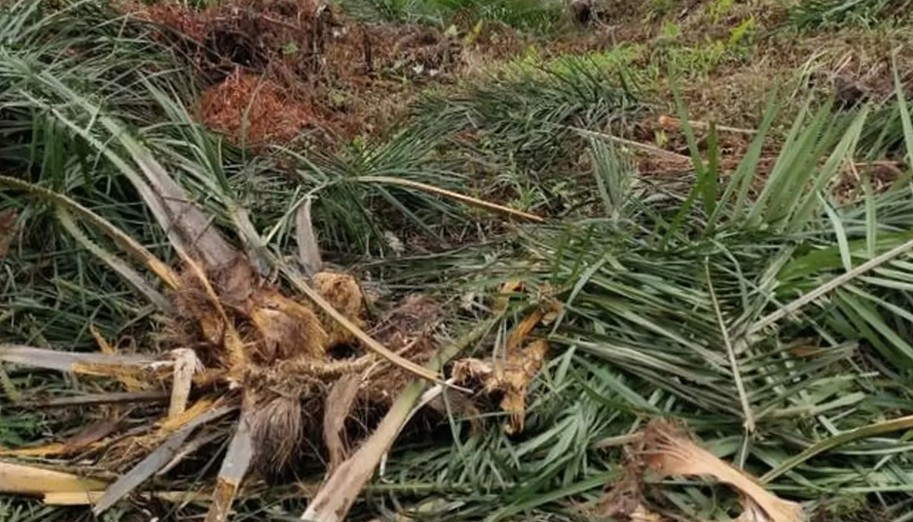
In the advanced phase, Ganoderma bodies begin to appear at the base of the rotting stem. This condition causes the stem to become soft and at risk of collapsing.
One of the biggest challenges in Ganoderma control is the difficulty of detecting infection in its early stages because the plants do not yet show visible symptoms.
To address this issue, BRIN isolates and characterizes Ganoderma in the laboratory. Research is conducted by observing the shape of its bodies, colonies, and spores, as well as conducting molecular analysis to determine the diversity of the pathogen from various regions.
Going forward, BRIN is also encouraging the use of modern technologies such as artificial intelligence (AI), biosensors, molecular detection, and remote sensing to accelerate disease identification in the field.
According to Siti, early detection technology will help farmers and companies to take faster and more precise control measures in order to maintain oil palm plantations’ productivity.
Strengthening this research is part of BRIN’s commitment to supporting the transformation of the national plantation industry based on innovation and technology.
These efforts are considered crucial for maintaining the sustainability of the Indonesian palm oil industry amidst productivity challenges and global environmental change. (*)
Sawitku.id. Teknologi Baru BRIN Bantu Deteksi Ganoderma dan Selamatkan Produktivitas Sawit Nasional. https://www.sawitku.id/sawitku/81417209393/teknologi-baru-brin-bantu-deteksi-ganoderma-dan-selamatkan-produktivitas-sawit-nasional. 4 Juni 2026