JAKARTA – The Indonesian Palm Oil Association (GAPKI) emphasizes that the supervision of Indonesian palm oil exports has been conducted through multiple layers and involves a number of related government agencies. Consequently, efforts to prevent the leakage of state revenue are considered to depend not on the introduction of new regulations, but rather on consistent law enforcement against any perpetrator proven to have committed violations.
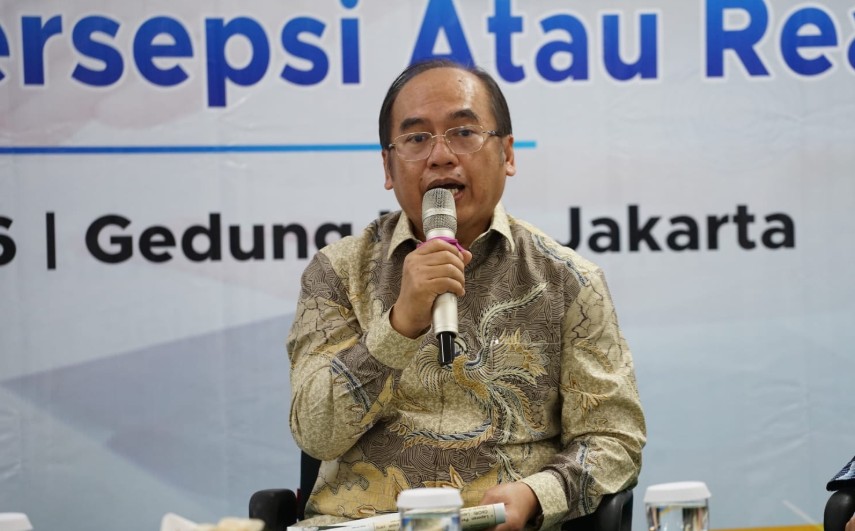
“The current oversight mechanism for palm oil exports in Indonesia is highly comprehensive,” GAPKI Taxation and Fiscal Division Head Dr. Yustinus Lambang Setyo Putro said during the IKPI “Ruang Gagasan” (Idea Forum) webinar titled “Under-invoicing and State Revenue Leakage: Perception or Reality?” organized by the Indonesian Tax Consultants Association (IKPI) on Friday (26/06/2026).
According to Yustinus, Supervision spans the entire process: from the export licensing stage via the Indonesia National Single Window (INSW) system and document verification through the Directorate General of Customs and Excise’s CEISA system, to physical inspections of goods on specific processing lanes and the monitoring of export earnings through Bank Indonesia’s Integrated Real-Time Foreign Exchange Monitoring System (SIMODIS).
Furthermore, export transactions are subject to oversight by tax authorities, who verify the reasonableness of the prices and transaction values reported by exporters.
“So, in my view, the system in place in Indonesia is already very stringent. What is needed now is law enforcement. The supervision system exists, and the mechanisms are already in place,” said Yustinus.
Palm oil exporters required to meet all obligations
Yustinus explained that companies exporting palm oil products must not only fulfill tax obligations. Before obtaining an export permit, business players must also fulfill various other obligations set by the government.
These obligations include paying export duties to the Directorate General of Customs and Excise, paying export levies to the Plantation Fund Management Agency (BPDP), and fulfilling the Domestic Market Obligation (DMO) requirements, which are a requirement for obtaining an export quota.
With the numerous monitoring stages and obligations that must be met, he believes the room for violations is increasingly limited.
Affiliation transactions supervised through Transfer Pricing
Furthermore, Yustinus explained that palm oil companies conducting transactions with affiliated companies are required to prepare complete transfer pricing documentation.
These documents include master files, local files, and Country-by-Country Reports (CbCR), which tax authorities use to verify the reasonableness of transaction prices.
If transaction prices are found to be inconsistent with the principles of arm’s length and business practice, the tax authorities have the authority to issue tax assessment letters and impose administrative sanctions in accordance with prevailing regulations.
GAPKI supports actions against violators
Nevertheless, Yustinus acknowledged that there are still unscrupulous business players who commit violations, such as manipulating export commodity classifications to gain specific advantages.
However, he emphasized that such actions are the conduct of individuals and cannot be generalized as practices carried out by the entire national palm oil industry.
“GAPKI consistently urges all its members to comply with all prevailing tax and trade regulations. If any exporter is proven to have committed a violation, they must certainly be processed in accordance with the prevailing laws,” he asserted.
Yustinus hopes that the government’s established supervision system can be further strengthened through consistent law enforcement. In this way, the business climate can be maintained, business compliance improved, and the palm oil industry can continue to make an optimal contribution to state revenue and the national economy. (*)