Understanding Palm-Based Fuels in the Energy Transition
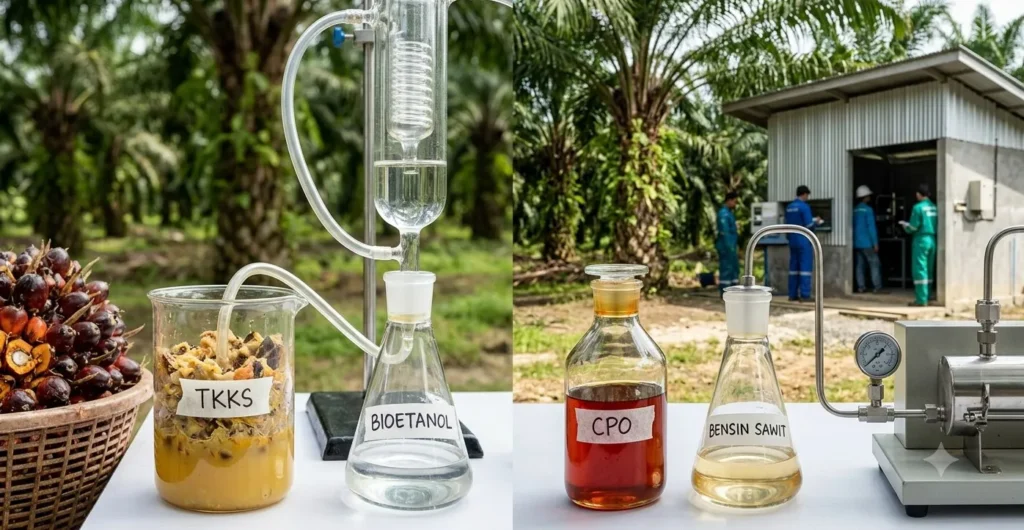
The oil palm industry is playing an increasingly important role in supporting the global transition toward renewable energy. Beyond its established contribution to biodiesel and sustainable aviation fuel (SAF), palm oil also offers the potential to produce gasoline alternatives through two distinct technological pathways: Palm Bioethanol and Palm Gasoline.
Both innovations aim to reduce dependence on fossil fuels, strengthen energy security, and maximize the utilization of domestic renewable resources. However, Palm Bioethanol and Palm Gasoline differ significantly in terms of feedstock, production processes, and fuel characteristics.
Understanding these differences is essential to appreciating how each technology can contribute to a more sustainable energy future.
Palm Bioethanol: Converting Oil Palm Biomass into Renewable Fuel
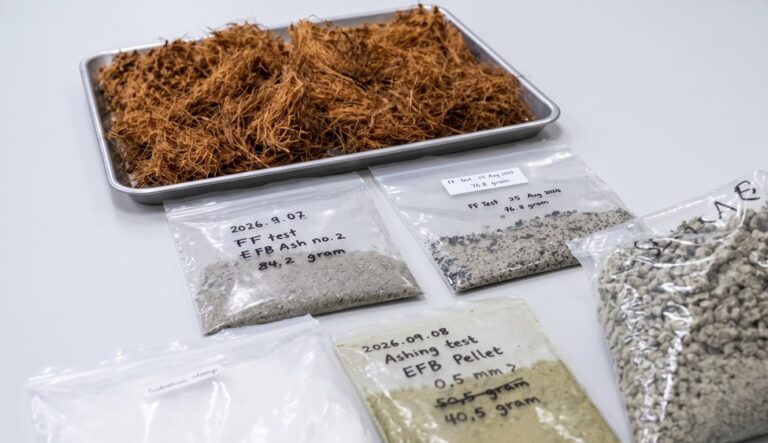
Palm Bioethanol is a renewable biofuel produced from oil palm biomass and plantation residues, including:
- Empty Fruit Bunches (EFB)
- Oil Palm Trunks (OPT)
- Oil Palm Fronds (OPF)
- Other lignocellulosic biomass from oil palm plantations
These materials contain cellulose and hemicellulose, which can be converted into simple sugars and subsequently fermented into ethanol.
How Palm Bioethanol Is Produced
Palm bioethanol production generally involves three main stages:
1. Hydrolysis
Cellulose and hemicellulose are broken down into fermentable sugars.
2. Fermentation
Microorganisms convert the sugars into ethanol.
3. Distillation and Purification
The ethanol is purified to achieve the desired fuel-grade quality.
Because it utilizes agricultural waste and biomass residues, Palm Bioethanol is considered a second-generation bioethanol (2G bioethanol) that does not compete with food production.
The development of Palm Bioethanol offers significant opportunities to increase the value of biomass resources that have traditionally been underutilized.
Palm Gasoline: Converting Palm Oil into Hydrocarbon Fuel
Unlike Palm Bioethanol, Palm Gasoline uses palm oil as its primary feedstock.
Through catalytic conversion technologies, including developments involving Indonesia’s Merah Putih Catalyst, oxygen molecules are removed from palm oil to produce hydrocarbons with characteristics similar to conventional gasoline.
The resulting fuel can potentially be used in existing gasoline-powered vehicles without major engine modifications or significant changes to fuel distribution infrastructure.
For this reason, Palm Gasoline is often categorized as a drop-in renewable fuel, meaning it can directly replace or supplement fossil-based gasoline.
The development of palm-based hydrocarbon fuels also supports downstream palm oil industrialization while strengthening national energy independence.
Key Differences Between Palm Bioethanol and Palm Gasoline
Although both are renewable fuels derived from the palm oil sector, they follow entirely different conversion pathways.
| Aspect | Palm Bioethanol | Palm Gasoline |
|---|---|---|
| Primary Feedstock | Palm biomass and agricultural residues | Palm oil |
| Raw Material Source | Empty Fruit Bunches (EFB), oil palm trunks, fronds, and other lignocellulosic biomass | Crude Palm Oil (CPO) and other palm-based oils |
| Production Process | Hydrolysis, fermentation, and distillation | Catalytic and chemical conversion processes |
| Conversion Pathway | Biological conversion | Thermochemical and catalytic conversion |
| Final Product | Ethanol (alcohol-based fuel) | Hydrocarbon fuel similar to gasoline |
| Fuel Characteristics | Typically blended with gasoline (e.g., E5, E10, E20) | Can closely resemble conventional gasoline properties |
| Engine Compatibility | Usually used as a gasoline blend component | Potential drop-in fuel for existing gasoline engines |
| Infrastructure Requirement | May require blending and dedicated fuel handling systems | Can potentially utilize existing fuel infrastructure |
| Biofuel Classification | Second-Generation Bioethanol (2G Bioethanol) | Renewable Hydrocarbon Fuel |
| Main Sustainability Benefit | Utilizes agricultural waste and biomass residues | Produces renewable gasoline from palm oil feedstock |
| Contribution to Circular Economy | High, because it converts plantation waste into energy | Moderate, through higher-value utilization of palm oil resources |
| Commercial Development Status | Mostly research, pilot projects, and demonstration plants | Emerging technology with ongoing development and testing |
In simple terms, Palm Bioethanol produces an alcohol-based fuel, while Palm Gasoline produces hydrocarbon molecules that closely resemble fossil gasoline.
Complementary Technologies for Energy Security
Rather than competing with one another, Palm Bioethanol and Palm Gasoline can serve complementary roles within a renewable fuel ecosystem.
Palm Bioethanol provides a pathway to utilize abundant oil palm biomass and plantation residues, helping reduce waste while generating renewable energy.
Palm Gasoline, meanwhile, demonstrates how palm oil itself can be transformed into renewable hydrocarbon fuels compatible with existing transportation infrastructure.
Together, these technologies broaden the contribution of the palm oil industry beyond biodiesel and sustainable aviation fuel, creating additional pathways toward cleaner transportation fuels.
The Future of Palm-Based Gasoline Alternatives
As countries seek to reduce greenhouse gas emissions and strengthen energy resilience, palm-based fuels are expected to play an increasingly important role.
Advances in bioethanol production, biomass conversion technologies, catalytic processing, and integrated biorefineries could accelerate the commercialization of both Palm Bioethanol and Palm Gasoline.
With continued technological innovation and supportive policies, these renewable fuels may become important components of future low-carbon energy systems while simultaneously increasing the value-added potential of the palm oil industry.
Conclusion
Palm Bioethanol and Palm Gasoline represent two different technological approaches to producing renewable transportation fuels from the oil palm sector.
Palm Bioethanol utilizes biomass and plantation residues to produce ethanol through biological processes, while Palm Gasoline converts palm oil into hydrocarbon fuels through catalytic processing.
Together, they highlight the growing potential of palm-based renewable energy solutions to support energy security, industrial downstream development, carbon emission reduction, and sustainable economic growth.
SEO Keywords: Palm Bioethanol, Palm Gasoline, Palm-Based Fuel, Renewable Fuel, Oil Palm Biomass, Palm Oil Energy, Second Generation Bioethanol, Drop-In Fuel, Palm Hydrocarbon Fuel, Sustainable Energy, Renewable Transportation Fuel, Palm Oil Industry, Energy Transition, Low Carbon Fuel, Indonesia Renewable Energy.
WikiSawit. Bioethanol Sawit vs Bensin Sawit: Apa Bedanya?. https://gapki.id/id/wikisawit/knowledge-base/bioethanol-sawit-vs-bensin-sawit-apa-bedanya/