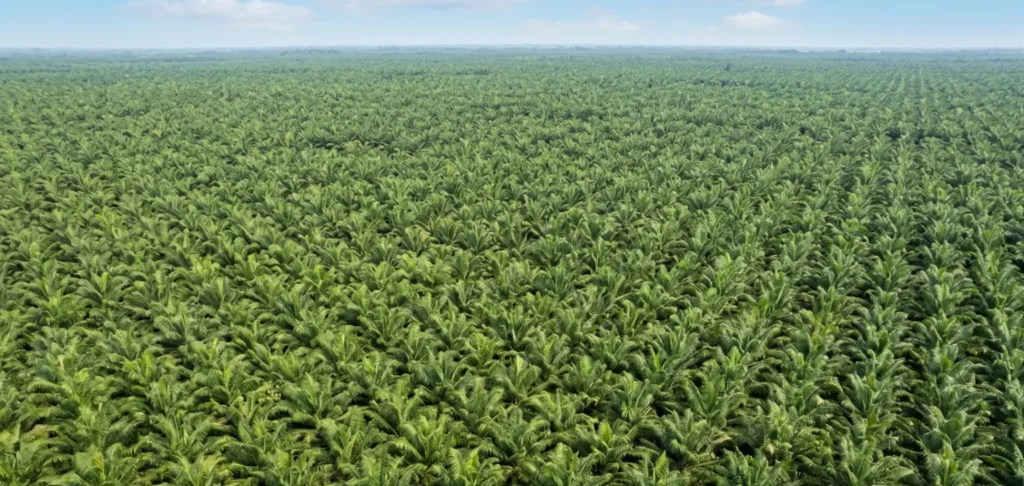
Indonesia is known as the largest producer and exporter of palm oil in the world. The achievement did not happen by chance, but it is underpinned by natural factors that make Indonesia one of the most ideal regions for oil palm cultivation. Those factors from its tropical climate, abundant rainfall, and suitable topography to its diverse soil types, collectively create an ecosystem that fosters optimal growth and productivity for oil palm crops.
Indonesia’s tropical climate very ideal for oil palm trees
The oil palm (Elaeis guineensis) is a tropical plant that requires abundant sunlight, warm temperatures, and high humidity throughout the year. It thrives at temperatures between 24°C and 32°C and needs approximately 6 to 7 hours of sunlight daily.
As a country straddling the equator, Indonesia benefits from a tropical climate that remains relatively stable year-round. These conditions allow the oil palm to maximize photosynthesis, resulting in higher productivity compared to subtropical regions or countries with long winters.
High rainfalls support productivity of oil palm trees
Water availability is one of the most critical factors in oil palm cultivation. Rainfall plays a major role in supporting both vegetative and generative plant growth, particularly during the stages of flower and fresh fruit bunch (FFB) formation.
Various studies indicate that oil palms thrive in regions with an annual rainfall of approximately 2,000–2,500 mm, evenly distributed throughout the year. A number of sources even cite an ideal range of 1,750–3,500 mm per year.
Indonesia possesses many regions with these rainfall characteristics, notably in Sumatra, Kalimantan, Sulawesi, and parts of Papua. Abundant rainfall is a key reason why Indonesia’s oil palm productivity has continued to improve over the years.
Lowland Topography Supports Optimal Growth
In addition to climate and rainfall, altitude also influences the growth of oil palm trees. Generally, oil palms thrive in areas with an elevation of less than 500 meters above sea level.
In higher-altitude regions, air temperatures tend to be lower, which can slow down plant growth and reduce productivity. Indonesia possesses vast low-lying areas particularly in Sumatra and Kalimantan that are highly suitable for the development of oil palm plantations.
Diversity of soil types becomes Indonesia’s advantages
Indonesia possesses various soil types suitable for oil palm cultivation, ranging from mineral soils to peatlands. With proper management, these diverse soil types can support plant growth and deliver high productivity.
This diversity in land conditions offers flexibility for developing oil palm plantations across various regions and serves as a key factor reinforcing Indonesia’s position as the world’s largest palm oil producer.
Climate change poses challenges that need to be anticipated
Despite Indonesia’s highly favorable natural conditions, the palm oil industry must remain vigilant regarding the impacts of climate change. Variations in rainfall, rising temperatures, water deficits, and shifting weather patterns can affect crop productivity.
Consequently, the use of weather forecasting technology, early warning systems, and sustainable cultivation practices is becoming increasingly vital to maintaining the stability of national palm oil production. Adaptation to climate change will be a key factor in the future sustainability of Indonesia’s palm oil industry.
Indonesia and global comparative advantage of palm oil
A combination of a tropical climate, ideal rainfall, suitable terrain elevation, and diverse soil types gives Indonesia a natural comparative advantage in oil palm cultivation. These factors not shared by all nations form a solid foundation for Indonesia’s ability to maintain its position as the world’s largest palm oil producer.
Understanding the natural suitability of Indonesia for oil palms is also crucial for farmers, companies, academics, and the general public. It highlights that the success of the national palm oil industry is supported not only by technology and investment but also by the natural resource endowment that allows optimal crop growth. (*)
WikiSawit. Kecocokan Sawit dan Indonesia. https://gapki.id/id/wikisawit/knowledge-base/kecocokan-sawit-dan-indonesia/