JAKARTA – WWF-Indonesia and the Council of Palm Oil Producing Countries (CPOPC) have signed a Memorandum of Understanding (MoU) to strengthen sustainability certification systems for plantation commodities, particularly Indonesian Sustainable Palm Oil (ISPO).
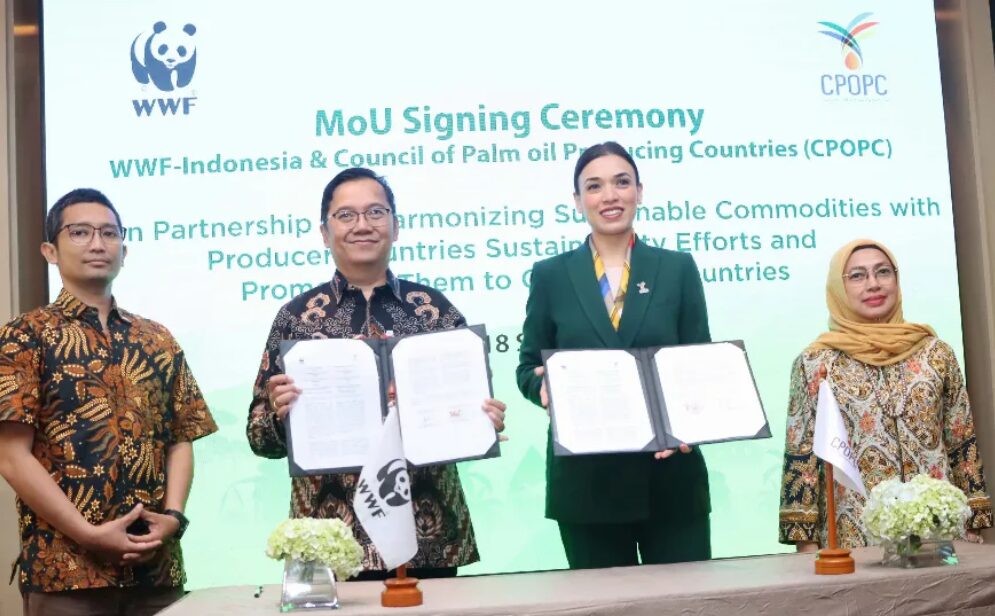
The partnership is aimed at enhancing the credibility and global acceptance of ISPO certification, while strengthening supply chain transparency, responsible production practices, and the participation of independent smallholders in sustainable palm oil supply chains.
The MoU was signed in Jakarta on Friday (September 18, 2026), as part of efforts to strengthen sustainability systems for plantation commodities at both the national and global levels.
CPOPC Highlights the Importance of Strengthening ISPO Certification
CPOPC Secretary-General Izzana Salleh said palm oil-producing countries and industry stakeholders have made significant investments and progress in strengthening sustainability practices across the sector.
She said national sustainability certification schemes, including Indonesian Sustainable Palm Oil (ISPO) and Malaysian Sustainable Palm Oil (MSPO), reflect the commitment of producer countries to improving sustainability standards.
However, Izzana also emphasized the importance of ensuring that independent smallholders have adequate resources, capacity, and opportunities to participate in sustainable supply chains.
Partnerships among producer countries, businesses, civil society organizations, and other stakeholders are therefore considered important to support greater smallholder participation in sustainability initiatives.
Strengthening ISPO’s Global Recognition
A key focus of the partnership is the strengthening of ISPO certification to enhance its credibility and competitiveness in global commodity markets.
CPOPC and its partners seek to reinforce ISPO within a broader global sustainability framework, with the aim of increasing its recognition and acceptance among consumer countries.
The initiative also reflects the growing importance of credible sustainability certification in global palm oil supply chains, particularly as markets increasingly emphasize traceability, responsible production, and environmental and social considerations.
Strengthening the connection between national certification systems and international market requirements could help improve confidence in certified sustainable palm oil from producer countries.
WWF-Indonesia Calls for Cross-Stakeholder Collaboration
WWF-Indonesia CEO Aditya Bayunanda said building credibility for sustainable plantation commodities requires collaboration among multiple stakeholders, including businesses, certification bodies, independent smallholders, and global markets.
He pointed to an existing gap between certified production capacity and the level of market acceptance for certified commodities.
According to him, collaboration between WWF-Indonesia and CPOPC can contribute to strengthening ISPO and other national sustainability certification systems developed by palm oil-producing countries.
Such cooperation is expected to support stronger links between sustainability standards, producers, supply chains, and international markets.
ISPO Certification and Indonesia’s Climate Commitments
The partnership also aligns with Indonesia’s climate commitments under its Second Nationally Determined Contribution (NDC).
Indonesia’s target includes reducing greenhouse gas emissions by 31.89% by 2030 through domestic efforts, and by up to 43.20% with international support.
In this context, strengthening sustainability systems in the plantation sector forms part of broader efforts to promote responsible production practices and support climate mitigation targets.
Independent Smallholders Remain a Key Focus
For CPOPC, the partnership with WWF-Indonesia represents an important step toward strengthening the role of palm oil-producing countries in developing practical, science-based, and inclusive sustainability solutions.
A key priority is ensuring that independent smallholders have access to the resources, capacity building, and market opportunities needed to participate in sustainable palm oil supply chains.
By strengthening ISPO certification, supply chain transparency, and smallholder participation, the partnership aims to contribute to a more sustainable palm oil supply chain with broader recognition in international markets.
The cooperation between WWF-Indonesia and CPOPC therefore goes beyond certification itself. It also seeks to strengthen the role of producer countries, expand smallholder participation, and build greater confidence in national sustainability certification systems within global palm oil markets. (*)
Sawitindonesia.com. WWF-Indonesia dan CPOPC Sepakati Kerjasama Perkuat Transparansi Rantai Pasok Komoditas Berkelanjutan di Pasar Global. https://sawitindonesia.com/wwf-indonesia-dan-cpopc-sepakati-kerjasama-perkuat-transparansi-rantai-pasok-komoditas-berkelanjutan-di-pasar-global. 19 Sep 2026