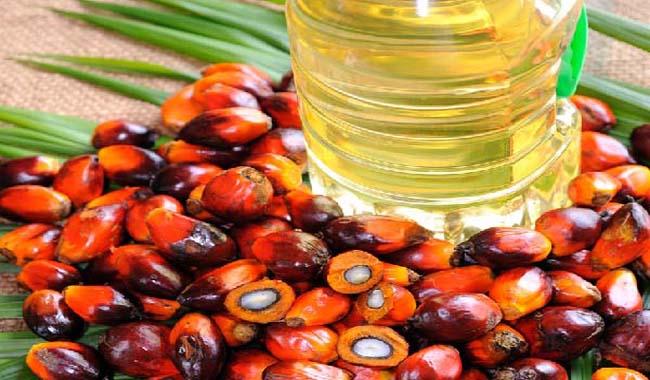
The Indonesian embassy (KBRI) in Islamabad convened a virtual meeting with the Pakistani Vanaspati Manufacturer’s Association (PVMA) and Pakistani importers to secure Indonesia’s exports of crude palm oil (CPO) and derivative products to the South Asian country.

The Indonesian embassy said recently that the meeting is part of its efforts to secure the exports of CPO and derivative products to Pakistan, amid the outbreak of Coronavirus 2019 (Covid-19) which had forced the country to apply a lockdown policy to stem the spread of the pandemic.
During the meeting, Indonesia’s Ambassador to Pakistan, Iwan Suyudhie Amri, expressed his appreciation to PVMA, which has been always cooperative in discussing about the latest development of palm oil trading in Pakistan. “Through our cooperation with PVMA that has been well developed until now, KBRI can get necessary information to continually pursue efforts of increasing the mutually-beneficial cooperation on the palm between the two countries,” Ambassador Iwan was quoted by Antara as saying, last week.
Based on data from the KBRI Islamabad, in 2019 Indonesia saw a surplus of US$1.5 billion in its trade balance with Pakistan, which was mainly contributed by palm oil products. During the period of January-May 2020, Pakistan’s palm oil imports from Indonesia dropped by 10.31 percent, as compared to its imports during the same period in 2019. Pakistan’s total imports of palm oil and derivative products during the first five months in 2020 amounted to around 1,174,961 tons, a decrease of 135,000 tons if compared to its imports during the same period in 2019 at 1,310,042 tons. The decrease was caused by several factors, which include the outbreak of Covid-19 pandemic.
But overall, Indonesia’s palm oil products still command the market in Pakistan. In May 2020, Pakistan’s imports of palm oil and derivative products from Indonesia reached 194,152 tons or 92.41 percent of its total imports of the palm oil products. The other 7.59 percent or 15,949 tons are imported from Malaysia.
Pakistan is the fourth largest importer of Indonesia’s palm oil and derivative products after India, China and the European Union (EU). In South Asian region, which also includes India and Bangladesh, Pakistan is the second largest importer after India, with its palm oil imports in 2018 reached 2,5 million tons. During the same year, India’s imports of palm oil products reached 6.7 million tons, while Bangladesh 1.4 million tons.
During the meeting, PVMA also informed about the problems facing the vanaspati ghee industries, which rely on the palm oil as their raw materials to produce a variety of products, including energy sources, vitamin, essential fatty acid and other products.
The Punjab Food Authority (PFA), an institution authorized to supervise the healthy standard of food products in Punjab, is considering to re-enact since July 2020 the regulation on banning vanaspati ghee production in Punjab province, which has the second largest population after Sindh. The PFA reasoned that the ban policy is based on a panel recommendation which sees the vanaspati ghee as potential to bring negative impact to the human health. “We’ll take it to court, as we’ve once did when the PFA applied the ban for the first time in 2018,” the PVMA Secretary General Umer Islam.
The palm oil and derivative products in Pakistan have created jobs for around 58,000 people and become the third largest contributor of tax income, contributing US$654 million or around Rp9 trillion in tax income in 2019.
“The ban policy has no logical reason and is against the standard national policy of Pakistan,” said Umer.
To solve the problem, Ambassador Iwan said that they will collaborate with the Indonesia’s palm oil consumer companies in Pakistan to launch CPO positive campaigns. Such campaigns will be intensified through collaborations, including with the Indonesia-Pakistan Palm Oil Joint Committee (IP JPOC), which was set up in 2017 based on the initiative of KBRI Islamabad. (*)
Source: Bisnis.com | Featured image via thenews.com.pk