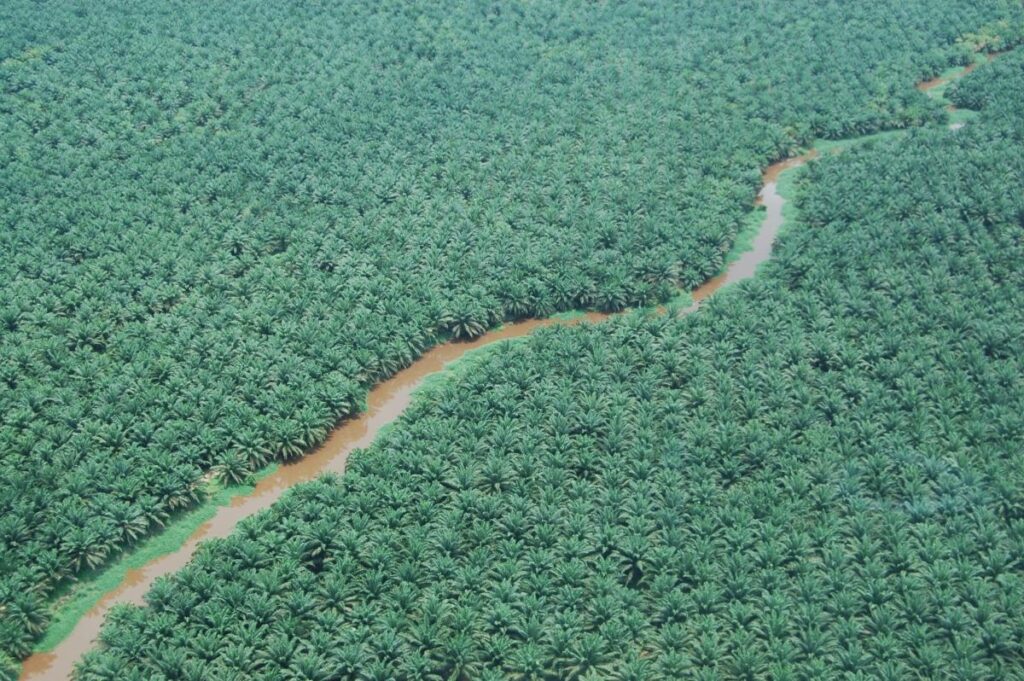
Palm oil has been very often accused of causing forest encroachment and deforestation. But based on a number of studies, the use of land in secondary forests for development of oil palm plantations only accounts for 3% of the total oil palm acreage in Indonesia. The rest of the oil palm plantations are grown in derelict lands at 43%, degraded lands 27%, agriculture lands at 14%, and industrial forests at 13%.

Based on data from the Indonesian Palm Oil Association (GAPKI), the total acreage of Indonesian oil palm plantations contradicts the claim that the palm oil is the main cause of deforestation in Indonesia. Besides, the palm oil has been also accused of contributing to the global warming. The fact is that the largest contributor of the greenhouse gas emissions is the energy consumption. The agriculture sector only contributes 14% of the total greenhouse gas emissions.
In fact, Indonesia contributes the greenhouse gas emissions at very small amount if compared to the global 10 major contributors of C02, namely China, the USA, India, Russia, Japan, Germany, Iran, Canada, South Korea and the UK (over 500 million tons/year per country). Indonesia only contributes greenhouse gas emission at 2.7%.
As plants the oil palm trees emit CO2 as part of respiration process. Based on the research conducted by the Intergovernmental Panel on Climate Change (IPCC) during 2011-2014, the oil palm plantations emit 3.6 tons of CO2 per hectare (ha), but the oil palm plantations are able to sequester CO2 up to 13.7 tons per ha. That means there is a balance of 10 tons per ha in the CO2 sequestration. It has proven that oil palm plantations are not emitter but good absorber of CO2.
The oil palm plantations have been also accused of absorbing a lot of water, so that the plantations are not friendly to their surrounding ecosystem. The agriculture ministry’s plantation director general Bambang said that actually the oil palm plantations help re-greening the former locations of logging activities in Indonesia. GAPKI said that the roots of the oil palm trees can quickly absorb rain water which is later released through the process of evaporation.
Indonesian palm oil industry contributes significantly to the national economy. In 2016, Indonesia’s plantation sector contributed Rp411 trillion to the total gross domestic product (GDP) of Indonesia, of which a total of Rp239.4 trillion was contributed by palm oil industry.
The palm oil sector has provided a total of 82 million on-farm and off-farm jobs. It has also contributed bioenergy amid the declining trend of fossil fuels production.
The above data should actually stand as an eye-opener for the general public, especially the European Union, in getting deeper understanding on environmental damage accused against Indonesia. The real facts have proven that the oil palm plantations are not the main cause of environmental damages in Indonesia. (*)
Source: InfoSAWIT