Jakarta: The Indonesian Palm Oil Association (Gapki) has emphasized the importance of partnership between oil palm smallholders and companies to secure the palm oil supply chain and improve market competitiveness.

Gapki Chairman Joko Supriyono said that the palm oil supply chain depends on the partnership of smallholders and companies. The solidity of their partnership will determine the competitiveness of the palm oil in the global market.
“The partnership is a must. It is because the palm oil industry needs to be more competitive at the global market. If there is any problems hindering its supply chain, the palm oil industry will be impacted,” Joko said during the webinar on small and medium businesses (UMKM) organized on Monday by Majalah Sawit Indonesia in cooperation with the oil palm plantation fund management board (BPDP-KS).
He added that compared to other commodities, the partnership of oil palm smallholders and companies stands as an ideal model.
According to him, the partnership between the smallholders and companies have strengthened the management of oil palm plantations so that the industry can grow robustly.
The Indonesian Oil Palm Smallholders Association (Apkasindo) Chairman Gulat Manurung said that the partnership between smallholders and companies should be well managed to improve palm oil competitiveness and increase the palm oil industry’s contribution to the national economy.
He said that for such purpose, the partnership should be strengthened through the improvement of smallholders’ institution, principle of openness, and partnership management.
“Oil palm smallholders badly need partnership as it will ensure certainty, increase added value, generate economic growth, promote even distribution and empower people and small businesses,” he said.
He noted that the institutions of smallholders should be improved and given bigger role to play. Having better institutions will make it easier for smallholders and companies to develop their partnerships.
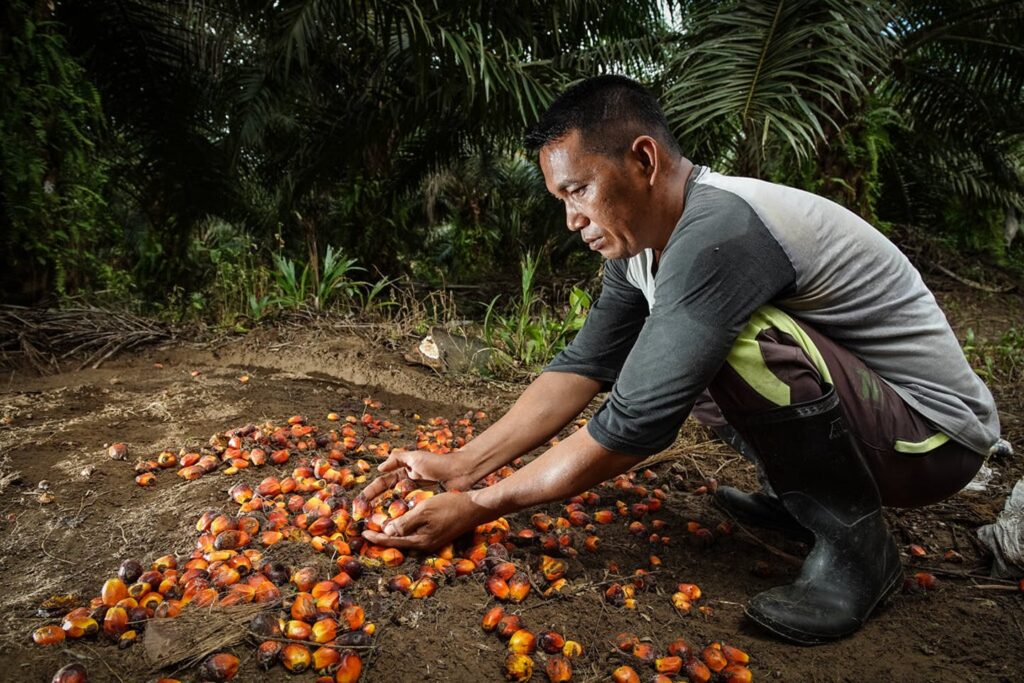
“The partnership model can be extended to accommodate their current needs. It shouldn’t be just limited to a partnership to supply the fresh fruit bunches (FFB) to the mills,” he told the webinar which was themed with “Synergistic partnership and institutional empowerment for efficient palm oil supply chain”.
Normansyah Syahrudin, the head of marketing sub-division of the plantation directorate general at the agriculture ministry, said that the government has regulated the partnership between companies and smallholders through the agriculture ministry regulation (Permentan) No.01/2018. It sets the definition of growers and partnership and provides guidelines to determine prices of fresh fruit bunches from plantations.
“Basically, the Permentan sets a guideline to determine the price of FFB based on the decision of provincial teams every month. Therefore, the institutions of smallholders should partner with the palm oil mills,” he said.
Meanwhile, M. Ferrian, acting director of partnership at the oil palm plantation fund management board (BPDPKS), said that his institution has been continually urging the smallholders to develop palm oil mills, but the development should be based on feasibility study.
“BPDPKS can provide funding for smallholders based on directions set in prevailing regulations. We can also provide trainings and funding of facilities and necessary infrastructure according to the regulation of agriculture ministry,” he added. (*)
Source: antaranews.com | Featured: eco-business.com