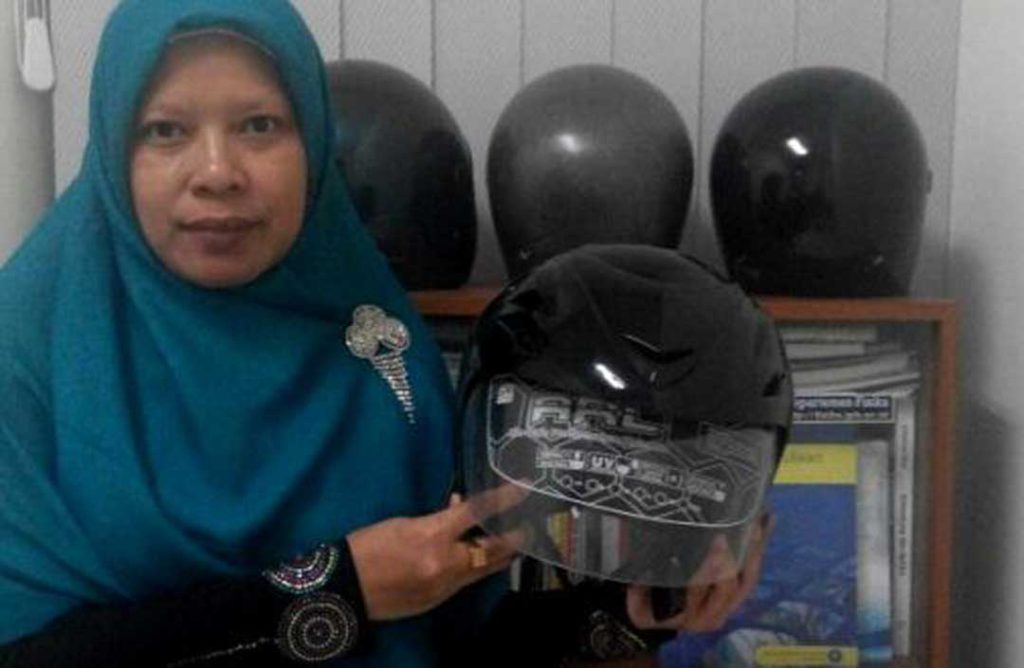
BOGOR – Bogor Agriculture University (IPB) Lecturer Siti Nikmatin has partnered with PT Intertisi Material Maju (PT IMM), the foster partner of Surveyor Indonesia, to produce hardhats or protective helmets from empty fruit bunches of oil palm. The helmets have local content of 71.21% and already passed the standard test of SNI, the national standardization institute.
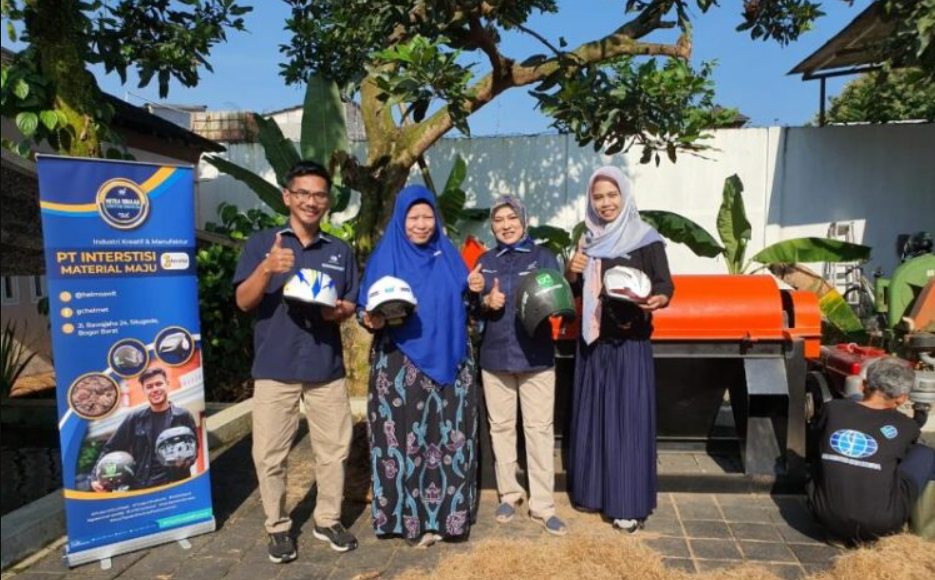
“The innovation to use the empty palm fruit bunches as raw material to produce helmets has been granted with a patent by the number of P00201609159,” Siti was quoted by Antara as saying on Wednesday, 29 March 2023.
Siti said that commercially the palm-based helmet products are branded with Green Composite Helmet. “Usually, the empty bunches are used for fertilizer. We tried to diversify its use by innovating the helmet production from the empty bunches,” she said.
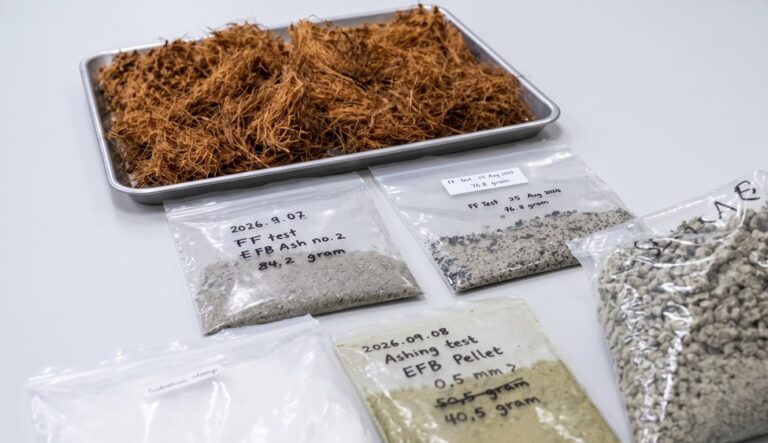
According to her, the empty palm bunches have good mechanical properties and can be used as fillers to increase the mechanical-physical quality of the protective helmets.
Indonesia is the world’s largest producer of palm oil. Based on data from the United States Department of Agriculture (USDA), Indonesia’s production of crude palm oil (CPO) can reach 45.5 million metric tons during 2022/2023.
Every one ton of oil palm fruit bunches will result in 22–23 percent or around 220–230 kg of empty palm fruit bunches. It means that every processing of 100 tons of palm fruit bunches per hour in palm oil mills will produce around 23 tons of empty fruit bunches. The abundant waste of empty fruit bunches needs good solutions which are eco-friendly and able to increase their economic value.
PT IMM’s CEO Andika Kristinawati said that PT Surveyor Indonesia had facilitated the certification process of its local content. Surveyor Indonesia has also helped financing the purchase of chopping machines, registration in market place Padi UMKM, training on branding, and participations in exhibitions.
For the raw materials, PT IMM has partnered with PT Perkebunan Nusantara (PTPN) VIII in Jasinga district of Bogor regency, West Java. “The processing of the empty bunches is implemented under cooperation with groups of farmers in Jasinga,” said Andika.
According to Andika, the helmets are produced through a number of processes, which include the splitting of the empty bunches into long fibers by the groups of farmers. Such process will take around one to two weeks. After that, the fibers are mixed with plastic polymer and then extracted into small granules. The granules will be later injected into helmet shells. The next process will be the hardening process of the helmet shells and finishing process that includes painting. “That way we can contribute in solving the problem of the oil palm waste,” she said.
Since 2017 until now, the Green Composite helmets have been sold to almost all regions of Indonesia. “During the Covid-19 pandemic, the palm-based helmets were sold at the prices ranging from Rp70,000 to Rp350,000 per unit,” she said. (*)
Source: JawaPos.com