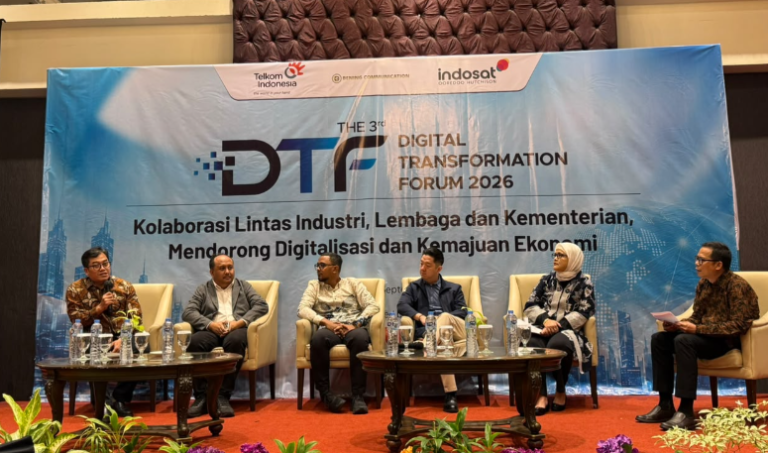
Tarakan – The oil palm growers grouped in the Indonesian Palm Oil Association (GAPKI) held a two-day event of Borneo Forum on 14 – 15 November 2023 in Kota Tarakan, North Kalimantan (Kaltara). The sixth annual palm oil forum was themed with “Creating Sustainable Palm Oil For Public Welfare.”
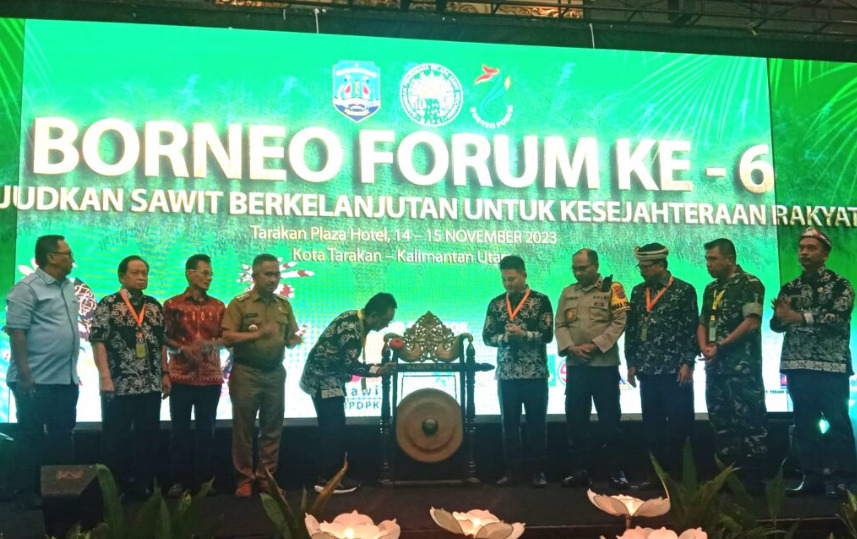
During the convention and exhibition, speakers and participants discussed three main topics, namely oil palm replanting program, the encroachment of oil palm plantations into forests, and smallholding plantations.
Addressing its opening ceremony, GAPKI Chairman Eddy Martono reminded the Borneo Forum participants about the challenges facing the Indonesian palm oil industry, especially on production. “Although we’re the world’s largest producer of palm oil, we’re also one of the world’s major consumers of palm oil with domestic demand continually rising. Currently, our production is stagnant and tends to decline. But our local consumption has been steadily increasing from year to year. Due to the rising local consumption our exports have decreased from the previous 70% of our total production to only 40% now,” he said.
Based on data from the government, Indonesia’s total production of CPO and PKO in 2022 was around 51 million tons, while local need was around 24 – 25 million tons and estimated to rise due to the government’s mandatory program of biodiesel 35 percent or B35.
“To raise the production, we need to accelerate replanting of smallholdings. The replanting program needs a collaboration of all stakeholders. If there is no increase in production, then export will have to be further reduced to fulfill the rising local need,” Eddy said.
He said that oil palm companies should fairly implement their obligation to develop 20% plasma plantations from their total plantations for smallholders in such a way to prevent social conflicts as happened recently in Central Kalimantan.
“Regarding the problem of certain areas of oil plantations encroaching forests, we’re seeking a solution for the owners. We’re now fighting for it, so that they won’t be categorized into the article 110B of the Omnibus Law, but into its article 110A that will categorize them as non-forest area and legally allowed to continue their oil palm cultivation. What if there are palm oil mills, employee housing complex, schools in the areas. Can you imagine what will happen to them if they are stopped. It might trigger new social problems,” he said.
“In addition to that, currently there are around 30 ministries/institutions which deal with the palm oil industry, resulting in overlapping policies. We hope the government will streamline the palm oil bureaucracy to create a conducive condition for the industry to grow robustly. But what happens now is the fact that the palm oil industry has been stunted by the overlapping policies,” said Eddy. (B/B)