JAKARTA – The Indonesian Palm Oil Association (GAPKI) Chairman Eddy Martono said he is confident that in 2024 palm oil will maintain its leading position at the global market of vegetable oils with a market share of around 36 percent. But despite his optimism, he also revealed a number of challenges and opportunities facing Indonesian palm oil industry players next year.
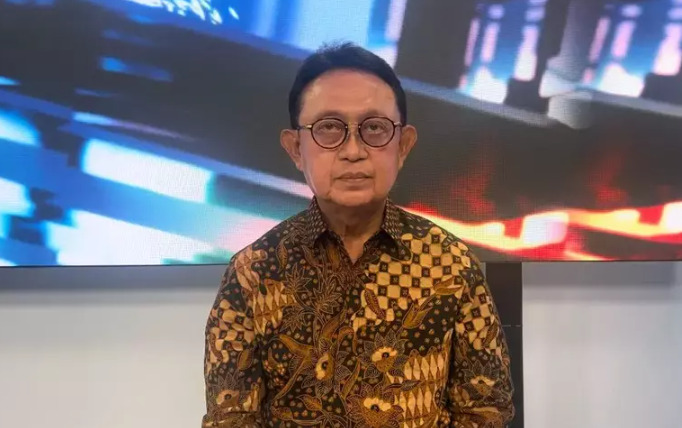
“We’re confident with that as consumption of vegetable oils increases every year along with the global population growth,” Eddy Martono said at the office building of B Universe, Jakarta, on Monday (11/12).
Eddy pointed out that the consumption of vegetable oils increased at around 3 – 5 million tons every year. “Palm oil and other vegetable oils can exploit that niche to increase their market share,” he said.
Eddy said that one of the challenges facing the palm oil industry next year is concerned with the European Union Deforestation-free Regulation (EUDR). “We have to pursue some preparation efforts to make us ready when the EUDR is fully implemented in 2025. It might make things difficult for us if its implementation is strict as stipulated in the current version of the EUDR,” said Eddy.
According to him, GAPKI has been taking a number of steps to deal with the EUDR, including a collaboration with Malaysia to lobby the EU. “Our embassy in Europe has been also very active in pursuing diplomatic efforts. We hope the EU will soften the EUDR implementation in 2025,” Eddy said.
When addressing the opening ceremony of the 19th Indonesian Palm Oil Conference (IPOC) and 2024 Price Outlook early last month in Bali International Convention Center (BICC), Nusa Dua, Bali, Eddy Martono expressed the hope that the government will take appropriate policies to maintain the competitiveness of Indonesian palm oil industry at the global market, especially on improving sustainability.
He said that considering the global economic and political condition, Indonesian palm oil industry needs to take prudent steps to survive amid the uncertainty of global market.
“We see potential volatility of palm oil prices combined with stagnant production. Those factors indicate uncertainty of global trade, so that business players need to increase their resilience,” said Eddy.
According to him, replanting program for smallholders and the use of renewable energy through biodiesel and bioavtur can increase the resilience of Indonesian palm oil industry. “We’re confident that with the right policies implemented by the government, Indonesian palm oil industry can grow robustly amid today’s global market dynamics,” Eddy Martono concluded. (*)
Source: investor.id / majalahhortus.com