Imagine you are in a shopping mall wanting to buy something to eat. After searching among many food products you stumble upon a product with a label of “Palm Oil Free.” Will you buy it?
Wait a minute. If you consider yourself a wise consumer, you have to think deeper before you decide to buy. You might have been told by certain groups or people that palm oil is an environmental villain that has caused deforestation and purchasing products with the labels of “palm oil free” is the right decision. But with such scanty and flimsy information can you be sure to take the right decision?.
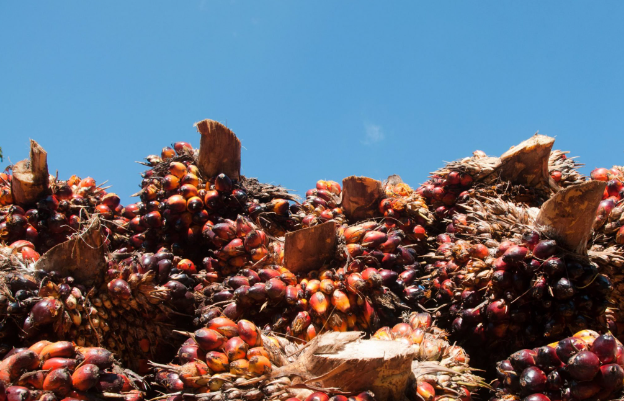
Consider the palm oil and other vegetable oils–especially sunflower, rapeseed, and soybean as its main competitors at the global market, in terms of productivity, versatility and efficiency. Scientific data derived from a number of international researches shows that palm oil excels in those three aspects. There is no denying that those three aspects have made the palm oil as the preferable material widely used in most of consumer goods sold on the shelves of shopping malls across the globe.
Based on the research conducted by the International Union for Conservation of Nature (IUCN) in 2019, compared to other vegetable oils, the palm oil is much more efficient in terms of land use for cultivation. Other vegetable oils will require nine times larger size of land to produce oil to fulfil the rising global demand of vegetable oils.
Oil palm plantation needs only 0.3 hectare of land to produce one ton of palm oil per year, while rapeseed needs 1.3 hectares of land to produce one ton of oil per year, sunflower needs 1.5 Ha of land to produce the same amount of oil, while soybean needs 2.2 Ha.
Based on the study conducted by the European Commission in 2018, of the total 239 million hectares of global deforestation, 58 million hectares were caused by livestock industry, 13 million hectares caused by soybean, 8.0 million hectares caused by development of corn plantations, and only around 6.0 million hectares caused by palm oil. So, the opening of palm oil plantations only contributes around 2.5% to the global deforestation.
But a number of green NGOs have criticized Indonesian palm oil industries for causing deforestation. It might be resulted from different definitions and concepts of forests adopted by the NGOs and Indonesia. In fact, forest analysts have stated that there are more than 1,600 definitions of forests adopted by countries across the globe, which certainly leads to different definitions of deforestation. The Nature Conservation and Advocation Study Center at Bogor University of Agriculture (IPB), said that 91.25 percent of Indonesia’s oil palm plantations are located in degraded land areas called APL (areas intended for non-forest purposes), 8.75 percent in areas intended for plantations and production forests, and only 0.1 percent in protected or conservation forests.
The IUCN research has also concluded that replacing the palm oil with other vegetable oils will only push up much larger use of land and forests for cultivation of the vegetable oils, which will certainly increase global deforestation. “Half of global population consume palm oil directly and indirectly in various kinds of consumer goods. If we ban the palm oil and encourage other vegetable oils to meet the rising global demand then much more lands will be needed for their cultivation,” the IUCN Chairman Erik Meijaard said.
Currently, the palm oil contributes 35% to the total global need of vegetable oils, with the highest demand coming from India, China, Indonesia, Pakistan and the European countries. The palm oil is 75% used in foods industries, and 25% in industries of cosmetics, cleaning products, personal care, and biofuel.
According to the United States of Agriculture (USDA), in 2023/2024 global consumption of vegetable oils is projected to reach 217.7 million tons, while production is estimated at around 220 million tons. In 2050 the global need for vegetable oils is projected to reach 310 million tons. The continual increase of global demand as a result of population growth and economic growth is expected to steadily drive up production of vegetable oils.
Further increasing production to meet the rising global demand will then increase the use of land that will lead to more deforestation in the future. But it will depend on the consumers on how much increase of land use needed to increase the production. If the consumers follow the “Palm oil free” campaign to only buy the palm oil free products they will push more production of other vegetable oils, which will only require more lands and cause more deforestation.
So, what is your conclusion from those scientific facts. Environmentally speaking, do you still believe that buying the “palm oil free” products is the right choice?. Is the palm oil is really an environmental villain or vice versa an environmental saver? Now, by bearing in mind all those scientific facts, you are welcomed to take the right choice. Benget Besalicto ST