Jakarta – PT Kilang Pertamina Internasional, the refining & petrochemical subholding company of Pertamina Group, has been continually committed to providing green fuels for Indonesia. The green fuels include the palm oil-based biodiesel and bio-avture for airplanes.
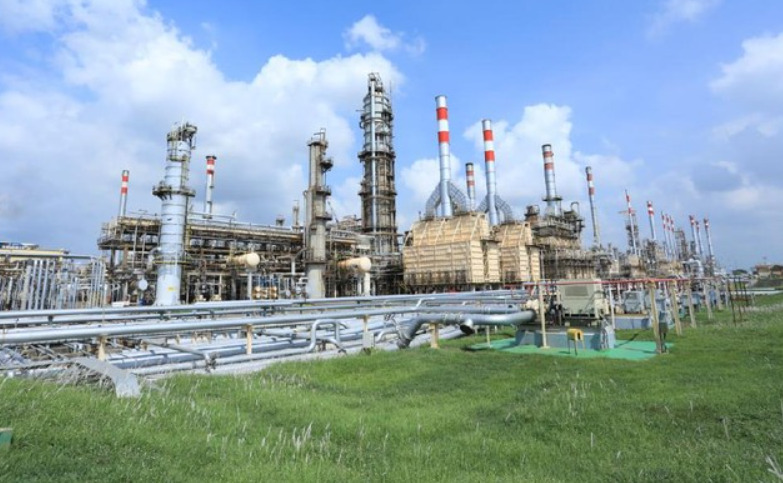
Kilang Pertamina Internasional President Director Taufik Aditiyawarman said that his company has managed to produce the sustainable aviation fuel (SAF) or bioavture in its Cilacap Green Refinery in Central Java with the mixture of 2.4% palm oil derivative called Refined Bleach Deodorized Palm Kernel Oil (RBDPKO) at production capacity of 9,000 barrels per day (bpd).
“Alhamdulillah (Thanks God) we’ve managed to conduct a commercial test of bioavture 2.4% with Garuda airplane, Boeing 737-800NG, and previously with CN235 aircraft. It has proven that we’re able to produce bioavture 2.4%,” he said during the event of Energy Corner CNBC Indonesia on Tuesday (02/01) in Jakarta.
Taufik hopes that demand for bioavture use will massively increase in the future. “With the massive use, we can maintain our production of the palm oil-based bioavture 2.4% at the capacity of 9,000 bpd,” he said.
“Looking forward, we hope our partner Patra Niaga will expand the market for the SAF 2.4% at home and abroad,” he said.
According to him, besides the bioavture 2.4% they have also targeted to start producing bioavture with 100% mixture of palm oil during the next few years. The company is now finalizing the development of Cilacap Green Refinery Phase-2 with the production capacity of 6,000 barrels per day of bioavture (SAF) 100%.
“It’s production of SAF 100%, not the bioavture 2.4%, to fulfill the need of airplanes. Perhaps, the government will make it mandatory for domestic airplanes in 2030 to use the bioavture. We’re ready for that. We can also export the excess of production that could not be absorbed locally,” he said.
According to him, with the current production capacity of bioavture 2.4% at 9,000 bpd, PT KPI is able at least to produce bioavture at around 1.4 million liters per day. (*)
Source: cnbcindonesia.com