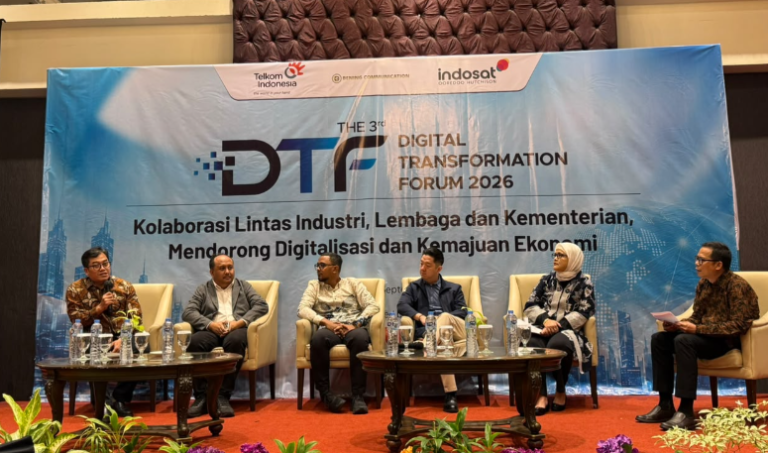
JAKARTA – The Council of Palm Oil Producing Countries’ (CPOPC) Senior Officials Forum Chairperson Musdhalifah Machmud said that representatives of Indonesia and Malaysia will meet with representatives of European Union (EU) on 02 February 2024. All of representatives will attend the meeting under the framework of the Ad Hoc Joint Task Force on European Union Deforestation-free Regulation (EUDR), which was established in August 2023.
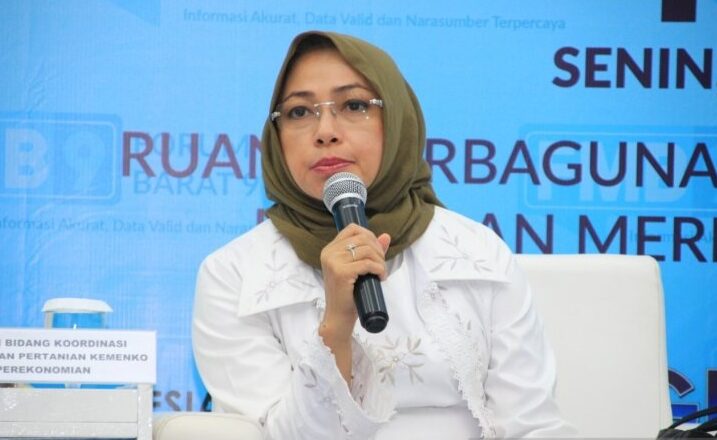
According to Musdhalifah, who is a representative of Indonesia in the EUDR Task Force, the meeting will focus on discussions of 5 main issues, which are now being pursued by the Indonesian government regarding the EUDR policy.
The EU has adopted the EUDR since May 2023. Expected to be made effective by the end of 2024, the EU policy will ban the exports of palm oil, meat, coffee, wood, cocoa, rubber, soybean and all of their derivative products to EU unless the exported products can prove through documents that they are free from deforestation.
The EUDR policy has caused a strong reaction from Indonesia and Malaysia, which are respectively the world’s largest and second largest producer and exporter of palm oil. The two countries launched a joint mission to Brussels on 30-31 May 2023. Then on 26 – 28 June 2023 the EU Commission made a visit to Indonesia and Malaysia. As a result, the EU, Indonesia and Malaysia agreed to set up the Ad Hoc Joint Task Force on EUDR.
“There are five main issues that we’ll discuss further during our next meeting. It’s been scheduled that we’ll hold the meeting on 02 February. We welcome if there is any input,” Musdhalifah said during the public discussion on palm oil industry reflection 2023 and future challenges, which was organized by Indonesian Palm Oil House (Rumah Sawit Indonesia—RSI) in Jakarta on Wednesday (10/1/2024).
The five main issues are as follows
First, inclusiveness of smallholders. Regarding this, the government through the task force will ensure that the smallholders will not be marginalized due to the EUDR implementation.
“I think the international community will also fight for such interest,” she said.
Second, sustainability. Musdhalifah said that through the task force Indonesia will find out why the EU refuses to acknowledge the sustainability certification applied in Indonesia.
Third, on the benchmark of category of high risk and low risk.
“We’ll seek further details on the category and its implementation under the EUDR,” she said.
Fourth, on traceability. Through the task force, said Musdhalifah, the Indonesian government will seek a solution on the policy implementation. It is because fulfilling the due diligence required by the EUDR will need millions of documents to prove the traceability of smallholders’ palm oil.
“Fifth, on data confidentiality. We can fulfill the data of traceability, but what about the guarantee of data confidentiality? We’ll pursue this issue during the next task force meeting,” said Musdhalifah. (*)
Source: sawitindonesia.com