Indonesia has long started the development of its palm oil-based bioenergy. During the last 15 years it has implemented a commercial production of palm oil-based biofuel, and now is seeking to expand its bioenergy program to the production of bio-avture, biogas, and bio-gasoline, which are all based on palm oil.
Initially, the bioenergy production was driven by oil crisis as oil prices reaching up to almost US$150 per barrel. Then it was accelerated by green campaigns and energy transition from fossil fuels to renewable energy to help tackle the climate change. Lately, it was further boosted by the growing market restrictions imposed by the European Union (EU) against its palm oil products.
The Southeast Asia’s largest economy needs around 1.5 million barrels of oil equivalent per day (boepd) to meet its rising local demand for energy, while only around 800,000 barrels per day can be produced locally through the refinery plants owned by the state-owned PT Pertamina Group. The rest has to be imported from foreign sources.
Based on data from the ministry of energy and mineral resources (MEMR) in 2022, Indonesia needs a total energy of 1.18 billion barrels of oil equivalent (BOE), which rose by 28.31% compared to 924.19 million BOE at the previous year. Based on energy types, gasoline accounts for 25.95% of the total energy consumption or 235.95 million BOE, followed by diesel fuel/biodiesel at 21.34% or 194.06 million BOE, electricity at 18.52% or 168.38 million BOE, and natural gas at 9.85% or 89.56 million BOE, coal 9.66% or 87.82 million BOE, Liqufied Petroleum Gas (LPG) at 8.02% or 72.92 million BOE, biomass at 6.64% or 60.39 million BOE, and biogas at 0.02% or 180,000 BOE.
To reduce its import and to strengthen its energy resilience, Indonesia started its biodiesel mandatory program in 2006. It was gradually upgraded from B2.5 in 2008, to B7.5 in 2010, to B10 in 2014, to B15 in 2015, to B20 in 2016, to B30 in 2020, and to B35 in February 2023.
During last year (2023) alone, the government targeted the production of B35 at around 13 million kiloliters, which can save foreign exchange at US$3.59 billion or around Rp55.23 trillion.
After years of implementation and gradual upgrading to the latest B35, Indonesia has proven that its mandatory biodiesel program can significantly reduce its dependence on import of fossil diesel fuel. In 2010, RI’s import of diesel fuel accounted for 46% of its total domestic consumption. But then due to the biodiesel mandatory program, the import dropped to below 10% in 2020, which has also saved its foreign exchange.
Regarding bioavture, the state-owned company PT Kilang Pertamina Internasional (KPI) has started producing the Sustainable Aviation Fuel (SAF) with the mixture of palm oil derivative, namely Refined Bleach Deodorized Palm Kernel Oil (RBDPKO) at 2.4% in its Green Refinery Cilacap, Central Java. The Green Refinery Cilacap now has a processing capacity of bioavtur at 9,000 barrels per day (bpd).
KPI President Director Taufik Aditiyawarman said that his company has targeted to sell bioavtur this year (2024) to foreign markets. The bioavtur 2.4% had undergone a commercial test in October 2023 on Garuda’s airplane, Boeing 737-800NG and previously on the airplane of CN235.
On biogas, many palm oil industries have actually used it for their own power generation. But Knowledge Integration Services (KIS) Group has planned to develop 25 compressed biogas plants in North Sumatra and Riau provinces with a total investments of US$110 million. All of the plants will use palm oil waste as raw material.
KIS has developed one of the planned 25 plants in Langkat regency, North Sumatra. The compressed biogas plant, which is the biggest in Asia, has recently started its commercial production with a production capacity of 300 MMBTU per day.
The MEMR Bioenergy Director Edi Wibowo said that in the near future, the compressed biogas can also replace or mixed into the non-subsidized LPG for industrial and commercial sectors, which is sold within 12-kg LPG canisters and 50-kg LPG canisters. Currently, 74% of LPG consumed in Indonesia is produced from natural gas with dominant elements of propane and butane, which is imported.
Driven by its success in the biodiesel program, the country is now seeking to implement a bio-gasoline mandatory program to reduce its dependence on import of fossil gasoline. Like the biodiesel, it can be implemented in stages based on blending rate from G-10 to G-20 and to G-50.
The MEMR said that gasoline is the most energy source consumed in Indonesia. From a total of 35.3 million kiloliters of gasoline consumed in Indonesia in 2019, around 54 percent or 19.19 million kiloliters was imported.
Besides low emission, the palm-based gasoline, which is locally known as Bensa has other advantages, which include its Research Octane Number (RON) at 115, as compared to the fossil gasoline of Pertamax Turbo type at RON 98, and higher than that of Pertamax Racing type.
The palm gasoline is also seen suitable for the vehicles with high compression widely developed now. Besides being more ecofriendly, the palm-based gasoline is also friendly to machines as it improves the machines’ performance and prolong machine age and also cheaper.
The National Energy Council (DEN) Secretary General Djoko Siswanto said recently that the government has planned to replace fossil gasoline of the types of Pertamax Turbo, Pertamax, and Pertalite, which are widely used as energy sources in Indonesia, with the bio-gasoline Bensa. “With Ron of 120, Bensa has a very good quality. Its price is cheaper than Pertamax Turbo,” Djoko said.
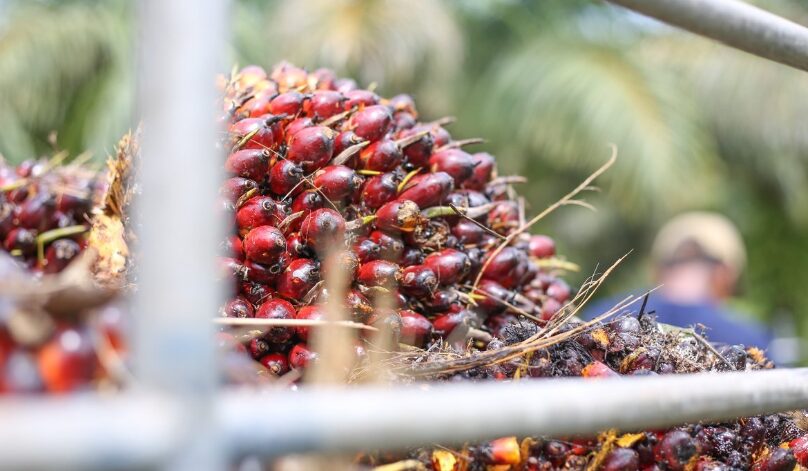
In producing the bioenergy, Indonesia will face no problem in providing palm oil and its wastes as raw material as it is the world’s largest producer of palm oil. It has been also supported by a catalyst named as “Merah Putih Catalyst”, which can be used to produce green gasoline, green diesel and green avtur. The catalyst was developed by researchers of the Innovation and Entrepreneurship Development Institute (LPIK) at Bandung Institute of Technology (ITB) under a collaboration with the oil palm plantation fund management board (BPDPKS) and PT Kemurgi Indonesia.
Considering the enthusiasm of the government, business players, other stakeholders, and rising demand locally and globally, Indonesia’s bioenergy industries will certainly reach full-blown development in the near future. Like killing many birds with just one stone, the country’s bioenergy program will solve its many problems, including reliance on energy imports, EU market restrictions (including EUDR), carbon emissions, and creating economic benefits through multiplier effects. Benget Besalicto ST