Amid growing concerns in dealing with the EUDR, President Joko Widodo (Jokowi) has set a new milestone in Indonesia’s palm oil industry by inaugurating its first red cooking oil factory in Deli Serdang regency of North Sumatra province. It stands as the latest program among a series of government’s programs to empower smallholders, who own around 41% of Indonesia’s total 16.38 million hectares of oil plantations as the main pillar of the country’s national economy.
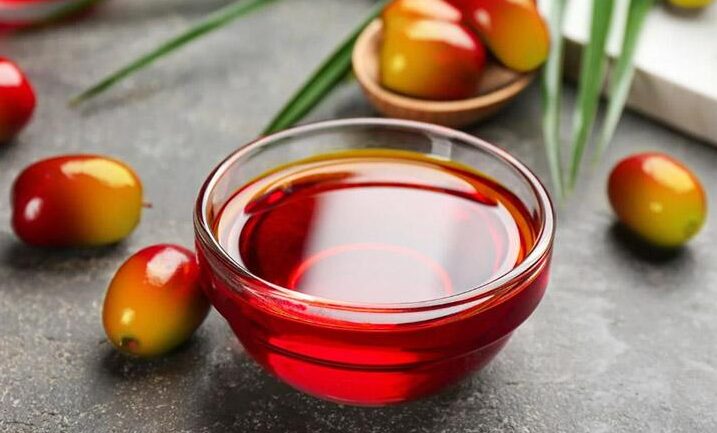
President Jokowi said that the red cooking oil factory is part of the government’s program to develop a number of similar factories in other locations across the archipelagic country. Initially, three pilot projects of red cooking plants, which include the one in Deli Serdang, will be developed by the ministry of cooperatives and small and medium enterprises under a cooperation with the state-owned plantation company PTPN and local cooperatives.
Cooperatives, Small and Medium Enterprises Minister Teten Masduki said that besides the three pilot projects the government is preparing a special scheme for smallholders cooperatives to develop red cooking oil factories in other locations. Several immediate plans will be realized in Tanah Laut regency of South Kalimantan province, Pelalawan regency of Riau province, Sekadau regency of West Kalimantan and other potential regencies.
Minister Teten said that the red cooking oil factory will help stabilize the prices of fresh fruit bunches from smallholders, who have been for decades relying on the palm oil mills owned by plantation companies. It can also help prevent the recurring issue of cooking oil supply shortage and very high price at domestic market as seen during 2021 and 2022.
“Looking forward, we hope to develop one red cooking oil plant for every 1,000 hectares of plantations under the management of smallholder cooperatives. That way we expand the reach of our national down-streaming program up to smallholders’ plantations. The smallholders will get added value for their palm oil production,” he said.
According to him, besides its economic benefits the red palm oil also has health properties which can function as an elixir to cure many health problems in Indonesia, including the stunting cases found rampant among children in Indonesia.
The Palm Oil Research Center (PPKS) reported that the red cooking oil is derived through a shorter process without bleaching, so that it still maintains its pure content of phytonutrients, consisting of carotenes as vitamin A, tocopherol and tocotrienol as vitamin E, and squalene. It also contains oleic acid and linoleic acid which function to form and develop child’s brain and metabolism.
Based on scientific study, the red palm oil or virgin red palm oil (VRPO) has beta carotene content 15 times higher than carrot and 30 times higher than tomato. Its vitamin E content, consisting of tocopherol and tocotrienol, is much higher than other vegetable oils. The percentage of tocotrienol and tocopherol contents in VRPO is 70:30.
Other vegetable oils have a small amount or even zero content of tocotrienol. In terms of antioxidant property, the tocotrienol is 16 times higher than the tocopherol.
Actually, besides the red palm oil program the government has been also seeking to implement the programs of integrating cattle farming into smallholders’ oil palm plantations, rice intercropping system in palm plantations, and replanting in the already mature plantations of smallholders.
Already implemented in several locations in Sumatra and Kalimantan, the government hopes that the integration of oil palm plantations with cattle farming will increase livestock population and beef cattle production in Indonesia, while improving the sustainability of Indonesian palm oil industry.
If only 20% of the total plantation areas of 16.38 million hectares are used for the implementation of the integrated cattle-oil palm farming system, then at least 1.6 million cows per year can be produced.
The rice intercropping system in oil palm plantations, especially those subjected for replanting program, is expected to help strengthen the national food resilience. The intercropping system is an agricultural method of cultivating two kinds of crops simultaneously on the same land areas. Besides rice, other crops can be also applied.
The Indonesian Palm Oil Association (GAPKI) Chairman Eddy Martono said that all member companies are prepared to support the government’s program to strengthen the national food resilience through partnerships with smallholders in applying the rice intercropping system in their oil palm plantations. GAPKI groups 739 oil palm plantation companies, which have a total acreage of 3.7 million hectares in 15 provincial branches.
“Initially, we’ll implement it in South Kalimantan province. We’ll also ask our members who join the replanting partnership program to apply the rice intercropping system,” he said.
Deputy Minister of Agriculture Harvick Hasnul Qolbi said recently that the agriculture ministry has planned to apply the rice intercropping scheme in 500,000 hectares of oil palm plantations across the archipelago. “The intercropping system will be implemented in line with the replanting program for smallholders’ plantation areas,” said Harvick.
Regarding the replanting, the government has been intensively implementing it for the last few years with a view to increasing the smallholders’ productivity, quality, governance and sustainability. Since its launching by President Joko Widodo (Jokowi) in October 2017 until 2023, the replanting program has covered a total of 326,678 hectares of oil palm plantations owned by 142,078 smallholders who had received a total fund of Rp9.11 trillion for implementing the replanting program.
Based on the government-sponsored replanting program, during the first year of implementation smallholders can receive the aid fund of Rp30 million per hectare with a maximum plantation size of 4.0 hectares. But now it has been doubled by the government to Rp60 million per hectare. For the second year and subsequent years, the smallholders can use the people’s business credits (KUR) with a maximum ceiling of Rp500 million and interest rate of 6% per year.
All of the government’s programs, if implemented well as expected, will go far beyond just empowering the smallholders economically, environmentally and socially. Those programs will certainly also boost local economies and strengthen the position of palm plantation companies in generating higher economic growth of Indonesia. Benget Besalicto ST