JAKARTA – The government is designing an industry minister regulation (Permenperin) on the application of Indonesian Sustainable Palm Oil (ISPO) for Indonesia’s downstream palm oil industries. Based on the Permenperin, all downstream products of palm oil on sale in the market are required to comply with the sustainability principles by having ISPO certification.
Rismansyah Danasaputra, the Head of ISPO Application and Acceleration Team (TP2 ISPO) and the Head of ISPO Permenperin Drafting Team, said the Permenperin will function as an implementing regulation of the presidential regulation (Perpres) No.44/2020 on the ISPO certification system, which is currently being revised. “The regulation is a response to the EUDR (European Union Deforestation-Free Regulation). It has been haunting the oil palm growers ever since its application by the EU,” he said.
According to him, the Permenperin will ensure that the revision of regulation on sustainability of palm oil will not only facilitate the sustainability practices, but it will also secure the legal certainty and environment protection that must be adhred to by all oil palm growers in Indonesia.
Meanwhile, the industry ministry is also designing a roadmap on development of downstream palm oil industries towards Golden Indonesia 2045 through three stages of development.
The industry ministry’s Forestry and Plantation Industries Director Setia Diarta said that the three stages are the schemes of milestone 1, 2 and 3 with a timeframe of 10 years for each.
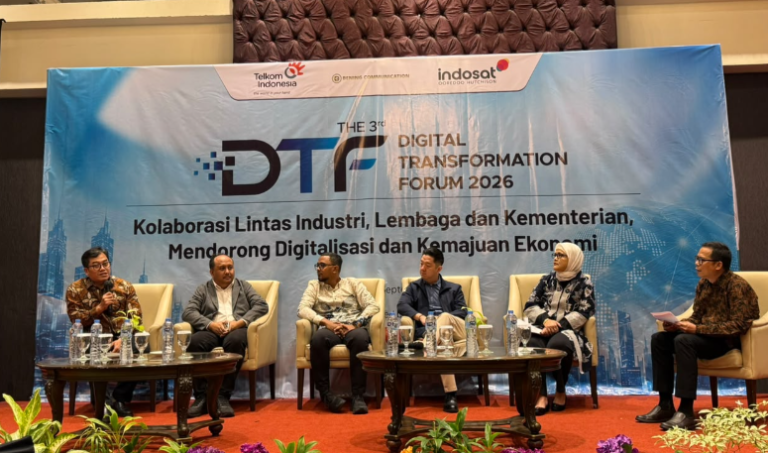
“We break it into three stages. The Milestone 1 will be from 2025 until 2034. Milestone 2 from 2035 to 2044, and the third stage will start from 2045,” Setia Diarta told the participants of a public discussion in Jakarta recently.
According to Setia, the Milestone 1 stage will focus on management of demand or absorption of crude palm oil at remunerative level. “Innovations on nutritious foods based on CPO will be also focused on this first stage to prevent stunting and anti-wasting. Besides, we’ll improve the quality of functional materials such as olechemical and biofuel gene and improvement of mandatory biodiesel production to minimize the greenhouse gas emissions (GHG).
“We also focus on the improvement of palm oil governance from upstream to downstream through the application of information system technology, and ensure the sustainability of supply chains. In 2025 our priority is domestic demand, innovation, anti-stunting, anti-wasting, sophisticated oleochemical product and bio net zero emission,” he said.
He said during the second stage of Milestone 2 since 2035, development programs are focused on the contribution of CPO to the commitment of net zero emission, improvement of CPO-based nutritional intake for the public, and integration of supply chains and governance based on information system, which includes the aspects of fiscal, monetary, and food supply control.
The third stage will focus on the value of carbon cycle that will reach zero in Indonesia, the use of biomass energy as a mixture or the replacement of primary energy of coal-fired power plants (PLTU), high availability of nutrition from CPO-based foods for the public, and responsive and agile control of market allocation of downstream palm oil products based on the industry 4.0 scheme. (*)
Source: sawitkita.id