PALANGKA RAYA – The Indonesian Palm Oil Association (GAPKI) Chairman Eddy Martono said that Indonesian palm oil industries are not in good condition. Many plantation companies are facing land problems, while many smallholders could not join the replanting program as their plantations are suspected to have encroached forest areas despite having legal certificates.
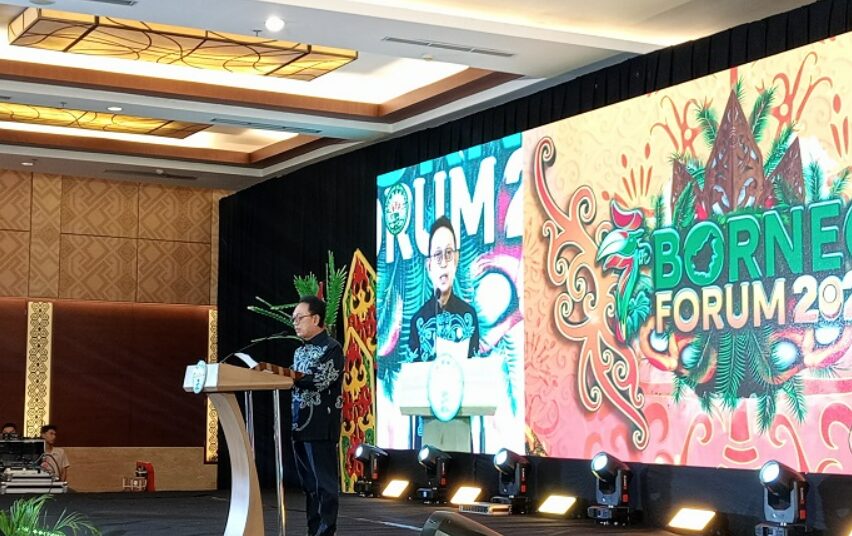
“Hopefully, Agrarian and Spatial Planning Minister and the National Land Agency (BPN) Chairman Agus Harimurti Yudhoyono (AHY) can help resolve these problems,” Eddy Martono said during the opening ceremony of Borneo Forum in Palangka Raya on Friday (28/6/24).
The Borneo Forum is a regular palm oil event, which is annually organized by GAPKI branches across Kalimantan and this year it is hosted by Central Kalimantan (Kalteng). “This year the theme of Borneo Forum is securing investment for development of sustainable palm oil,” he said.
According to him, currently GAPKI has a total of 744 member companies with a total palm plantation acreage at 3.7 million hectares. Based on data from Statistics Indonesia (BPS) in 2019, there are a total of 2,058 oil palm plantation companies operating in Indonesia.
Based on data from Kalteng plantation service, in 2022 Kalteng province has a total palm plantation acreage of 1.58 million hectares, of which 1.36 million hectares are owned by 202 plantation companies, but only 117 companies become member companies of GAPKI, representing around 800,000 hectares.
“Nationally, GAPKI groups 744 member companies of the total 2,058 companies. GAPKI has always positioned itself as a partner of government. We hope Minister Agus Harimurti and Governor H. Sugianto Sabran can facilitate the necessary coordination between the government and palm oil industry players in developing our palm oil industries,” he said.
He pointed that the palm oil industries play a very important role in Indonesian economy, as the industries employ more than 16.2 million people and contribute the largest foreign exchange from exports.
He said that in 2022 the Indonesian palm oil industries contributed around Rp600 trillion in foreign exchange, which was the highest in the history of Indonesian palm oil industries. “Due to the largest foreign exchange, our balance of trade saw a surplus,” he said, adding that unlike other industries during the Covid-19 pandemic the palm oil industry managed to grow steadily.
“But during the last five years the production of our palm oil industries was stagnant, while consumption has been rising every year. In 2019, our local consumption reached 19 percent of total production, but in 2023 it rose to 42 percent. Indonesia is the world’s largest producer of palm oil, but also the world’s lagest consumer of palm oil,” he said. (*)
Source: palangkaekspres.co