JAKARTA – The wastes of oil palm plantations in the forms of biomass can be processed into biochar, which has many functions and economic values.

Dedi Nursyamsi, Head of Agricultural Counseling and Human Resource Development Board at the agriculture ministry said that the biochar has many advantages, which include resistant to weathering, decomposition, temperature attack fermentation, humidity, microbes, etc.
“The biochar also has many functions. One of the functions is to fertilize the soil,” Dedi said during a Talkshow on “Optimizing The Carbon Economic Value Through Development of Biochar from Biomass Wastes of Oil Palm Plantations” as part of the LIKE 2 Festival (on environment, climate, forestry and energy) on Thursday (08/08/2024).
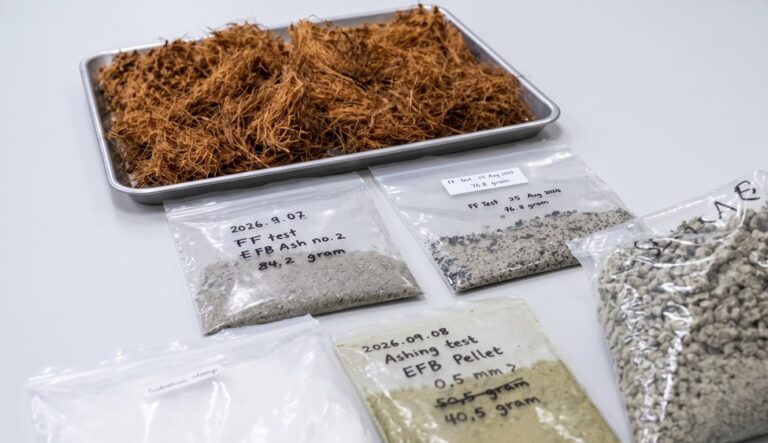
The biochar is a form of charcoal that consists of carbon and ashes. It is produced through pyrolysis, which is the burning (usually above 500 degrees Celsius) of organic materials, such as the palm biomass in the absence of oxygen or minimal oxygen.
The biochar is usually used for agricultural application to increase soil fertility and agricultural productivity. It increases soil aeration, reduces soil emissions of greenhouse gases and soil acidity, and increases soil water content in coarse soils. Besides agriculture, it can be also used as additive for animal fodder, and for application in global climate change mitigation, and for carbon sequestration.
In terms of environmental and agricultural applications, the biochar has received international recognition from a number of organizations, including the European Biochar Foundation and the USDA’s National Organic Program.
According to Dedi, the potentiality of biochar from palm biomass wastes can have carbon economic value up to US$85 billion.
Dedi said that currently Indonesia has a total of 16.5 million hectares of oil palm plantations. Usually, each hectare has around 50 tons of biomass waste per year that can be processed into biochar.
“In addition to that, every year there are around 670,000 of palm plantations that are included into the implementation of replanting program. That means all of their oil palm trees have to be cut, which then becomes new source of emissions. Therefore, every year Indonesia’s oil palm plantations can produce around 58.5 million tons of carbon that can be processed into the biochar,” he said. (*)
Source: sawitku.id