JAKARTA – You may think the palm oil industries have no contribution to the poverty eradication in Indonesia. But don’t be too sure of your opinion before reading the following facts.
Poverty eradication is one of the main goals of national development in Indonesia. How to alleviate poverty in its various configurations is the target of sectoral, industrial, regional and national development programs.
Included in the government’s efforts to reach the target of poverty eradication is people empowerment through development of agriculture sector. In the agriculture sector, development of oil palm plantations has become one of the government’s agendas to increase rural development and rural poverty alleviation.
Poor villagers are mostly in rural, remote, isolated and frontier areas. Generally, the oil palm plantations become pioneer economic activities in those areas. The development of the plantations that produce palm oil as top export commodity and raw material for industries is expected to become a locomotive of development that will reduce poverty in those areas.
Many researchers have revealed empirical evidences of oil palm plantations’ contribution in alleviating poverty. At national level, the study of Susila and Munadi (2008), Joni et al. (2012), and PASPI (2014) shows that the increase of national production of palm oil is able to reduce poverty. World Growth (2011) has also revealed that the oil palm plantations in Indonesia have played a significant role in reducing poverty. Goenadi (2008) reveals that more than 6.0 million people involved in the oil palm plantations in Indonesia managed to get out of poverty. In line with the study, Edwards (2019) also revealed that around 2.6 million Indonesia people were lifted out of poverty. Besides the above two studies, The National Team of Accelerating Poverty Alleviation (2019) said that since 2000, around 1.3 million rural people and around 10 million Indonesian people managed to get out of poverty through development of oil palm industries.
The oil palm plantations have also played an important role in eradicating poverty in other producing countries (World Bank, 2011), such as Malaysia (Norwana et al., 2011), Papua New Guinea (ITS Global, 2012), Nigeria (Adebo et al., 2015), Ghana (Ayodele, 2010), and Colombia (Castiblanco et al., 2015; Qaim et al., 2020; Porter, 2020). It has proven that the oil palm plantations have become a driver in reducing poverty in the world’s palm oil producing countries (PASPI Monitor, 2021aa).
Meanwhile, at regional level, the increase of palm oil production in those producing areas is strongly linked with the significant alleviation of poverty (PASPI, 2014; Syahza et al., 2019). The study of Alamsyah et al. (2020) shows that the development of oil palm plantations in 10 producing provinces in Indonesia has significantly reduced the number of poor people in rural areas and cities. The study has also revealed that to reduce one percent of poor people in villages and cities needs an expansion of palm plantation at 1.05 million hectares. But to reduce one percent of poor people in villages alone, it needs an expansion of oil palm plantations at 959.7 thousand hectares.
In line with the growth of palm oil production, the capacity of regional economies have also increased in producing output, income, and absorption of workers, inside the oil palm plantations and other economic sectors outside the palm plantations. The multiplier impacts of oil palm plantation development are also enjoyed by other modern sectors in those producing areas, such as financial institutions, restaurants and hotels, food processing, electric equipment, and manufacturing. It shows that the oil palm plantations have created new growth centres that are able to reduce the poverty rate in those regions.
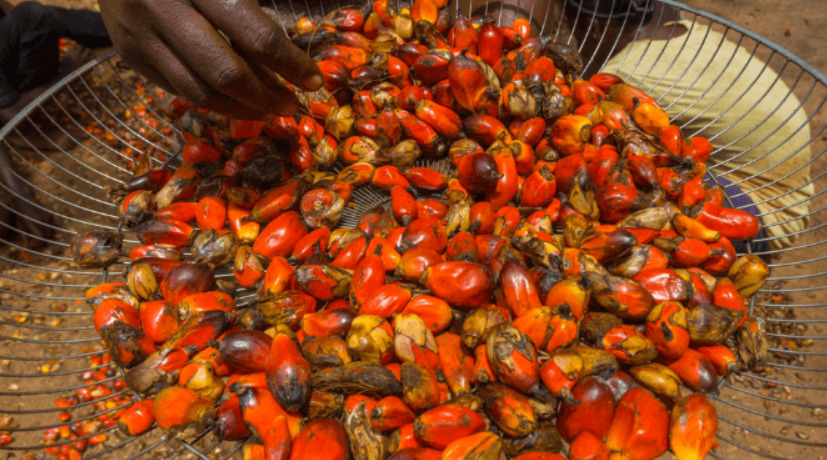
The study of PASPI (2014), Kasryno (2015), and Edwards (2019) shows that the rate of poverty reduction in regencies with largest palm plantations is faster than other regencies without palm plantations (photo-3).

At the village level, many studies have also revealed the contribution of oil palm plantations in reducing poverty in villages. The study of Alwarritzi et al. (2015) shows that the increase of income from the oil palm plantations has lifted the smallholders and their families from the poverty line.
The study of Santika et al. (2019) concludes that the contribution of palm plantations in improving the socio-economic welfare in rural areas is able to alleviate the poverty in rural areas. The study of Syahza et al. (2020) also concludes that the development of palm plantations has created multiplier effect in rural areas and raised the welfare index of people in villages.
The above facts show that the oil palm plantations significantly contributed to the efforts of reducing poverty at the levels of villages, regional, and national. The development of palm plantations in rural, isolated, and frontier areas has resulted in the growth of economic growth centres, which in turn eradicated the poverty in those areas. (*)
Source: Mitos & Fakta Kelapa Sawit – 4th Edition (Mitos 4-04)