JAKARTA – You possibly think the oil palm plantations have no contribution in increasing access of the people in rural areas to education. If you do, then you need to validate it with the following facts.
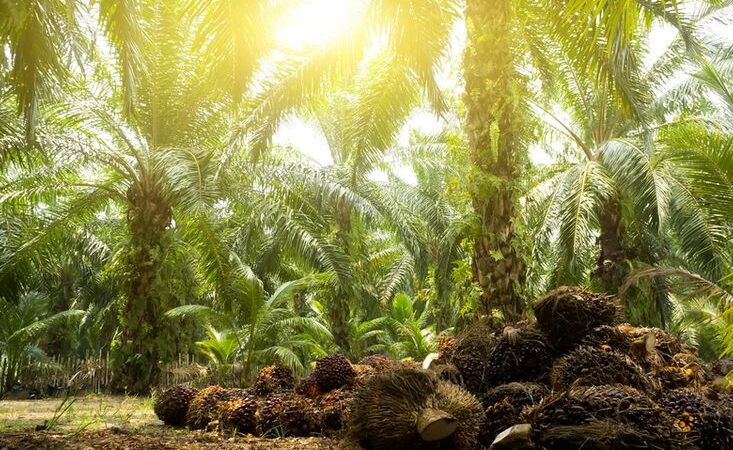
It has been empirically proven that the oil palm plantations also contribute to development of education in rural areas. The contribution can be seen through two mechanisms, namely increasing public access to education and development of education facilities in rural areas around the oil palm plantations.
The development of oil palm plantations is a pioneer economic activity as it is implemented in degraded land areas, and isolated, frontier and remote areas. Due to the condition of isolated areas, palm plantation companies have to develop various public facilities to fulfill the needs of all workers. Among the public facilities is education facilities, from pre-school/kindergarten, elementary school, and secondary school.
Initially, the education facilities were only appropriated for the company workers’ children. But then, the facilities are also enjoyed by other villagers living around.
The phenomenon was also revealed by Edward in his study (2019) regarding many schools are developed in palm oil producing regencies, which are mostly not state-owned schools developed by the government.
Various empirical studies (Rist et al., 2010; PASPI, 2014; Budidarsono et al., 2012; Syahza et al., 2020) reveals that the oil palm plantations contribute to the development of schools and education facilities. Such development was also confirmed in the study of Santika et al. (2019), which reveals that the development of school infrastructure increased in palm oil producing villages compared to the non-producing villages.
Besides developing education facilities in plantation areas, the oil palm plantation companies also help the other villagers’ education facilities around the plantation areas. The empirical study (by Suwandi et al., 2013; Pambudi et al.,2017; Satria, 2017; Pasaribu, 2019; Fajrin and Anshari, 2019; Syahrida et al., 2019; Baihaqi et al., 2020) reveals that oil palm plantation companies had given assistances for development/ renovation of school infrastructure, teaching aids/props, books, computers, scholarships, allowances for teachers, study centers, and school buses.
The second mechanism that shows the contribution of oil palm plantations in education is the increase of smallholders’ access to various levels of education. The increase of smallholders’ income has enabled them to raise household spending to fulfill their education needs (Rist et al., 2010; Alwarritzi et al., 2016; Kubitza et al., 2018; Edwards, 2019). The increase of palm smallholders’ income has also increased their financial capabilities to get better quality education in various levels, including university graduates and post-graduates (Syahza et al., 2021; Chrisendo et al., 2022).
The palm oil fund derived from export levy of palm oil, which is collected and managed by the oil palm plantation fund management board (BPDPKS), is also utilized to finance scholarship programs for the children of plantation workers and smallholders. During the period of 2015-2021, the palm oil fund given for the scholarship program reached Rp186 billion for 3,265 students (BPDPKS, 2022).
Those facts have shown that the palm oil industries contribute to the increase of public access to education. The palm oil industries have particularly realized their contribution to education through the two mechanisms, namely development of education facilities (availability) and increase of villagers’ capacity to get higher quality education (affordability). (*)
Source: Mitos & Fakta Kelapa Sawit – 4th Edition (Mitos 4-10)