JAKARTA – Public perception on the exclusivity of plantations is inherited from the colonial era. But after Indonesia’s independence, especially since the reform era in 2000, the wall of exclusivity has collapsed. Plantations and their communities have become an integral part of the whole community in the respective regions where the plantations are located.
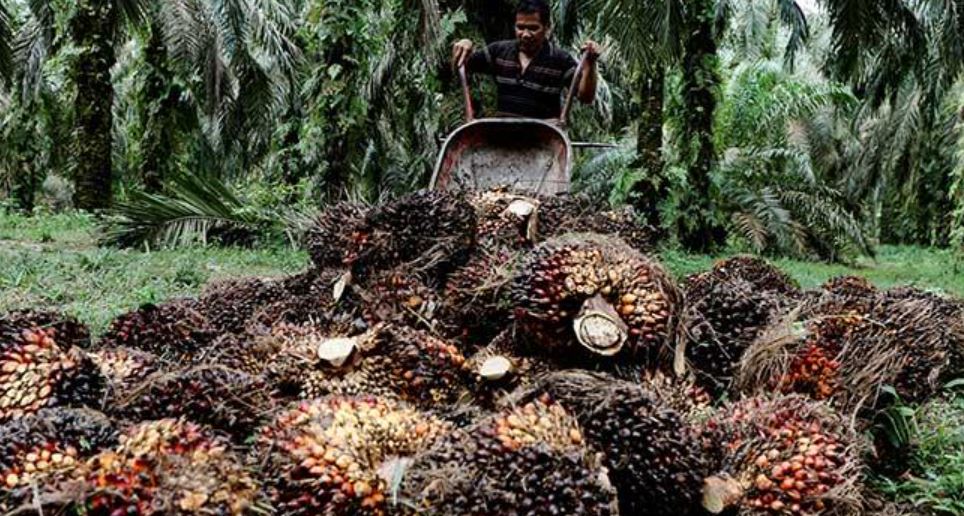
The oil palm plantations are found inclusive of local people and economy. It can be seen through the plantation companies’ programs of environmental protection partnership (PKBL) and corporate social responsibility (CSR). Various empirical studies have shown that the existence of palm plantations and their programs of PKBL/CSR have significantly contributed to the development of villages and local people economically, socially and environmentally.
The implementation of the partnership programs (nucleus – plasma) as the main CSR program of plantation companies has lifted the income of villagers around the palm plantations (PASPI, 2014). The study of Suwandi et al. (2013) shows that partnerships under the village unit cooperatives (KUD) between companies and people living around play an important role in developing local economies, especially in facilitating the trading of palm fresh fruit bunches (FFB), financing, procurements of agricultural equipment and other necessary goods, and transportation.
Through their CSR programs, the palm plantation companies have fostered local small businesses. The study of PASPI (2014) shows that the development of small businesses as implemented by many state-owned plantation companies (PTPN) consists of the following (photo-6): fostering of small businesses in trade sector (40 percent), followed by service sector (24 percent) and agriculture (20 percent).

Other CSR Program implemented by palm plantation companies in fostering small businesses in trading sector is the small stalls and cheap markets (Suwandi et al., 2013; Satria, 2017; Syahrida et al., 2019; Syahza et al., 2020), small businesses in transportation service (Pambudi et al., 2017), and cultivation of non-oil palm commodities, such as rice
and horticulture (Suwandi et al., 2013; Baihaqi et al., 2020), fisheries (Suwandi et al. 2013; Pasaribu, 2019) and husbandry (Suwandi et al., 2013; Winarso dan Basuno, 2013).
Besides the economic aspect, the palm plantation companies also implemented programs to increase the local people welfare, by increasing the access to basic needs, such as education and health services. The CSR programs to improve the public welfare consist of education and training (32 percent), public facilities and infrastructure (21 percent) and the other 53 percent for development of houses of worship, health service, natural conservation and assistances for victims of natural disasters (photo-7).

The study results had been also confirmed by other empirical studies (Budidarsono et al., 2013; PASPI, 2014; Marwan et al., 2016; Satria, 2017; Baihaqi, 2019; Zainuri et al., 2021), which reveal that CSR programs of the palm plantation companies have directly contributed to the development of infrastructure, such as infrastructure of education (kindergarten, elementary schools, junior high schools, and senior high schools), schools buses, clinics, ambulances, houses of worship, roads / bridges.
Also as part of CSR programs, the plantation companies have incidentally given assistances in conjunction with religious celebrations, traditional days, amd natural disasters (Marwan et al., 2016; Baihaqi, 2019; Fajrin dan Anshari, 2019; Syahrida et al., 2019).
The plantation companies’ CSR program on environmental protection includes efforts to prevent forest and land fires (Baihaqi et al., 2020), reforestation (Satria, 2017), forest conservation and management (HCV/HCS) and the use of vacant land areas for cultivation of productive plants (Suwandi et al., 2013).
Palm plantations’ inclusivity has increased significantly since the government applied the partnership program. It is due to the government’s policies that had allowed the developments of oil palm plantations across the archipelago from Sabang in the West to Merauke in the East. One of the policies applied by the government during the initial period of Indonesia’s palm plantation development is the policy of PIR-Trans, which is a combination of transmigration and partnerships between companies and transmigrants/ smallholders (PASPI, 2014; Kasryno, 2015; Gatto et al., 2017).
Many people with a variety of ethnic backgrounds joined the combined program of transmigration and palm plantation under partnerships with palm companies in Sumatera and Kalimantan islands.
Then since 2000 the developments of oil palm plantations had attracted spontaneous migrants to become plantation workers, suppliers, grocery/food traders, palm smallholders, etc. It shows that besides accelerating the local economies, the PIR-Trans program had also contributed to the creation of ethnic diversity within the communities of villages and plantations. The creation of heterogeneous communities has also indicated the plantation development success in creating social capital and social resilience (Kemendesa PDT, 2021). Based on data from Statistics Indonesia (BPS) in 2014 and Kemendes PDTT in 2021, the heterogeneity is created if the people living in one village consist of more than one ethnic group. The study of PASPI (2022) shows that the number of palm producing villages with heterogeneity is significantly higher than non-palm producing villages.
The realization of heterogeneous people in the palm producing villages has proven the contribution of palm plantations in realizing one of the goals set in the law of plantations (UU Perkebunan), which is to function as a unifier of nation and to strengthen social and cultural cohesion.
Societies with diversity of ethnics and cultures reflect inclusivity, openness and tolerance of differences and heterogeneity. Ethnic and cultural acculturation will bring positive impacts to the work environment, such as increased knowledge, productivity, and innovations. A variety of empirical studies on human resource management (Van Ewijk, 2011; Adkins, 2016; Syamsuar and Ginting, 2020) show that organizations and communities which are able to manage diversity and heterogeneity are more innovative and advanced.
From the perspective of village and agricultural sociology, the diverse communities in the palm producing villages will strengthen social capital and generate collective actions that will be then followed with establishment of strong relations and cooperations between the government, the private sector, and the rural people (Tonny et al., 2022). The creation of such social ecosystem in the palm producing villages will further push up growth and public welfare in those villages.
All of the facts have shown that palm plantation companies have become more inclusive, economically, socially and environmentally. The increase of ethnic and cultural diversity (heterogeneity) among the communities of palm plantations in Indonesia has proven that palm plantations have become more inclusive and more integrated with the people living around the plantations. (*)
Source: Mitos & Fakta Kelapa Sawit – 4th Edition (Mitos 4-13)