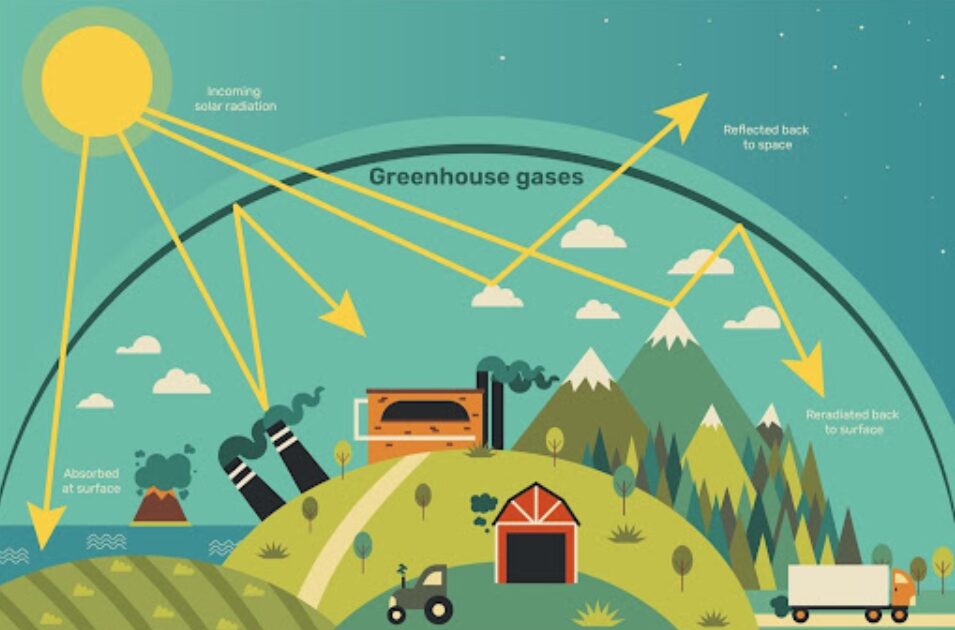
JAKARTA – The carbon emissions resulted from land use, land use change and forestry (LULUCF) have been accused to have big contribution to the global greenhouse gas emissions (GHG). It is a serious accusation that should be rigorously pondered with the following facts and descriptions.
There are many cases of land use, land use change and forestry (LULUCF) in developing countries. As the countries are implementing their development programs, they have to convert forests into non-forests to accommodate their national economic development projects. But the LULUCF does not necessarily result in emissions. It depends on the carbon stock change. If the LULUCF occurred from ecosystem with high carbon stock to ecosystem with low carbon stock, such as from oil palm plantations to shrubs, then the change will result in higher carbon emissions.
It is because the carbon stock of oil palm plantations is higher than the carbon stock of soybean plantations. Conversely, if the LULUCF from ecosystem of lower carbon stock to ecosystem of higher carbon stock, such as from shrubs to oil palm plantations, then the change will result in CO2 absorption (carbon sink).
Indirect Land Use Change (ILUC) is part of the LULUCF. The Council of the European Union (2018) defines ILUC as follows:
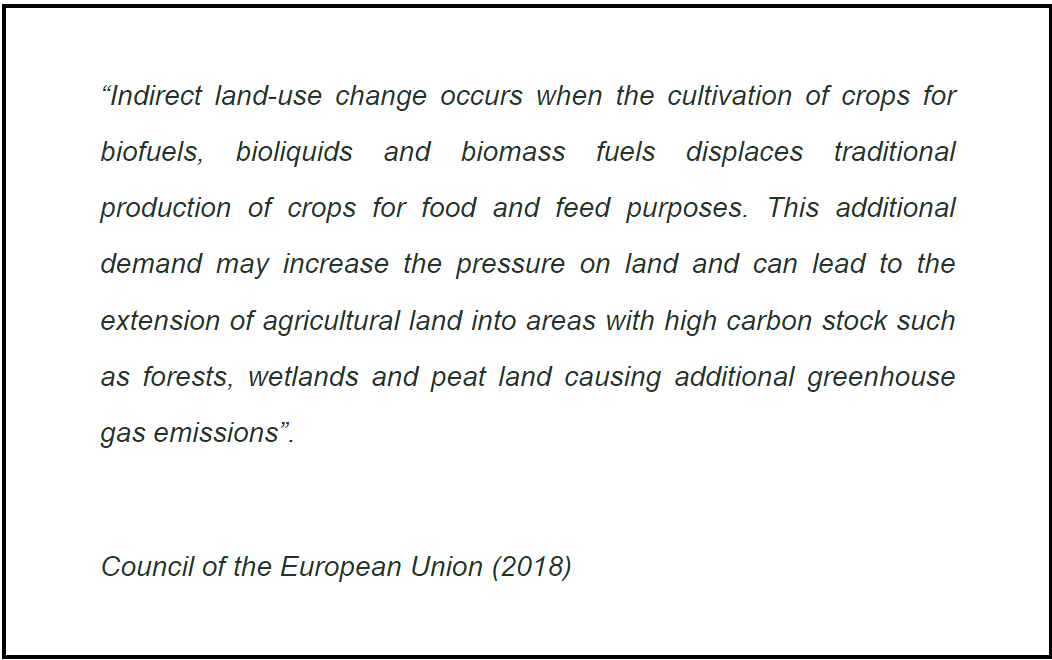
The key word of ILUC is Land Use Change (LUC), while the factor that drives LUC is direct and indirect in nature (dLUC and ILUC), so that the dLUC and ILUC should be included in the global LULUCF.
Globally, (picture-8), total emission of global greenhouse gas in 2019 reached 51.7 Gt CO2 eq (not included the emissions from LULUCF). If included the emissions from LULUCF, then total emission of GHG reached 58.8 Gt CO2 eq. The global emissions of LULUCF reached 7.1 Gt CO2 eq or around 12 percent from the total emission of global GHG in 2019.
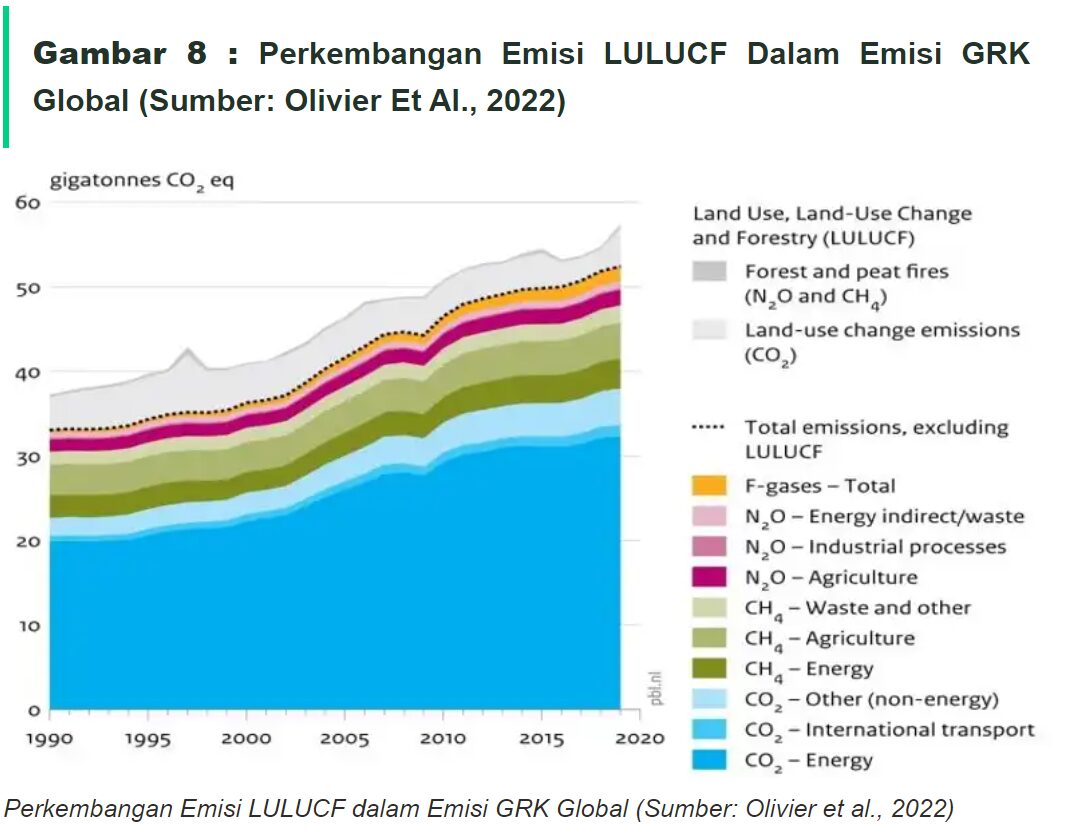
It means, the emission contribution of LULUCF to total emission of global GHG is relatively small, or lower than the GHG emission from energy sector and even lower than GHG emissions from agriculture sector. Considering the facts, then the issue of LULUCF emissions, including ILUC emission, is not too significant in terms of reducing the global GHG emissions. Therefore, efforts to reduce the use of fossil fuels as the global sources of energy should become the global strategic steps to reduce global emissions of GHG. (*)
Reference:
- Olivier JGJ, Schure KM, Peters JAHW. 2022. Trends in Global CO2 and Total Greenhouse Gas Emissions: 2021 Summary Report.
Source: Mitos & Fakta Kelapa Sawit –4th Edition | (Mitos 6-06)