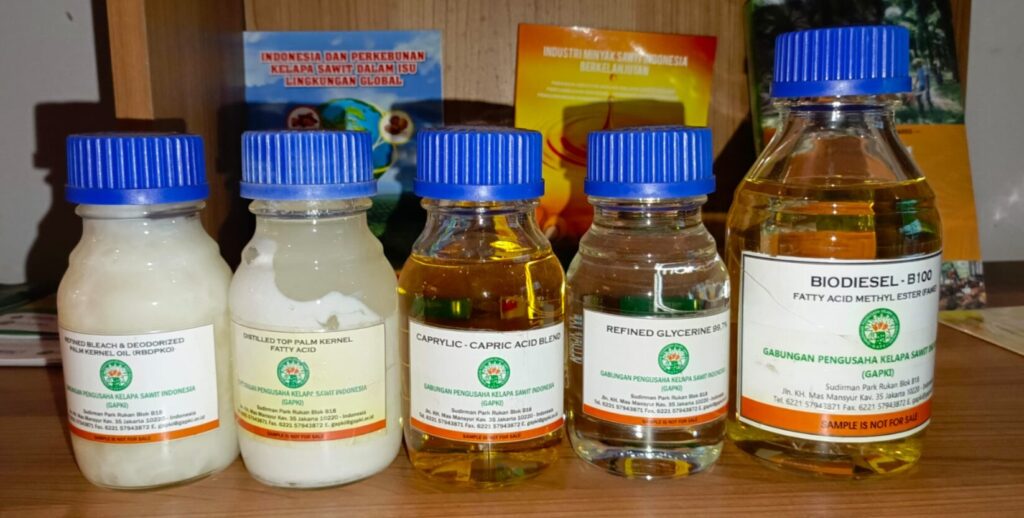
Distilled Top Palm Kernel Fatty Acid (DTPKFA) is a fatty acid fraction derived from distilling process of palm kernel oil. DTPKFA consists of very pure fatty acids of short to medium chain, which are usually dominated by lauric acid (C12) and myristic acid (C14). The two saturated fatty acids have many applications in the cosmetic, chemical and food industries.
Production Process of DTPKFA:
- Extraction from Palm Kernel Oil: The palm kernel oil is extracted from palm fruit seeds.
- Purification and Separation: The oil undergoes purification and hydrolysis process, which breaks it down into free fatty acids.
- Distillation: The free fatty acids is then separated based on its boiling point. The highest fraction from the distillation process is DTPKFA.
Composition:
DTPKFA mainly contains lauric acid (C12) and myristic acid (C14). The fatty acid content makes it ideal for making products that need stable and pure properties.
Characteristics:
- Composition of fatty acid: High content of medium chain fatty acids.
- High Purity: Distillation process ensures very pure products.
- Shape and Melting Point: Usually, it is solid at room temperature, with a low melting point because of its medium fat chains.
Applications:
- Cosmetic Industries: As moisturizer in lotions, soaps, and skin care products.
- Food Industries: Used in production of processed foods, such as ice cream and specialty fats.
- Chemical Industries: Raw materials for oleochemicals, such as fatty alcohol and fatty esters.
- Pharmacy Industries: As solvent and carrier ingredient in drug formulations.
- Soap and Detergent Industries: Having a property of producing soft and thick foam makes it suitable for soaps and detergents.
Advantages:
- Emollient property: Very suitable for skin care products.
- Stable Foam: Producing good and stable foams, it is suitable for production of soaps and detergents.
- Ecofriendly: It is environmentally friendly as it is derived from palm oil which is green and renewable.
But like other palm oil derivative products, the DTPKFA also deals with environmental challenges posed by expansion of oil palm plantations. But getting it from certified raw materials (such as ISPO and RSPO) can help reduce such environmental impacts. (*)