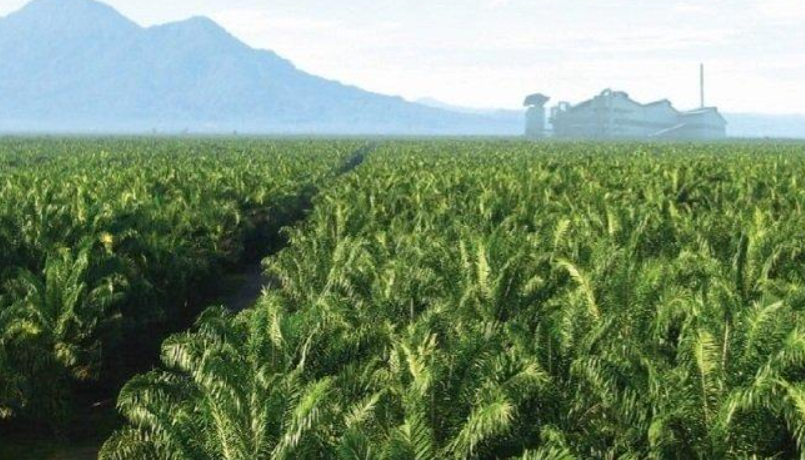
JAKARTA – There are people who stated that oil palm plantations are not net carbon absorber. They should review their opinion with the following facts and description.
Every second the atmosphere is filled with carbon dioxide waste from human activities on earth. Humans, animals, vehicles, and plants across the globe emit excessive greenhouse gas (GHG) to the atmosphere. It has caused global warming. To reduce the concentration of GHG in the atmosphere, the GHG needs to be reabsorbed.
Like other plants, the oil palm trees also play a role in tackling the climate change through the absorption of carbon or carbon sink (PASPI Monitor, 2020; 2021). Through the process of assimilative photosynthesis, oil palm trees absorb carbon dioxide (CO2) from the atmosphere (Hardter et al., 1997; Henson, 1999; Fairhurst and Hardter, 2003) and store it as carbon stock in the form of biomass —above ground biomass and below ground biomass).
Tanaman kelapa sawit yang merupakan tanaman tahunan (parennial plant) dengan sistem perakaran yang intensif, berukuran relatif besar, pertumbuhan cepat, dan produksi tinggi dengan siklus pertanaman selama 25 tahun atau lebih. Karakteristik tanaman yang demikian membuat perkebunan kelapa sawit berperan menjadi “mesin biologis” penyerap karbon dioksida (CO2) yang cukup besar dari atmosfir bumi.
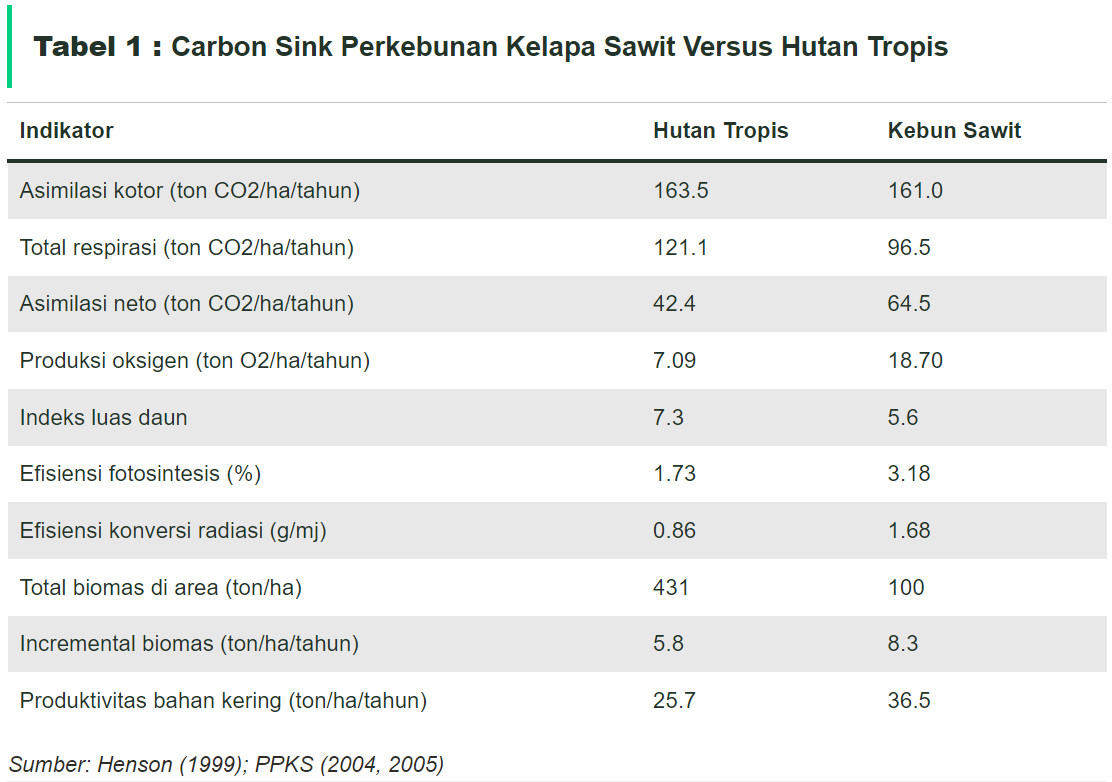
Berdasarkan studi Henson (1999), secara rataan besarnya carbon sink dari perkebunan kelapa sawit secara neto mencapai 64.5 ton CO2 per hektar per tahun (Tabel 1). Penyerapan neto CO2 pada perkebunan kelapa sawit tersebut lebih besar dibandingkan dengan hutan tropis. Hal ini menunjukkan bahwa perkebunan kelapa sawit secara neto mampu menyerap karbon dioksida dari atmosfer bumi dan menghasilkan oksigen (PASPI Monitor, 2021).
Uraian di atas menunjukkan bahwa perkebunan kelapa sawit secara neto adalah menyerap karbon (carbon sink). Oleh karena itu, perkebunan kelapa sawit merupakan bagian solusi dari upaya global dalam menurunkan emisi karbon dari atmosfer bumi. Kontribusi perkebunan kelapa sawit dapat dilakukan melalui dua jalur sekaligus yakni menyerap kembali karbon dioksida dari atmosfer bumi melalui proses fotosintesis dan mengurangi emisi karbon dioksida dengan mengganti (substitusi) energi fosil boros emisi dengan biofuel sawit yang hemat emisi.
Referensi
- Hardter R, Woo YC, Ooi SH. 1997. Intensive Plantation Cropping: A Source of Sustainable Food and Energy Production in The Tropical Rain Forest Areas In South Asia. Forest Ecology and Management. 91(1): 93-102.
- Henson I. 1999. Comparative Ecophysiology of Palm Oil and Tropical Rainforest. Oil Palm and Environment: A Malaysian Perspective. Kuala Lumpur (MY): Malaysian Oil Palm Brower Council.
- PASPI Monitor. 2020g. Palm Oil Industry as Part of the Global Warming and Climate Change Solution. Palm Oil Journal Analysis of Palm Oil Strategic Issues. 1(09): 49-54
- Oil Palm Plantations Are Part Of The “Lungs” For The Earth Ecosystem. Palm Oil Journal Analysis of Palm Oil Strategic Issues. 2(10): 333-338.
- The Palm Oil Industry as a Global Climate Change Solution. Palm Oil Journal Analysis of Palm Oil Strategic Issues. 2(39): 521-526
- Fairhurst T, R Hardter. 2003. Oil Palm Management for Large and Sustainable Yields. International Potash Institute. https://www.ipipotash.org/publications/publication-59
Source: Palm Oil Myth & Fact – 4th (Mitos 6-09)