JAKARTA – The government needs to establish a national board to manage Indonesian palm oil industries as one of the top industries which have significantly contributed to the country’s economy.
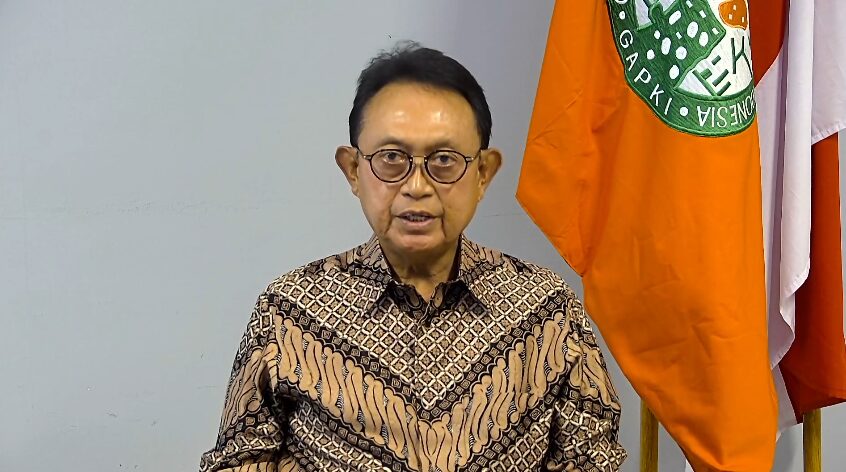
“We hope the government will establish one more institution, namely Badan Sawit Nasional (National Palm Oil Board). The palm oil industries have given significant contribution to national economy, employing millions of workers, strengthening food and energy resilience, and providing big contribution of foreign exchange,” the Indonesian Palm Oil Association (GAPKI) Chairman Eddy Martono said in Jakarta on Tuesday (22/10/2024).
According to Eddy Martono, the proposal on the establishment of the special palm oil board has been long filed to the government, and even long before the presidential election in February 2024. “A result of assessment on the establishment of the special board that had been completed on 18 October 2024 has been already presented to the government. Hopefully, it can be soon realized,” he said.
“It can be a new board or an upgrading of the oil palm plantation fund management board (BPDPKS) as a special board with full authority under President,” he said.
He said that by making it a special board under President, and not under ministry, the board will prevent overlapping regulations and becomes more focused on reaching targets of palm oil development programs.
Eddy said that one of the main factors that necessitate the establishment of the special board is the fact that national palm oil production is stagnant and tends to decline while domestic consumption is rising.
Based on data from GAPKI, this year production of palm oil as of August (2024) reached 34.52 million tons, which is 4.86% lower than that of the same period in 2023 at 36.29 million tons. Total domestic consumption as of August 2024 reached 15.57 million tons or 1.94% higher than that of the same period in 2023 at 15.27 million tons.
Apparently, the stagnant production has been also contributed by the slow implementation of replanting program for palm smallholders’ plantations. Such condition has resulted in the decrease of final stock of palm oil from 2.51 million tons by the end of July 2024 to 2.45 million tons by the end of August 2024.
According to Eddy, other factors that necessitate the special board formation include the government’s plan to upgrade the implementation of biodiesel mandatory program from the current biodiesel 35% (B35) to B40 in 2025 and B50 in 2026.
He said the special board could emulate the institution of the Malaysian Palm Oil Board (MPOB) in Malaysia, which has full authority in managing its palm oil industries from upstream to downstream. “That way we can ensure all regulations on palm oil will be more simplified and more powerful,” Eddy Martono concluded. (*)