JAKARTA – Economic Coordinating Minister Airlangga Hartaro said that the government has designed a new strategy to deal with the European Union Deforestation-free Regulation (EUDR), which was initially scheduled to be implemented in 2025 but then delayed until 2026.
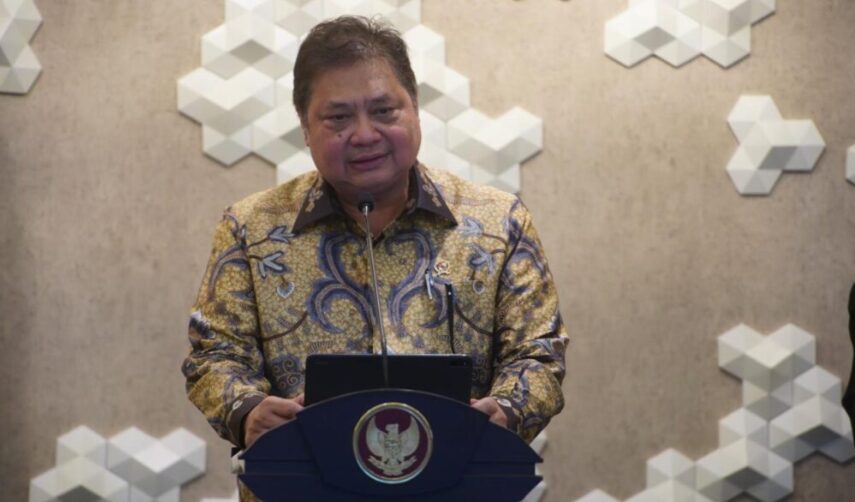
Minister Airlangga said currently they are in a process of proposing to President Prabowo Subianto to determine the standard of certification of the Indonesian Sustainable Palm Oil (ISPO) through a government regulation (PP). “We’ll show to the world, especially European Union (EU), that Indonesia has a special regulation on the sustainability in its palm oil sector.
“The standard (ISPO) will be set through a government regulation. That way we’ll ensure to EU that we have a regulation on sustainability,” he said on Wednesday (30/10/2024).
Adopted by the EU in June 2023, the EUDR was sheduled to be effective since 30 December this year. But then the EU decided to delay its implementation for one year. Based on its decision taken on Wednesday, 16 October 2024, its implementation will be started in December 2025 for companies, and in the middle of 2026 for smallholders.
The EUDR requires that the supply chain of all products of agriculture, plantations and forestry, including palm oil, traded in the European market are free from deforestation in their countries of origins. The European Commission said that deforestation has become the second largest source of greenhouse gas (GHG) emission after burning of fossil fuels as the cause global climate change.
According to Airlangga, all palm plantation companies and smallholders are obliged to have the Indonesian Sustainable Palm Oil (ISPO) certification since November 2025. But the process of ISPO certification among companies and smallholders has been slow until now.
Based on the government’s data, the realization of ISPO certification, especially among smallholders, is lower than expected. During the last 13 years the ISPO certification for smallholders’ institutions only amounted to 81 certificates with a total plantation areas of 60,236 hectares, as compared to the total plantation areas of smallholders at 6.94 million hectares or just 0.3 percent of the total. (*)
Source: sawitindonesia.com